
Qatar is home to a diverse array of wildflowers, showcasing the breathtaking beauty and floral diversity of the peninsula. Despite the arid desert landscape, these native flowers defy the odds and bring life and color to the region. Join us on a journey to discover the enchanting world of Qatar‘s wildflowers.
Key Takeaways:
- Qatar is home to over 300 species of native wildflowers.
- The flora of Qatar has adapted to the challenging desert environment.
- Native species like Vachellia tortilis and Tetraena qatarensis showcase the resilience of Qatar’s vegetation.
- Rawdats provide biodiversity hotspots where blooming flowers thrive.
- Preserved natural areas in Qatar protect and conserve the country’s floral treasures.
The Flora of Qatar: A Rich Botanical Tapestry
The flora of Qatar is a testament to the resilience and adaptability of plant life in harsh desert environments. Despite the challenging conditions of the arid landscape, Qatar is home to a diverse range of plant species that have found unique ways to thrive. From vibrant wildflowers to hardy desert trees, each plant tells a fascinating story of survival and beauty.
One of the remarkable aspects of Qatar’s flora is its ability to adapt to the low rainfall and flat terrain. Species like Arnebia hispidissima, with its yellow flowers, have developed strategies to conserve water and make the most of limited resources. Glossonema edule, on the other hand, offers edible fruits, providing sustenance in an otherwise challenging environment.
To truly appreciate the botanical beauty of Qatar, it’s important to explore the stunning variety of wildflowers that grace the peninsula. These blooms, with their vibrant colors and delicate forms, captivate the senses and showcase the incredible diversity of plant life in the region.
From the hardy daisy-like flowers of Silene Arabica to the intricate blossoms of Tetraena qatarensis, each wildflower is a testament to nature’s ability to create beauty even in the harshest of conditions.
| Common Name | Scientific Name | Main Attributes |
|---|---|---|
| Arnebia hispidissima | Arnebia hispidissima | Yellow flowers, water conservation adaptions |
| Glossonema edule | Glossonema edule | Edible fruits, survival in arid conditions |
| Silene Arabica | Silene Arabica | Hardy daisy-like flowers |
| Tetraena qatarensis | Tetraena qatarensis | Intricate blossoms, resilience |
The flora of Qatar is not only a visual delight, but also a fascinating testament to the adaptability and endurance of plant life in challenging environments. By exploring and appreciating the botanical wonders of Qatar, we gain a deeper understanding of the delicate balance between nature and survival, while also being inspired by the beauty that can be found amidst adversity.
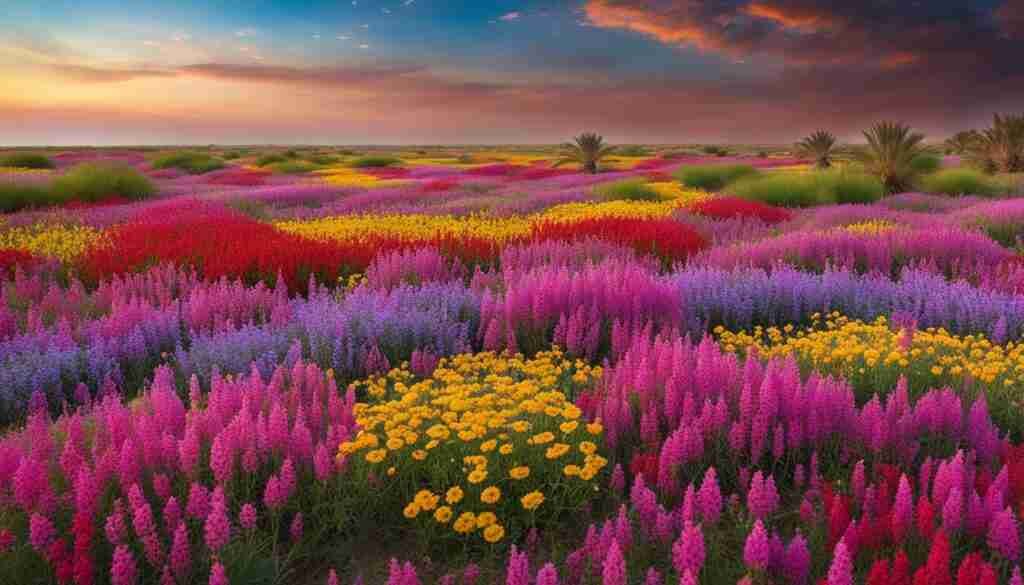
Vegetation in Qatar: Adaptation and Diversity
Despite the sparse vegetation in Qatar’s hamada landscape, there are still native species that have managed to adapt to the harsh conditions.
The Vachellia tortilis, known locally as samr, is a native tree well-adapted to the desert environment and is one of the most common forms of vegetation in the country. Other plants, such as Tetraena qatarensis and Lycium shawii, also grow in this landscape, showcasing the diversity and resilience of Qatar’s flora.
In the hamada landscape, where the availability of water is limited and the soil is rocky and sandy, adaptations are necessary for survival. The Vachellia tortilis, with its long taproot that reaches deep into the ground, can access water in the deeper layers of the soil. Its thorny branches and leaves minimize water loss through transpiration, enabling it to thrive in the arid conditions of Qatar.
Similarly, Tetraena qatarensis has small leaves and a thick waxy cuticle to reduce water loss, while Lycium shawii has succulent leaves that store water for prolonged periods of drought.
The adaptation and diversity of Qatar’s vegetation extend beyond the hamada landscape. In rawdats, or shallow depressions, plant life flourishes due to the accumulation of rainwater run-off.
These areas exhibit a more varied selection of plants compared to the hamada landscape, with species such as Ziziphus nummularia and Cymbopogon parkeri thriving. Additionally, wind-blown soils in the southern part of the peninsula provide a suitable habitat for plants like Panicum turgidum and Vachellia tortilis.
Table: Native Vegetation in Qatar
| Plant Species | Adaptations to Harsh Environment |
|---|---|
| Vachellia tortilis | Long taproot for accessing deep water, thorny branches and leaves to minimize water loss |
| Tetraena qatarensis | Small leaves, thick waxy cuticle to reduce water loss |
| Lycium shawii | Succulent leaves for water storage |
| Ziziphus nummularia | Thrives in rawdats with accumulated rainwater run-off |
| Cymbopogon parkeri | Thrives in rawdats with accumulated rainwater run-off |
| Panicum turgidum | Thrives in wind-blown soils in the southern part of the peninsula |
Qatar’s vegetation is a testament to the adaptability and resilience of plant life in arid environments. The diverse range of native species, each equipped with unique adaptations, showcases nature’s ability to thrive in even the harshest conditions.
By understanding and appreciating the adaptations and diversity of Qatar’s vegetation, we gain a deeper appreciation for the delicate balance of life in the desert and the importance of preserving these fragile ecosystems.
Rawdats: Biodiversity Hotspots in Qatar
Rawdats, or shallow depressions, are areas in Qatar where plants can thrive due to the accumulation of rainwater run-off. These unique habitats provide a haven for a diverse range of plant species, making them biodiversity hotspots in the region. From colorful blossoms to delicate ferns, rawdats showcase the rich floral diversity of Qatar.

The blooming flowers in rawdats vary throughout the year, adding bursts of vibrant colors to the landscape in different seasons.
In the spring, you can witness the beautiful sight of desert marigolds (Ziziphus nummularia) covering the rawdats with their golden-yellow blooms. These hardy flowers are well-adapted to the arid conditions and are known for their ability to withstand extreme temperatures.
Another plant species that thrives in rawdats is the Cymbopogon parkeri, commonly known as the Parker’s grass or desert lemon grass. It is characterized by its fragrant leaves and small spikes of purple flowers.
This grass not only adds aesthetic appeal to the rawdats but also plays a vital role in erosion control, stabilizing the soil and preventing water runoff.
In addition to these species, rawdats also support the growth of other plants like Panicum turgidum, a grass species commonly found in wind-blown soils in the southern part of the peninsula. Vachellia tortilis, a tree species, can also be found in rawdats, contributing to the overall biodiversity of these unique habitats.
Table: Plant Species Found in Rawdats
| Plant Species | Common Name | Characteristics |
|---|---|---|
| Ziziphus nummularia | Desert Marigold | Golden-yellow blooms, extreme temperature tolerance |
| Cymbopogon parkeri | Parker’s Grass | Fragrant leaves, small spikes of purple flowers, erosion control |
| Panicum turgidum | Wind-blown Panic Grass | Grass species, thrives in wind-blown soils in the southern part of the peninsula |
| Vachellia tortilis | Twisted Thorn | Tree species, contributes to overall biodiversity |
Exploring these rawdats allows you to witness the beauty and resilience of Qatar’s wildflowers.
As you stroll through these biodiversity hotspots, you’ll be amazed by the intricate floral displays and the ability of these plants to thrive in challenging desert conditions. The seasonal variations in blooming flowers make each visit a unique experience, offering a glimpse into the ever-changing natural wonders of Qatar.
Natural Areas: Preserving Qatar’s Floral Treasures
Qatar is committed to preserving its natural areas, which serve as crucial habitats for a wide variety of plant species. These protected areas not only provide a sanctuary for native flowers but also play a vital role in conserving Qatar’s floral treasures. By exploring these natural areas, you can immerse yourself in the beauty and biodiversity of Qatar’s wildflowers.
One such natural area is the Al Shahaniyah Park, which boasts stunning landscapes and a diverse range of plant life. From vibrant wildflowers to towering trees, this park offers a captivating glimpse into Qatar’s botanical wonders.
Additionally, the Al Thakira Nature Reserve is another must-visit destination for nature enthusiasts. Here, you can discover a wealth of native flowers, including the beautiful Arnebia hispidissima and Tetraena qatarensis.
Exploring these natural areas not only allows you to witness the splendor of Qatar’s wildflowers but also enables you to contribute to their preservation. By practicing responsible tourism and respecting the delicate ecosystems, you can help ensure that future generations can continue to marvel at the floral diversity of Qatar.
Table: Natural Areas in Qatar
| Location | Main Features |
|---|---|
| Al Shahaniyah Park | Stunning landscapes, diverse range of plant life |
| Al Thakira Nature Reserve | Native flowers, diverse ecosystems |
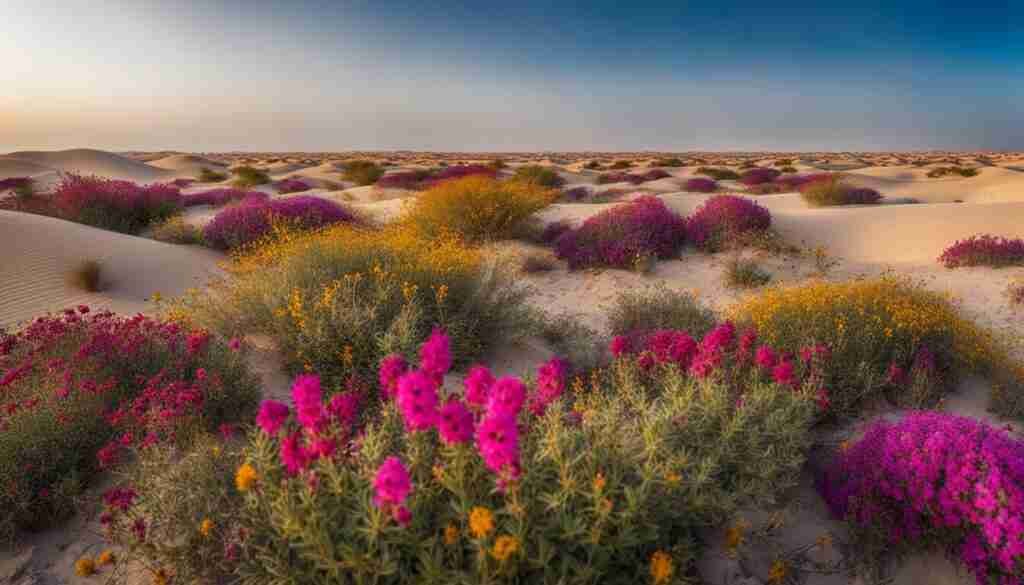
Taxonomy of Qatar’s Flora: Exploring Plant Families
Qatar’s flora is a fascinating tapestry of plant families that contribute to the diverse botanical landscape of the country. From the Psilotopsida class to the Caryophyllales order, each family represents a distinct group of plants with its own unique characteristics.
One remarkable plant species found in Qatar is Ophioglossum polyphyllum. This native plant belongs to the Ophioglossaceae family and is known for its unusual fronds and spore-bearing structures.
Another notable plant is Reichardia tingitana, a member of the Asteraceae family, which features vibrant yellow flowers and is often found in sandy habitats across the country. Additionally, Calligonum comosum, from the Polygonaceae family, stands out with its intricate branch structure and small white flowers.
Exploring the taxonomy of Qatar’s flora allows us to delve deeper into the unique characteristics and adaptations of each plant family. By understanding the diverse range of plant species, we can gain a greater appreciation for the rich botanical heritage of Qatar and the vital role these plants play in the country’s ecosystem.
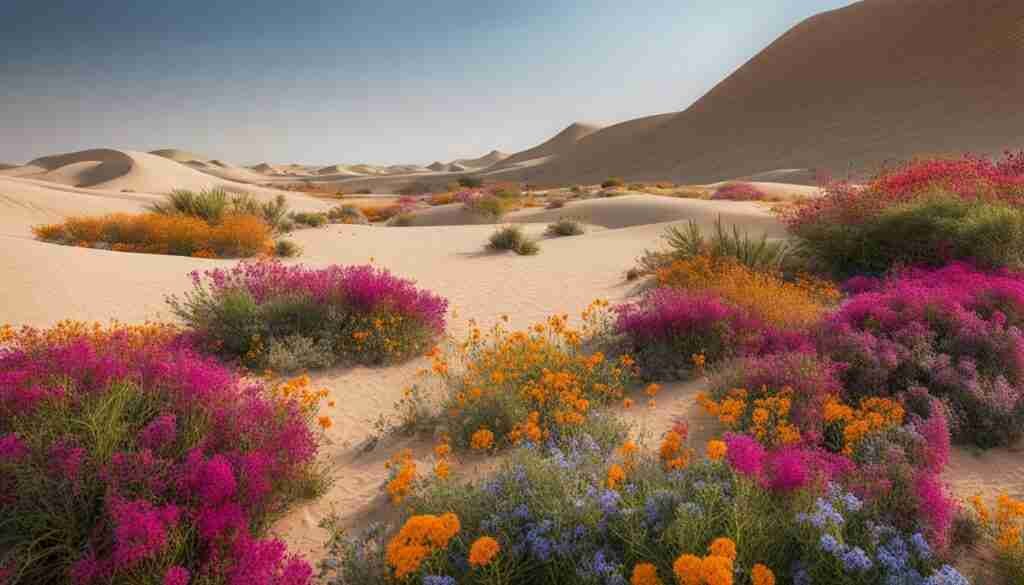
Plant Families in Qatar
| Plant Family | Representative Species |
|---|---|
| Ophioglossaceae | Ophioglossum polyphyllum |
| Asteraceae | Reichardia tingitana |
| Polygonaceae | Calligonum comosum |
Each plant family in Qatar adds its own unique contributions to the country’s botanical diversity. From the fascinating spore-bearing structures of the Ophioglossaceae to the vibrant flowers of the Asteraceae, Qatar’s plant families are a testament to the resilience and beauty of nature.
Qatar’s Wildflowers: A Delicate Balance of Endurance
Qatar’s wildflowers are a testament to the resilience and endurance of life in the desert. Despite the harsh arid conditions, these blooms bring vibrancy and beauty to the peninsula, creating a delicate balance between survival and natural wonder. The blooming flowers in Qatar showcase a diverse range of colors, shapes, and sizes, adding a touch of serenity to an otherwise unforgiving landscape.
The floral diversity of Qatar is truly remarkable, with over 300 species of native plants that have adapted to thrive in the arid environment.
From the vibrant yellow petals of desert marigolds to the delicate lavender blossoms of lavender cotton, each wildflower in Qatar tells a unique story of adaptation and endurance. These blossoms have evolved over time to withstand the scorching heat, scarce water resources, and harsh winds, making them a true symbol of nature’s resilience.
Examples of Qatar’s Native Wildflowers:
- Arnebia hispidissima: Known for its striking yellow flowers, this wildflower blooms in the spring and is often found in sandy areas.
- Silene Arabica: With its hardy daisy-like petals, this wildflower thrives in the rocky terrain of Qatar, adding pops of pink and white to the landscape.
- Tetraena qatarensis: This delicate wildflower boasts small white blossoms and is commonly found along the coastlines, sprinkling the sandy shores with beauty.
Qatar’s wildflowers not only add aesthetic appeal to the desert, but they also play a vital role in the ecosystem. They provide a source of food and shelter for insects, birds, and other wildlife, contributing to the overall biodiversity of the region.
The floral diversity of Qatar is a reminder that life can flourish even in the harshest of environments, and it serves as a source of inspiration for those who appreciate the wonders of the natural world.
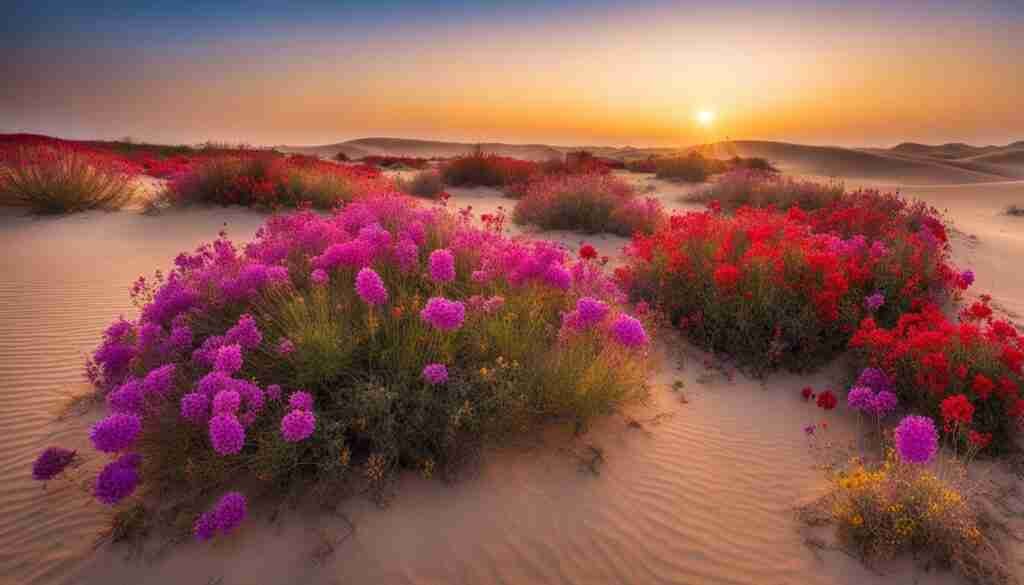
| Native Wildflower | Blooming Season | Common Habitat |
|---|---|---|
| Arnebia hispidissima | Spring | Sandy areas |
| Silene Arabica | Year-round | Rocky terrain |
| Tetraena qatarensis | Winter | Coastlines |
Exploration of Qatar’s Botanical Wonders
Embark on a journey of discovery as you explore the breathtaking botanical wonders of Qatar. From the wind-blown soils of the south to the lush rawdats teeming with plant life, there is an abundance of natural beauty to behold.
Whether you are an avid nature enthusiast, a passionate photographer, or simply someone who appreciates the splendor of blooming flowers, Qatar offers a rich tapestry of flora waiting to be explored.
One of the highlights of exploring Qatar’s botanical wonders is experiencing the diverse flower seasons throughout the year. Each season brings a unique display of native flowers, from the vibrant purple blooms of Lavandula dentata in spring to the delicate white Lepidium virginicum flowers that grace the landscape in summer.
Whether you’re capturing these natural wonders through the lens of your camera or simply basking in their beauty, Qatar’s flower seasons are truly a sight to behold.
| Native Flowers in Qatar | Season |
|---|---|
| Silene Arabica | Winter |
| Lavandula dentata | Spring |
| Phoenix dactylifera | Summer |
| Calligonum comosum | Fall |
As you delve deeper into Qatar’s botanical wonders, you may find yourself enchanted by the task of flower identification. The diverse range of plant species, each with its own unique features and characteristics, presents an exciting challenge for budding botanists.
From the distinctive shape of the Haloxylon salicornicum to the vibrant colors of the Echinops spinosissimus, every flower holds a story waiting to be unraveled. Take the time to observe the intricate details, consult field guides, or seek the expertise of local experts to enhance your flower identification skills.
Immerse yourself in the floral diversity of Qatar and embrace the wonders of nature. Whether you’re exploring during the flower seasons, identifying native flowers, or simply marveling at the breathtaking beauty of Qatar’s botanical treasures, each experience will deepen your connection with the natural world. So grab your camera, pack your curiosity, and embark on an unforgettable journey through Qatar’s botanical wonders.

Qatar’s Floral Heritage: Cherishing Nature’s Gifts
Qatar’s floral heritage is a treasure that should be cherished and protected. The diverse range of plant species in the country contributes to the overall ecological balance and enriches the natural landscape.
From the vibrant wildflowers that dot the desert to the sprawling greenery of protected nature reserves, Qatar’s floral diversity is a testament to the resilience and beauty of nature.
Recognizing and appreciating Qatar’s floral heritage allows us to better understand the importance of conservation and sustainable practices for the preservation of these invaluable gifts from nature.
By promoting awareness and actively participating in conservation efforts, we can ensure the continued existence of Qatar’s unique plant species for generations to come.
Table: Floral Diversity of Qatar
| Plant Family | Common Name | Scientific Name |
|---|---|---|
| Apocynaceae | Desert Rose | Adenium obesum |
| Asteraceae | Arabian Daisy | Silene Arabica |
| Brassicaceae | Wild Mustard | Diplotaxis harra |
| Zygophyllaceae | Hamd | Zygophyllum qatarense |
Exploring Qatar’s botanical wonders and embracing the beauty of its wildflowers is not only a source of inspiration but also a way to connect with the natural world. Whether you’re an avid hiker, a budding photographer, or simply a nature enthusiast, the floral diversity of Qatar offers endless opportunities for discovery and appreciation.
Let us continue to cherish and protect Qatar’s floral heritage, for it is a testament to the power and beauty of nature that deserves our utmost respect and conservation efforts.
Qatar’s Wildflowers: A Source of Inspiration
Qatar’s wildflowers are a true testament to the beauty and resilience of nature. Their vibrant hues and unique forms have the power to captivate and inspire awe. Whether you’re a resident of Qatar or a visitor, taking the time to appreciate and document the beauty of these wildflowers can enhance your connection with nature and foster a deeper appreciation for the natural world.
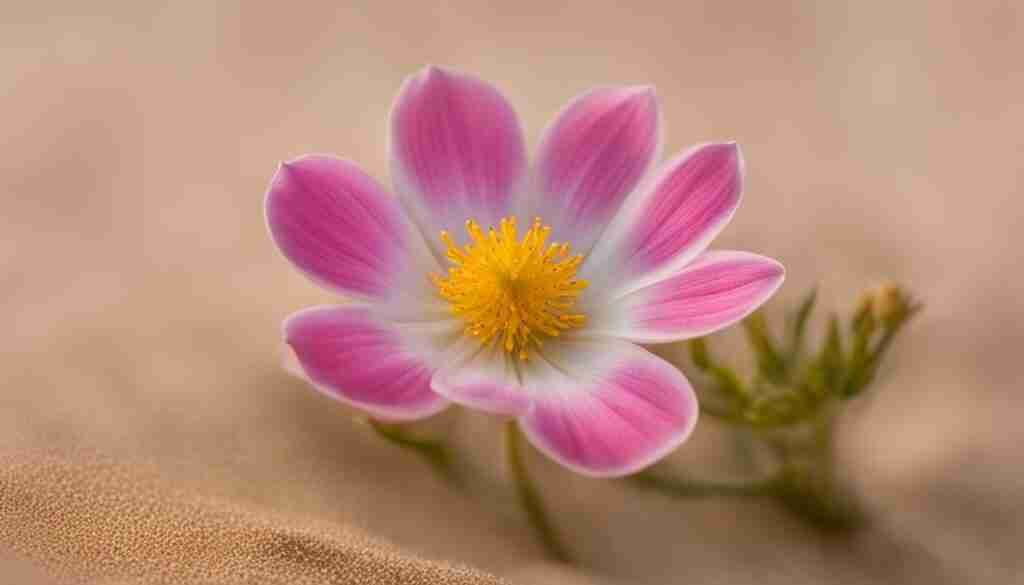
From the delicate blossoms of Tetraena qatarensis to the hardy daisy-like flowers of Silene Arabica, each bloom represents an adaptation to the arid conditions of Qatar’s desert environment. These wildflowers showcase a delicate balance between survival and beauty, creating a harmonious symphony of colors against the backdrop of the desert landscape.
Delighting the Senses
Qatar’s wildflowers not only provide visual beauty but also delight the senses with their fragrances. The sweet aroma of Arnebia hispidissima and the delicate scent of Tetraena qatarensis waft through the desert air, inviting you to pause and soak in the natural wonders surrounding you. These sensory experiences create lasting memories and inspire a deeper connection with the natural world.
Capturing the Essence
Artists and photographers have long been drawn to Qatar’s wildflowers, using their vibrant colors and unique forms as inspiration for their creations. The intricate details of each bloom, from the petals to the intricate patterns, offer endless possibilities for artistic expression.
Capturing the essence of Qatar’s wildflowers through various art forms allows us to preserve their beauty and share it with others, sparking a sense of wonder and appreciation for the natural world.
Embrace the Wonder
Whether you’re strolling through Qatar’s natural areas, exploring the rawdats teeming with blooming flowers, or simply admiring the wildflowers that dot the landscape, take a moment to embrace the wonder of Qatar’s floral treasures. Allow their beauty to inspire you, to awaken your senses, and to foster a greater appreciation for the intricate and delicate balance of nature.
| Flower | Scientific Name | Characteristics |
|---|---|---|
| Silene Arabica | Silene arabica | Hardy daisy-like flowers, vibrant pink petals |
| Tetraena qatarensis | Tetraena qatarensis | Delicate blossoms, aromatic scent |
| Arnebia hispidissima | Arnebia hispidissima | Yellow flowers, sweet fragrance |
| Ophioglossum polyphyllum | Ophioglossum polyphyllum | Unique fern-like foliage |
Conservation Efforts: Preserving Qatar’s Floral Diversity
Preserving the diverse floral heritage of Qatar is a crucial undertaking. As the country’s natural landscapes face increasing pressures, organizations and initiatives have emerged to protect and conserve the botanical beauty that Qatar offers. These efforts aim to safeguard the delicate balance of Qatar’s wildflowers and ensure their survival for future generations.
The Importance of Conservation
Conservation plays a vital role in maintaining the floral diversity of Qatar. By protecting natural areas and promoting sustainable practices, conservation efforts help preserve the habitats where wildflowers thrive.
These initiatives foster the conservation of native plant species and contribute to maintaining the overall ecological balance of Qatar’s natural landscape.
Additionally, conservation efforts raise awareness about the importance of preserving Qatar’s floral diversity. Through education and engagement, individuals and communities are encouraged to appreciate and understand the significance of native flowers in the country’s ecosystem.
By recognizing their value, more people are motivated to actively participate in conservation activities and support the long-term preservation of Qatar’s botanical treasures.
Initiatives and Collaborations
A number of organizations in Qatar are dedicated to preserving the floral diversity of the country. The Qatar National Forestry Department, for example, focuses on protecting native plant species and their habitats through conservation projects and awareness campaigns.
The Qatar Foundation’s Environmental Sustainability Department collaborates with various stakeholders to promote sustainable practices and raise awareness about the importance of preserving Qatar’s botanical beauty.
Collaborations between governmental bodies, research institutions, and community-based organizations further enhance conservation efforts. By pooling resources and expertise, these collaborations ensure a holistic approach to preserving Qatar’s floral diversity. Through research, monitoring, and the implementation of conservation strategies, these initiatives aim to create a sustainable future for Qatar’s wildflowers.
| Conservation Organizations | Mission |
|---|---|
| Qatar National Forestry Department | Protect native plant species and their habitats through conservation projects and awareness campaigns. |
| Qatar Foundation’s Environmental Sustainability Department | Collaborate with stakeholders to promote sustainable practices and raise awareness about the importance of preserving Qatar’s botanical beauty. |
By supporting these organizations and initiatives, individuals can contribute to the preservation of Qatar’s floral diversity. Whether through volunteering, participating in awareness campaigns, or adopting sustainable practices in everyday life, everyone has a role to play in ensuring the survival of Qatar’s wildflowers.
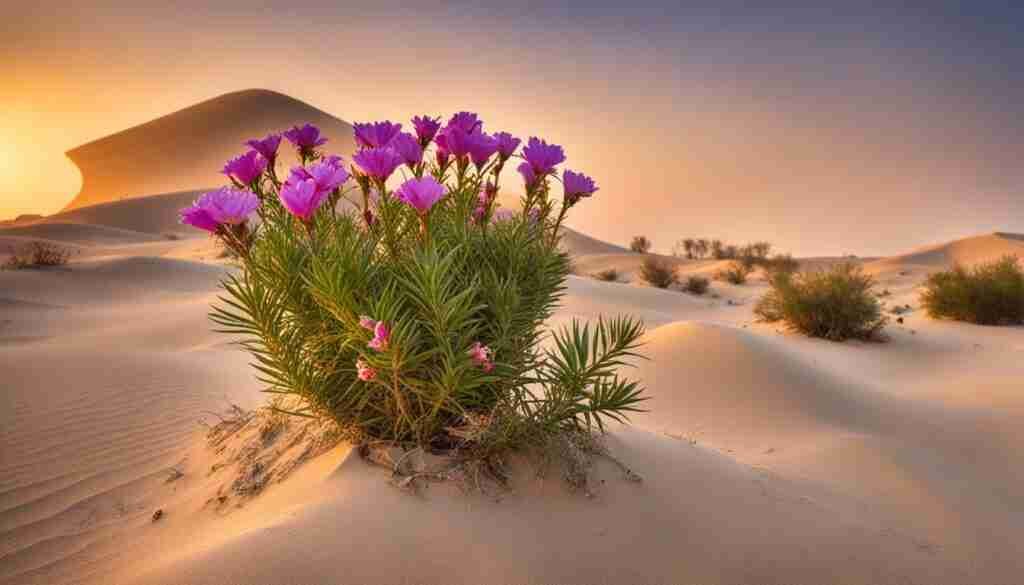
Conclusion
Qatar Wildflowers have proven to be resilient and stunning in their ability to thrive in the challenging desert environment. The floral diversity of Qatar is a testament to the beauty and adaptability of nature.
By exploring and appreciating the native flowers of Qatar, we can deepen our connection with the natural world and gain a greater understanding of the delicate balance between survival and beauty.
Preserving Qatar’s botanical treasures is essential for maintaining the ecological balance and ensuring the long-term survival of these precious wildflowers. Conservation efforts and sustainable practices play a vital role in safeguarding the floral diversity of Qatar.
By actively participating in these initiatives and supporting organizations dedicated to preserving the country’s botanical beauty, we can contribute to the legacy of Qatar’s wildflowers for future generations to enjoy.
Let the vibrancy and resilience of Qatar’s wildflowers inspire you to embrace the wonders of the natural world. Take the time to explore the floral diversity, understanding the unique adaptations of its plant species.
By doing so, you can foster a deeper appreciation for the beauty and complexity of Qatar’s wildflower ecosystem. Let us cherish and protect Qatar’s floral heritage, ensuring that these invaluable gifts from nature continue to enchant and inspire us for years to come.
FAQ
What is the floral diversity like in Qatar?
Qatar is home to over 300 species of native plants, showcasing a diverse array of wildflowers.
How do plants adapt to the desert environment in Qatar?
Plants in Qatar have evolved unique adaptations to survive in the arid conditions, such as deep root systems and water storage mechanisms.
Where can I find blooming flowers in Qatar?
Rawdats, or shallow depressions, are areas that feature a more varied selection of plants and provide a haven for blooming flowers throughout the different seasons in Qatar.
Are there any protected areas in Qatar for native flowers?
Yes, Qatar has several protected areas such as Al Shahaniyah Park and Al Thakira Nature Reserve that serve as important habitats for various plant species, including native flowers.
How can I identify different plant species in Qatar?
There are resources available, such as field guides and online databases, that can help you identify different plant species in Qatar.
What can I do to contribute to the conservation of Qatar’s wildflowers?
Supporting conservation initiatives, practicing responsible environmental stewardship, and raising awareness about the importance of preserving Qatar’s botanical beauty are all ways to contribute to the conservation of wildflowers in Qatar.
Are there any organizations dedicated to preserving Qatar’s floral diversity?
Yes, there are various organizations and initiatives in Qatar that are dedicated to protecting natural areas, promoting sustainable practices, and raising awareness about the importance of preserving Qatar’s floral diversity.
How can I get inspired by Qatar’s wildflowers?
Qatar’s wildflowers have long been a source of inspiration for artists, photographers, and nature enthusiasts. Immersing yourself in their vibrant hues and unique forms can help you connect with nature and foster a deeper appreciation for the natural world.
Where can I explore Qatar’s botanical wonders?
From the wind-blown soils in the south to the rawdats teeming with plant life, there are various natural areas in Qatar where you can explore the botanical wonders of the country.
Why is it important to preserve Qatar’s floral heritage?
Qatar’s floral heritage contributes to the overall ecological balance, enriches the natural landscape, and serves as a testament to the resilience and beauty of nature. Preserving it allows future generations to enjoy and appreciate these invaluable gifts from nature.