
The national flower of Chile, known as the Chilean bellflower or copihue, holds great meaning and symbolism in Chilean culture. This vibrant, bright pink flower is native to Chile and represents the country’s identity and cultural heritage.
The Chilean bellflower, which is the only species in the lapageria genus, thrives in the Valdivian temperate rainforests of Southern Chile. Unfortunately, its rarity has increased due to deforestation and excessive collection.
Blooming in the summer and fall, this flower has a long flowering season and takes up to ten years for its first blooms to appear.
The name copihue originates from the indigenous Mapuche language and translates to “to be mouth down,” reflecting its unique physical appearance. The Chilean bellflower showcases its evergreen climbing nature and mesmerizes with its stunning bell-shaped flowers.
These flowers feature deep pink or red exteriors with intricate white speckling on the inside. Hummingbirds play a crucial role in the pollination process of the Chilean bellflower, adding to its ecological importance.
Not only is the Chilean bellflower significant in Chilean culture, but it is also used to decorate bars and celebrations during the country’s independence festivities. Its rich symbolism extends beyond Chile, as the plant is cultivated in other parts of the world, such as the UK and France.
Key Takeaways:
- The national flower of Chile is the Chilean bellflower or copihue.
- The Chilean bellflower symbolizes Chilean culture and identity.
- It is the only species in the lapageria genus.
- The flower grows in the Valdivian temperate rainforests of Southern Chile.
- Deforestation and excessive collection have made the Chilean bellflower rare.
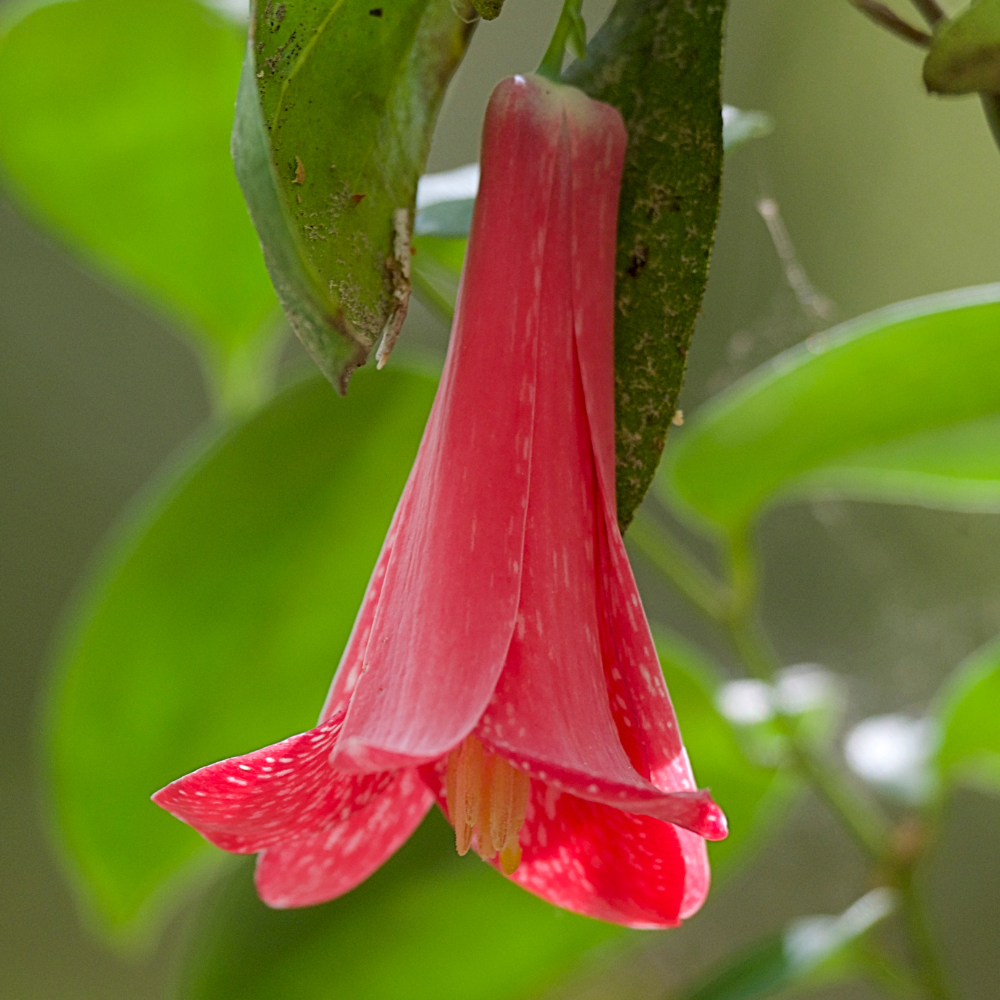
The Vibrant Chilean Bellflower
The Chilean bellflower, also known as copihue, is a vibrant and unique flower that has been designated as the national flower of Chile. This stunning flower is known for its vibrant pink color and bell-shaped petals, which make it a truly eye-catching sight in the Valdivian temperate rainforests of Southern Chile.
The Chilean bellflower is the only species in the lapageria genus, making it a truly special and distinct flower. Its bright pink petals are often speckled with white, creating a beautiful contrast that adds to its allure.
As an evergreen climbing plant, the Chilean bellflower displays its blossoms in the summer and fall, adding a burst of color to the forest landscape.
Not only is the Chilean bellflower visually striking, but it also holds deep cultural significance for Chile. The flower represents the country’s rich biodiversity and indigenous culture, with its name, copihue, derived from the Mapuche language meaning “to be mouth down.”
During Chile’s independence festivities, decorative plastic bellflowers are used to adorn bars and celebrations, further highlighting the cultural importance of this national symbol.
| Key Features | Information |
|---|---|
| Scientific Name | Lapageria rosea |
| Habitat | Valdivian temperate rainforests of Southern Chile |
| Blooming Season | Summer and fall |
| Growth Cycle | Up to 10 years for the first blooms to appear |
| Pollinators | Hummingbirds |
Symbolism of the Chilean Bellflower
The Chilean bellflower carries deep symbolic meaning, representing the rich cultural heritage, biodiversity, and national identity of Chile. The vibrant pink color of the flower is seen as a reflection of the country’s passionate spirit and vibrant culture.
It is a symbol of resilience and endurance, as the Chilean bellflower thrives in the Valdivian temperate rainforests despite the challenges it faces from deforestation and over-collection.
The Chilean bellflower also symbolizes the country’s diverse and unique biodiversity. Its evergreen climbing nature represents growth, adaptability, and the ability to rise above adversity. The bell-shaped flowers, with their deep pink or red exterior and white speckling on the inside, represent the blending of beauty and strength.
Chilean Bellflower Symbolism in Mapuche Culture
In Mapuche culture, the indigenous people of Chile, the Chilean bellflower holds significant symbolic value. The name “copihue,” derived from the Mapuche language, means “to be mouth down.”
This name reflects the belief that the flower is a messenger between the earthly and spiritual realms, connecting humans with nature and the divine. The Mapuche people consider the Chilean bellflower a sacred symbol of fertility, protection, and harmony.
The Chilean bellflower also has cultural significance in Chilean celebrations and traditions. During the country’s independence festivities, plastic bellflowers are used to decorate bars and venues, symbolizing national pride and unity.
The presence of the Chilean bellflower in these celebrations showcases its importance as a symbol of Chilean identity and cultural heritage.
| Symbolism of the Chilean Bellflower | Symbols |
|---|---|
| Passionate spirit and vibrant culture | Vibrant pink color |
| Resilience and endurance | Thrives despite challenges |
| Growth, adaptability, and strength | Evergreen climbing nature and bell-shaped flowers |
| Connection between earthly and spiritual realms | Mapuche culture |
| Sacred symbol of fertility, protection, and harmony | Mapuche belief |
| Representation of Chilean identity and cultural heritage | Used in national celebrations |
In conclusion, the Chilean bellflower, with its deep symbolic meaning and cultural significance, embodies the essence of Chile. It represents the country’s rich cultural heritage, biodiversity, and national identity, making it a cherished national flower.
As efforts continue to protect and preserve the Chilean bellflower and its habitat, it serves as a reminder of the importance of valuing and preserving our natural and cultural treasures.
Native Habitat and Rarity
The Chilean bellflower is native to the Valdivian temperate rainforests of Southern Chile but has become increasingly rare due to deforestation and over-collection. This unique flower thrives in the lush, cool climate of the rainforest, where it finds the perfect conditions to grow and bloom.
The Valdivian temperate rainforests are known for their rich biodiversity, and the Chilean bellflower is one of the many species that call this habitat home. However, human activities such as logging and land clearance for agriculture have significantly reduced the natural habitat of this beautiful flower, making it a rare sight to behold.
In addition to habitat loss, the Chilean bellflower is also at risk due to excessive collection. Its striking beauty and cultural significance have made it a sought-after plant, both within Chile and internationally. This has put further pressure on its already dwindling population, contributing to its rarity.
The Importance of Conservation Efforts
Recognizing the importance of preserving this national treasure, efforts have been made to protect and conserve the Chilean bellflower. Various organizations and conservation groups are working tirelessly to raise awareness about the flower’s conservation status and to implement measures to safeguard its future.
Conservation initiatives focus on habitat restoration, reforestation, and raising awareness among local communities and visitors about the importance of preserving the natural environment.
By promoting sustainable practices and responsible tourism, these efforts aim to strike a balance between human activities and the preservation of the Chilean bellflower’s native habitat.
| Threats to the Chilean Bellflower | |
|---|---|
| 1 | Deforestation |
| 2 | Over-collection |
Through these collective efforts, there is hope that the Chilean bellflower will once again thrive in its natural habitat, ensuring its survival for future generations to admire and cherish.
Blooming and Growth Cycle
The Chilean bellflower blooms in the summer and fall, with its long flowering season bringing vibrant colors to the Chilean landscape. This beautiful flower can be seen adorning the Valdivian temperate rainforests of Southern Chile, adding a touch of elegance to its natural surroundings.
It takes time for the Chilean bellflower to reach its full potential. From the moment the seeds are planted, it can take up to ten years for the first blooms to appear on a mature plant. This slow growth cycle emphasizes the delicate nature of this exquisite flower and adds to its allure.
Once the Chilean bellflower begins to bloom, its bell-shaped flowers captivate with their deep pink or red exterior and intricate white speckling on the inside. This unique combination of colors makes the bellflower a true standout in the floral world, reflecting the rich biodiversity of Chile itself.
The Resilience of the Chilean Bellflower
Despite facing challenges such as deforestation and over-collection, the Chilean bellflower continues to bloom, always persevering and adapting to its environment. Its evergreen climbing nature allows it to thrive in the Valdivian temperate rainforests, symbolizing the resilience and strength of the Chilean people and their culture.
As the bellflower blooms, it attracts a special visitor—the hummingbird. These tiny creatures play a vital role in pollinating the Chilean bellflower, ensuring its continued existence and guaranteeing the next generation of vibrant blooms. The delicate dance between flower and bird is a testament to the interconnectedness of nature.
| Blooming Season | Flower Appearance | Pollination |
|---|---|---|
| Summer and Fall | Bell-shaped flowers with deep pink or red exterior and white speckling on the inside | Hummingbirds |
With its long-lasting blooms, the Chilean bellflower brings a sense of joy and vitality to the Chilean landscape. This vibrant flower serves as a reminder of the country’s rich biodiversity and indigenous culture, making it an essential symbol of Chilean identity.
Indigenous Meaning and Name Origin
The Chilean bellflower holds special indigenous meaning, and its name, copihue, originates from the Mapuche language, meaning “to be mouth down.” This name reflects the unique shape of the flower, in which the bell-shaped blooms hang gracefully downward.
In Mapuche culture, the copihue is considered a symbol of beauty, grace, and spiritual connection to nature. It is believed to possess healing properties and is often associated with ceremonies and rituals. The indigenous people of Chile hold the copihue in high regard, considering it a sacred flower that represents the deep connection between humans and the natural world.
Significance in Mapuche Culture
- The copihue’s downward-facing blooms are seen as a sign of humility, reminding individuals to remain grounded and connected to their roots.
- The flower is believed to bring good luck and protection against negative energies.
- It is also associated with fertility, love, and the cycle of life.
The copihue’s significance in Mapuche culture extends beyond its physical beauty, as it represents the spiritual essence of the land and the indigenous people who have relied on nature for centuries.
Unique Features and Pollination
The Chilean bellflower is known for its evergreen climbing nature and distinctive bell-shaped flowers, which showcase deep pink or red hues on the outside and white speckling on the inside.
It is pollinated by hummingbirds, adding to its allure. The long, tubular flowers of the Chilean bellflower are perfectly adapted for hummingbird pollination, with their curved shape and nectar-filled base. As the hummingbirds feed on the nectar, they inadvertently transfer pollen from one flower to another, aiding in the plant’s reproduction.
Another unique feature of the Chilean bellflower is its intricate floral structure. The petals of the flower curve inward, forming a cup-like shape that gives it the appearance of a delicate bell. The vibrant colors and intricate patterns of the petals make the Chilean bellflower a visually striking plant, attracting both human admirers and its main pollinator, the hummingbird.
Table: Key Features of the Chilean Bellflower
| Feature | Description |
|---|---|
| Flower color | Deep pink or red on the outside with white speckling on the inside |
| Flower shape | Bell-shaped with curved petals that form a cup-like structure |
| Pollinator | Hummingbirds |
| Flowering season | Summer and fall |
| Growth habit | Evergreen climber |
The unique features and pollination mechanism of the Chilean bellflower contribute to its immense beauty and ecological significance. Not only does it showcase stunning colors and patterns, but it also plays a vital role in the ecosystem by providing a nectar source for hummingbirds and supporting biodiversity in the Valdivian rainforests of Southern Chile.
Cultural Significance and Celebrations
The Chilean bellflower holds immense cultural significance in Chile and is often used to adorn celebrations and bars during the country’s independence festivities. This vibrant flower, with its stunning bell-shaped petals and deep pink or red coloring, is a symbol of Chilean national pride and identity.
During the month of September, Chileans celebrate their independence with colorful parades, music, and traditional dances. The Chilean bellflower, also known as the copihue, plays a significant role in these festivities.
Plastic replicas of the flower are commonly used to decorate bars, street parties, and public spaces, creating a festive and patriotic atmosphere.
The use of the Chilean bellflower in these celebrations is a way to honor the country’s rich biodiversity and indigenous heritage. As the national flower, it represents the unique and diverse natural landscapes found throughout Chile, from the lush temperate rainforests to the scenic coastal regions.
The Importance of the Chilean Bellflower
Besides its role in national celebrations, the Chilean bellflower is cherished for its beauty and resilience. This evergreen climbing plant features delicate flowers that stand out against dark green foliage, creating a captivating display.
Its bell-shaped blooms, with white speckling on the inside, are not only visually striking but also attract the attention of hummingbirds, which play an essential role in pollination.
While the Chilean bellflower is native to Chile, it has also found a home in other parts of the world. In countries such as the United Kingdom and France, enthusiasts cultivate this flower for its ornamental value and symbolic connection to Chilean culture.
| Key Facts | |
|---|---|
| Scientific Name: | Lapageria rosea |
| Blooming Season: | Summer and Fall |
| Origin: | Valdivian temperate rainforests of Southern Chile |
| Symbolism: | Chilean identity, cultural pride, biodiversity |
| Significance: | Decorative element in Chilean independence festivities |
Overall, the Chilean bellflower represents the deep-rooted connection between the people of Chile and their natural surroundings. It serves as a reminder of the country’s rich cultural heritage and the importance of preserving its unique ecosystem for generations to come.
Global Presence and Cultivation
The popularity of the Chilean bellflower extends beyond the borders of Chile, as it can be found in cultivation in various parts of the world, including the UK and France. This vibrant and captivating flower has captured the hearts of plant enthusiasts and gardeners worldwide, who appreciate its unique beauty and cultural significance.
In the United Kingdom, the Chilean bellflower is cherished for its striking appearance and long-lasting blooms. It thrives in temperate climates and is often grown in gardens and conservatories.
Its ability to adapt to different environments has made it a favorite among horticulturists, who value its resilience and delicate charm.
Similarly, in France, the Chilean bellflower has gained popularity for its exceptional qualities. French gardeners admire its graceful climbing nature and breathtaking bell-shaped flowers. It adds a touch of elegance to gardens and creates a captivating display of color and texture.
| Country | Details |
|---|---|
| United Kingdom | Grown in gardens and conservatories. |
| France | Valued for its climbing nature and stunning flowers. |
These international cultivations of the Chilean bellflower contribute to its global presence and emphasize its enduring appeal. It serves as a reminder of the rich biodiversity and cultural heritage that this flower represents, transcending national boundaries and captivating people from all walks of life.
Conclusion
The Chilean bellflower, as the national flower of Chile, represents the country’s rich biodiversity, cultural heritage, and indigenous roots, making it an integral part of Chilean identity.
This vibrant and stunning pink flower, also known as copihue, can be found in the Valdivian temperate rainforests of Southern Chile. However, due to deforestation and excessive collection, it has become a rare sight in its native habitat.
Blooming in the summer and fall, the Chilean bellflower showcases its beauty for an extended period. It takes up to ten years for the first blooms to appear on a single plant, emphasizing the patience and resilience required for its growth.
The name copihue, derived from the indigenous Mapuche language, reflects the bell-shaped flower’s unique appearance, which is deep pink or red on the outside and adorned with white speckling on the inside.
Not only is the Chilean bellflower visually captivating, but it is also ecologically important. Hummingbirds play a vital role in its pollination, further showcasing the interconnectedness of Chile’s diverse fauna and flora.
The flower’s symbolic significance extends beyond its natural habitat, as it is used to adorn bars and celebrations during Chile’s independence festivities. Moreover, the Chilean bellflower has gained popularity beyond Chile’s borders and can now be found cultivated in countries like the UK and France.
The Chilean bellflower stands as a testament to Chilean pride and heritage. Its rarity, coupled with its indigenous meaning and cultural significance, makes it a cherished national symbol.
As we appreciate the beauty of this flower, we are reminded of the importance of preserving the rich biodiversity and indigenous culture that it represents. The Chilean bellflower truly encapsulates the essence of Chilean identity and serves as a visual reminder of the country’s natural wonders.
FAQ
Q: What is the national flower of Chile?
A: The national flower of Chile is the Chilean bellflower or copihue.
Q: What does the Chilean bellflower symbolize?
A: The Chilean bellflower is an important symbol of Chilean identity and represents the country’s rich biodiversity and indigenous culture.
Q: Where is the Chilean bellflower native to?
A: The Chilean bellflower is native to Chile and grows in the Valdivian temperate rainforests of Southern Chile.
Q: Why has the Chilean bellflower become rare?
A: The Chilean bellflower has become rare due to forest clearance and over-collection.
Q: When does the Chilean bellflower bloom?
A: The Chilean bellflower blooms in the summer and fall and has a long flowering season.
Q: How long does it take for the first blooms to appear on a Chilean bellflower plant?
A: It takes up to ten years for the first blooms to appear on a Chilean bellflower plant.
Q: What does the name “copihue” mean?
A: The name “copihue” comes from the indigenous Mapuche language and means “to be mouth down.”
Q: What are the unique features of the Chilean bellflower?
A: The Chilean bellflower is known for its evergreen climbing nature and stunning bell-shaped flowers, which are deep pink or red on the outside and have white speckling on the inside.
Q: How is the Chilean bellflower pollinated?
A: The Chilean bellflower is pollinated by hummingbirds.
Q: How is the Chilean bellflower used in celebrations?
A: Plastic bellflowers are used to decorate bars and celebrations during Chile’s independence festivities.
Q: Where else is the Chilean bellflower grown?
A: The Chilean bellflower is also grown in other parts of the world, including the UK and France.