
Experience the awe-inspiring spectacle of Chile’s wildflowers, as nature puts on a breathtaking display of colors and fragrances. From the arid landscapes of the Atacama Desert to the lush forests of the south, Chile is a haven for botanical wonders waiting to be explored.
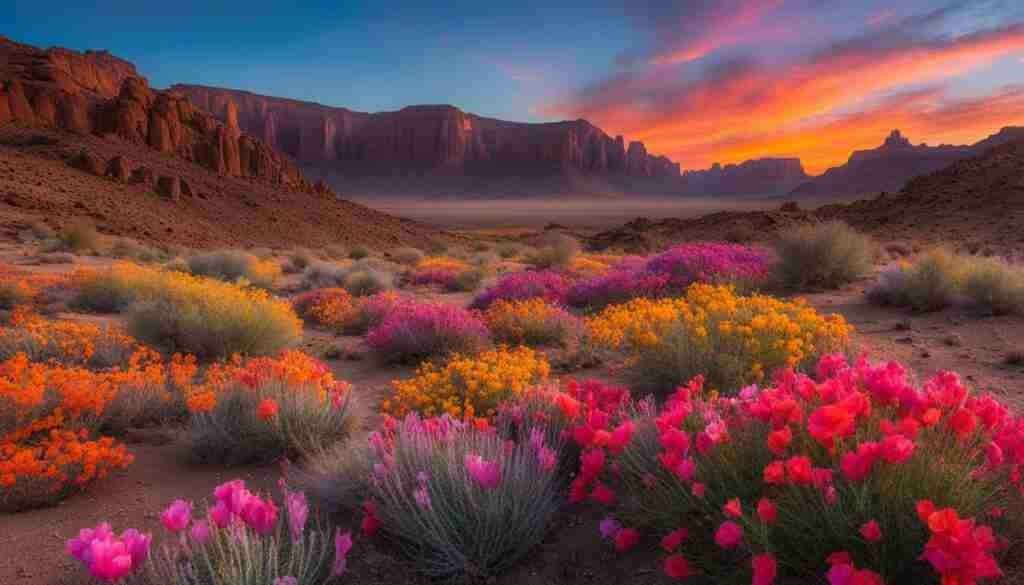
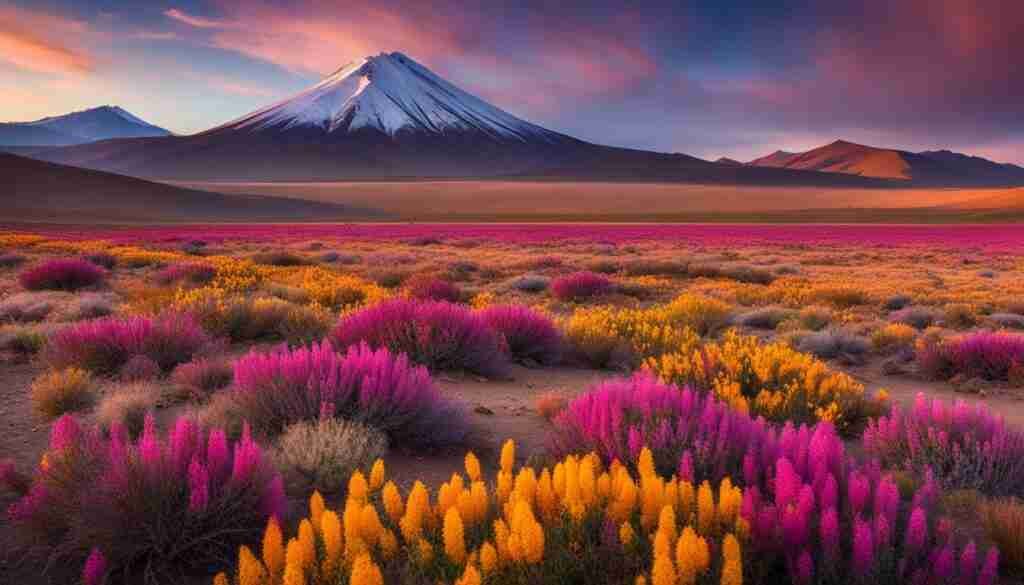
Uncover the hidden treasures of the Atacama Desert, where rare superblooms of red, magenta, and marigold wildflowers transform the barren landscape into a floral oasis. These vibrant blooms, occurring once every few years, captivate the senses and create stunning vistas against the backdrop of the world’s driest nonpolar desert.
But the beauty of Chile’s wildflowers extends beyond their visual appeal. These delicate blooms also offer a window into the potential for life beyond Earth, as scientists study the highly adaptable microorganisms that inhabit the hyper-arid core of the Atacama. Their survival strategies in extreme environments provide valuable insights into the possibility of extraterrestrial life.
Join us in celebrating Chile’s floral treasures and the efforts to protect them. From the establishment of the Desierto Florido national park to ongoing conservation initiatives, Chile is committed to preserving its diverse flora and ensuring its survival for future generations.
Immerse yourself in the diverse landscapes of Chile, from the coastal regions to the southern forests, and discover the unique plant species that call this country home. By exploring Chile’s wildflowers, you not only support conservation efforts but also have the opportunity to experience the wonders of nature and promote sustainable tourism in the region.
Key Takeaways:
- Chile is home to diverse and vibrant wildflowers, offering a visual feast for nature enthusiasts.
- The Atacama Desert showcases rare superblooms, transforming the barren landscape into a floral oasis.
- The Atacama’s microorganisms provide valuable insights into the potential for life beyond Earth.
- Conservation efforts in Chile aim to protect endangered plant species and preserve the country’s rich biodiversity.
- Exploring Chile’s wildflowers supports conservation and promotes sustainable tourism.
The Atacama Desert: A Flowering Oasis
The Atacama Desert, known as the world’s driest nonpolar desert, is a mesmerizing landscape that experiences occasional superblooms of wildflowers. These blooms, which occur every three to 10 years, transform the barren desert into a vibrant oasis of color. The sight of red, magenta, and marigold wildflowers stretching across the arid landscape is truly awe-inspiring.
Despite its extreme dryness, the Atacama Desert is teeming with life during these blooming periods. Microorganisms, insects, and birds rely on these wildflowers for food and habitat, contributing to the desert’s unique ecosystem. It’s a testament to the resilience and adaptability of life in even the harshest environments.
These superblooms not only provide a stunning contrast to the desert’s usual desolate appearance but also offer breathtaking vistas and captivating landscapes. Photographers and nature enthusiasts flock to the Atacama to witness this extraordinary sight and immerse themselves in the beauty of nature’s ability to thrive in unexpected places.
Table: Floral Highlights of the Atacama Desert
| Wildflower | Color | Blooming Period |
|---|---|---|
| Puya raimondii | Greenish-yellow | November to January |
| Garra de León | Yellow | October to November |
| Leucocoryne coquimbensis | White, pink, purple | September to November |
Visiting the Atacama Desert during a superbloom allows you to witness the resilience and beauty of nature firsthand. It’s a testament to the wonders of our planet and a reminder of the importance of preserving and protecting these delicate ecosystems for generations to come.
A Window into Life Beyond Earth
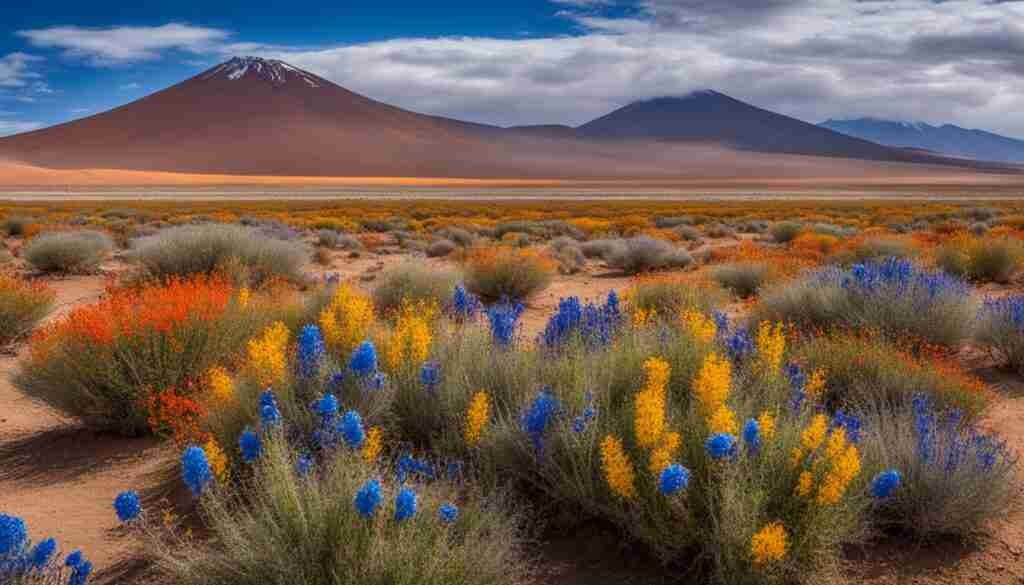
The hyper-arid core of the Atacama Desert in Chile provides a unique and valuable window into the study of life beyond Earth.
The extreme conditions found in this desert, including its minimal rainfall and high levels of UV radiation, mimic the harsh environments found on other planets like Mars. As a result, astrobiologists and researchers are using the Atacama Desert as a testing ground to understand the potential for extraterrestrial life.
Microorganisms in the Atacama Desert
One of the key areas of research in the Atacama Desert is the study of microorganisms. Despite the seemingly inhospitable conditions, scientists have discovered a diverse range of microbial life thriving in the hyper-arid environment.
These microorganisms have adapted to survive in extreme conditions, such as extreme temperatures, low water availability, and high levels of salt. Studying these microorganisms provides valuable insights into the survival strategies of life in harsh environments and offers clues about the potential for life on other planets.
The Atacama Desert microorganisms have become of particular interest to NASA and other space agencies due to their similarities to the conditions on Mars.
By studying how these microorganisms survive in the Atacama, researchers can gain a better understanding of the potential for life on Mars and other extraterrestrial environments. The findings from these studies help inform the exploration of Mars and contribute to our understanding of the possibility of extraterrestrial life.
Overall, the Atacama Desert in Chile offers a unique opportunity for scientists to study life beyond Earth.
The hyper-arid conditions and the presence of microorganisms provide valuable insights into the potential for extraterrestrial life and contribute to our understanding of how life can adapt and survive in extreme environments. Continued research in the Atacama is crucial for unlocking the mysteries of the universe and expanding our knowledge of life beyond our planet.
Protecting Chile’s Floral Treasures
Chile is known for its diverse and unique flora and fauna, with many species found only within its borders. However, the Atacama region, home to some of Chile’s most endangered plants, has not received as much conservation attention as other areas in the country. That is why a dedicated group of Atacama conservationists is working tirelessly to protect Chile’s floral treasures and ensure their long-term survival.
Endangered Chilean Plants
The Atacama region is home to several endangered plant species, including the Larch and Araucaria. These species face the threat of extinction due to deforestation and human activities. The slow growth and exceptional quality of these plants make them particularly vulnerable. Without immediate intervention, we risk losing these unique and valuable species forever.
To address this pressing issue, Atacama conservationists are collaborating with local communities, government agencies, and environmental organizations to establish protected areas and national parks. These efforts aim to safeguard the endangered plant species and restore their natural habitats. By creating these protected spaces, we can ensure the survival of Chile’s valuable floral biodiversity for future generations.
The Role of Atacama Conservationists
Atacama conservationists play a vital role in advocating for the protection of Chile’s floral treasures. Their work involves raising awareness about the importance of preserving endangered plant species and the unique ecosystems they support. By organizing educational campaigns, community initiatives, and research programs, these dedicated individuals are making significant strides in conservation efforts.
| Threats to Chile’s Floral Treasures | Conservation Efforts |
|---|---|
| Deforestation | Establishment of protected areas and national parks |
| Human activities | Collaboration with local communities, government agencies, and environmental organizations |
| Loss of natural habitats | Restoration programs and reforestation efforts |
Through their dedication and hard work, Atacama conservationists are not only protecting Chile’s floral treasures but also ensuring the preservation of the unique ecosystems and biodiversity that these plants support.
Their efforts are essential in maintaining the delicate balance of nature and promoting sustainable practices for the benefit of future generations. Together, we can support these conservation initiatives and contribute to the long-term survival of Chile’s incredible flora and fauna.
Flora of Chile: From Coast to Austral
Chile’s diverse geography gives rise to a rich tapestry of flora, with distinct vegetation patterns varying across the country. From the arid Northern coast to the lush forests of the Austral region, Chile’s flora showcases a remarkable range of species adapted to different climates and ecosystems.
In the Northern coast, where vegetation is scarce, cacti dominate the landscape, flourishing in the desert’s harsh conditions. Moving towards the Central area, increased humidity supports the growth of shrubs and trees, creating a greener environment. Here, you’ll find native species like the Chilean Wine Palm, Chilean Mistletoe, and Chilean Palm.
As you venture further south to the Austral area, you’ll encounter a majestic display of trees that dominate the landscape. Oak, Coigüe, Hazelnut, Canelo, Araucaria, and Larch are just a few examples of the impressive tree species found in this region. These trees not only provide habitat for a diverse array of wildlife but also contribute to the scenic beauty of Chile’s southern forests.
Table: Chilean Flora by Region
| Region | Characteristic Flora |
|---|---|
| Northern Coast | Cacti, Chilean Wine Palm, Chilean Mistletoe, Chilean Palm |
| Central Area | Shrubs, Trees (Chilean Wine Palm, Chilean Mistletoe, Chilean Palm) |
| Austral Area | Oak, Coigüe, Hazelnut, Canelo, Araucaria, Larch |
Chile’s flora is characterized by an abundance of species found exclusively within its borders, making it a unique and valuable treasure. The country’s geographical diversity gives rise to an extraordinary botanical heritage, attracting nature enthusiasts from around the world to explore and admire its natural wonders.
Endangered Chilean Species
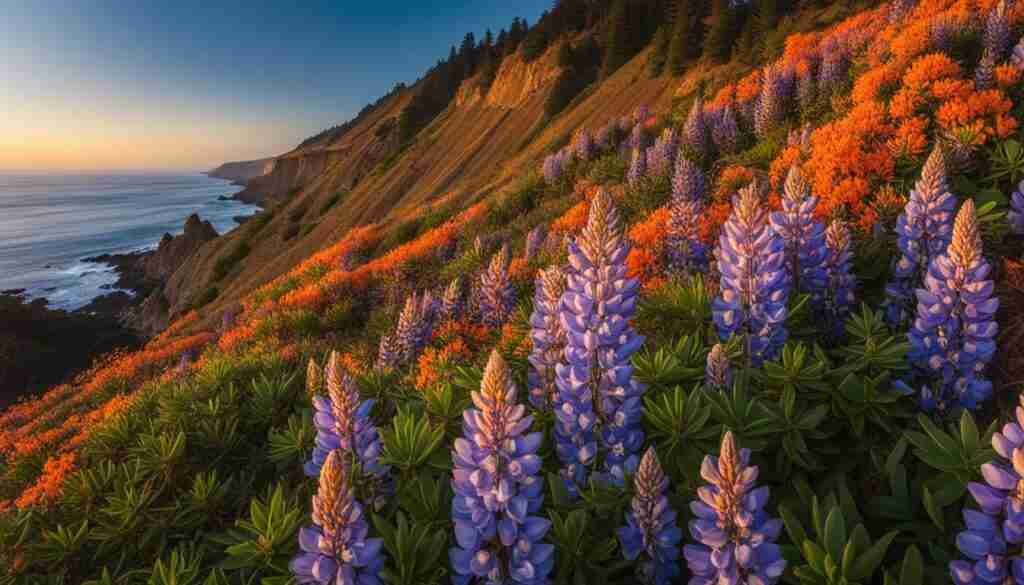
Chile is home to a diverse range of flora, but unfortunately, many plant species in Chile are facing the threat of extinction. Deforestation and habitat destruction have put endangered Chilean plants, such as the Larch and Araucaria, at risk. These species are particularly vulnerable due to their slow growth and unique qualities. To combat this, conservation efforts are crucial in preserving Chile’s valuable floral biodiversity.
The establishment of protected areas and national parks, like the upcoming Desierto Florido national park in the Atacama Desert, plays a vital role in safeguarding endangered Chilean plants.
These conservation efforts aim to ensure the long-term survival of these precious species and protect their habitats from further destruction. By investing in conservation, we can prevent the loss of valuable plant species and maintain the ecological balance of Chile’s diverse ecosystems.
Preserving Chile’s flora is not only important for the country’s biodiversity but also for global conservation efforts. Many of these endangered species are endemic to Chile, meaning they are found nowhere else in the world. By protecting these unique plant species, we contribute to the preservation of Earth’s natural heritage and promote the understanding of the interconnectedness of ecosystems worldwide.
Conservation Efforts for Endangered Chilean Plants
To address the threat of flora extinction in Chile, various organizations and government initiatives have been working tirelessly to protect and conserve endangered plant species. These efforts include:
- Establishing protected areas and national parks to create safe habitats for endangered plants.
- Implementing strict regulations and monitoring to prevent illegal logging and habitat destruction.
- Collaborating with local communities to raise awareness about the importance of conserving Chile’s unique flora.
- Supporting scientific research to study endangered plants and develop effective conservation strategies.
Through these collective efforts, Chile aims to ensure the survival of its endangered plant species and preserve its rich floral heritage for future generations to come.
| Endangered Chilean Plant | Status |
|---|---|
| Araucaria | Endangered |
| Larch | Endangered |
| Puya Raimondi | Vulnerable |
| Chilean Wine Palm | Critically Endangered |
Note: The table above showcases a selection of endangered Chilean plants. This is not an exhaustive list, but it serves as an example of the diverse species facing the threat of extinction in Chile.
The Importance of Desert Conservation
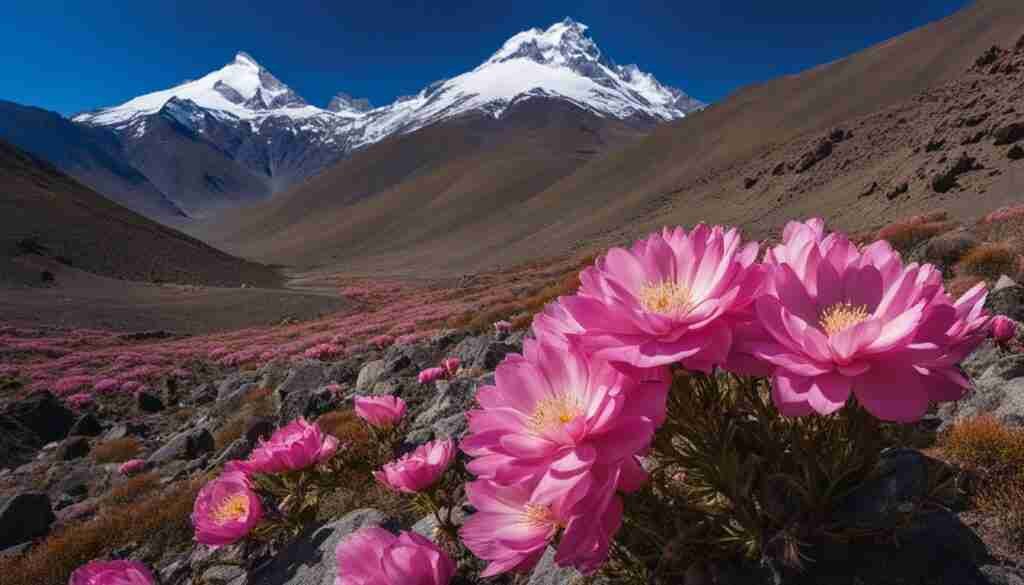
Deserts, such as the Atacama in Chile, may seem desolate and barren, but they are actually incredibly important for global biodiversity. Desert ecosystems are home to a wide variety of unique plant and animal species that have adapted to survive in extreme conditions.
By protecting and conserving deserts like the Atacama, we can gain valuable insights into evolutionary processes and the resilience of life in the face of adversity. The microorganisms and plant species found in these arid environments offer valuable lessons in adaptation, which can be applied to other ecosystems and even help us understand the potential for extraterrestrial life.
Conservation efforts in the Atacama are crucial not only for preserving biodiversity but also for mitigating the effects of climate change. As arid regions become more prevalent due to global warming, understanding how desert organisms survive can inform strategies for agriculture and crop survival in these increasingly dry areas.
The Rich Biodiversity of the Atacama Desert
The Atacama Desert is known for its incredible biodiversity, despite its harsh conditions. It is home to numerous species of microorganisms, plants, and animals that have adapted to the extreme aridity. For example, the Atacama’s microorganisms have developed unique survival strategies, such as dormancy and the ability to withstand high levels of salt and radiation.
The desert’s flora includes resilient species like cacti, succulents, and shrubs, many of which have adapted to store water and withstand long periods of drought. These plants provide essential habitats and food sources for a wide range of animals, including insects, birds, and small mammals.
Preserving the rich biodiversity of the Atacama is not only crucial for the survival of these unique species but also for the overall health of global ecosystems. Every organism plays a role in the intricate web of life, and the loss of even a single species can have far-reaching consequences.
| Threats to Atacama Desert Biodiversity | Conservation Strategies |
|---|---|
| Climate change and increasing aridity | Implementing measures to reduce carbon emissions and mitigate the effects of global warming. Promoting sustainable practices in agriculture and water management. |
| Illegal mining and extraction activities | Strengthening regulations and enforcement to prevent unauthorized mining in protected areas. Supporting sustainable mining practices that minimize environmental impact. |
| Habitat destruction and fragmentation | Creating protected areas and national parks to safeguard critical habitats. Implementing land-use policies that prioritize conservation and sustainable development. |
| Invasive species | Monitoring and controlling the spread of invasive species through early detection and rapid response programs. Rehabilitating and restoring degraded habitats. |
Through a combination of research, conservation efforts, and sustainable practices, we can ensure the long-term survival of the Atacama Desert’s unique biodiversity. By protecting these arid ecosystems, we not only preserve vital habitats and species but also gain invaluable knowledge that can guide our understanding of life on Earth and beyond.
Studying the Atacama Microorganisms
The extreme conditions of the Atacama Desert make it a unique and valuable location for studying microorganisms and their adaptations to extreme environments. Researchers from around the world are drawn to the Atacama’s hyper-arid core, which shares similarities with the harsh conditions found on Mars.
By studying the microorganisms that thrive in the Atacama, scientists gain insights into the potential for life on other planets.
The Atacama microorganisms provide valuable information about survival strategies in extreme environments. These resilient lifeforms have adapted to scarce water, high UV radiation, and extreme temperature fluctuations. Their ability to withstand such harsh conditions offers valuable insights into the possibilities of life in environments previously thought uninhabitable.
NASA has taken a particular interest in the Atacama microorganisms and their adaptations. The findings from the Atacama Desert have influenced research and exploration missions to Mars.
By studying the microbes in this extreme environment, scientists can test hypotheses and develop strategies to search for signs of life on the Red Planet. The Atacama serves as a real-world laboratory, providing critical insights into how life can survive and thrive in extreme environments beyond our own planet.
The potential for extraterrestrial life
The research conducted in the Atacama Desert is not only important for understanding life on other planets but also for expanding our knowledge of the diversity of life on Earth. The extreme conditions of the Atacama have forced microorganisms to develop fascinating adaptations, such as the ability to go into a dormant state for extended periods, effectively suspending their life processes until conditions improve.
| Adaptation | Significance |
|---|---|
| Dormancy | Allows microorganisms to survive long periods without water or other essential resources. |
| Resistance to UV radiation | Enables microorganisms to withstand high levels of radiation that would be lethal to most forms of life. |
| Tolerance to extreme temperatures | Enables microorganisms to thrive in environments with extreme temperature fluctuations, from scorching heat during the day to freezing cold at night. |
| Nutrient scavenging | Microorganisms have developed mechanisms to extract nutrients from scarce resources, allowing them to survive in nutrient-depleted soils. |
The Atacama microorganisms offer fascinating research opportunities for scientists seeking to understand the possibilities of life beyond Earth and the resilience of life on our own planet. By unlocking the secrets of these extreme-adapted microorganisms, we gain valuable insights into the potential for extraterrestrial life and the adaptability of lifeforms in extreme environments.
Chile’s Role in Conservation and Research
Chile is making significant strides in both conservation efforts and scientific research, playing a crucial role in the preservation of its unique biodiversity. With the creation of new national parks and the implementation of conservation programs, Chile is committed to protecting its precious flora and fauna for generations to come.
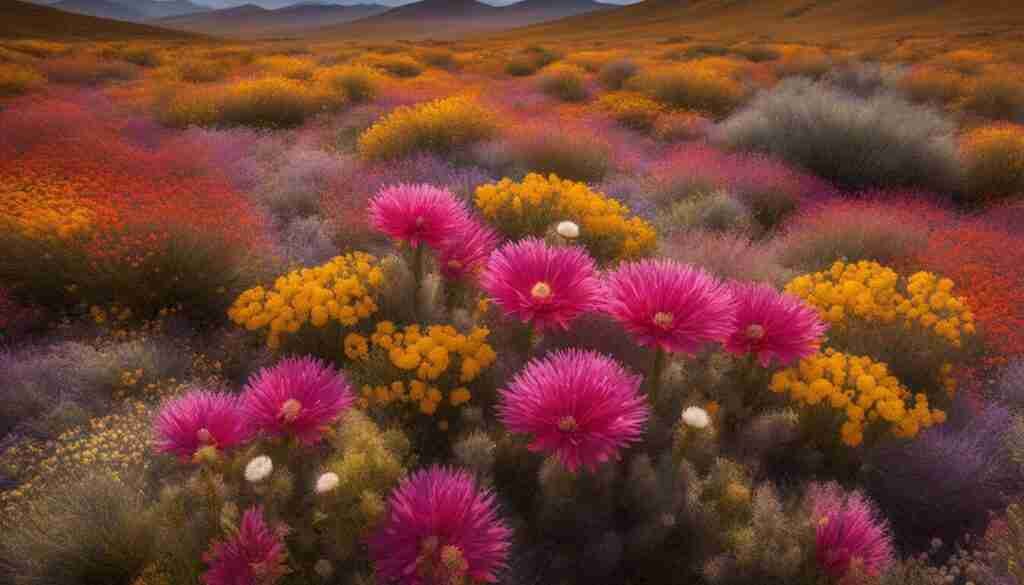
One area of focus in Chilean conservation efforts is the study of desert survival mechanisms. Researchers are investigating how plant species adapt and thrive in extreme conditions, such as those found in the Atacama Desert. By understanding these survival strategies, scientists can contribute to agricultural research and help develop crop survival strategies for drought-prone regions around the world.
Chile’s commitment to scientific research extends beyond conservation efforts. The country’s unique geography and diverse ecosystems offer valuable opportunities for studying a wide range of scientific disciplines. From astrobiology in the Atacama Desert to marine biology along the Chilean coast, researchers are uncovering new insights into life on Earth and beyond.
Through its conservation efforts and scientific research initiatives, Chile is not only preserving its natural treasures but also contributing to global knowledge and understanding. By investing in the protection of its flora and the exploration of its ecosystems, Chile is paving the way for a sustainable future and offering valuable lessons for the preservation of biodiversity worldwide.
Conclusion
The vibrant beauty of Chile’s wildflowers showcases the country’s rich biodiversity, making it a haven for nature enthusiasts and researchers alike. From the blooming landscapes of the Atacama Desert to the lush forests of the south, Chile’s wildflowers offer a visual feast that highlights the importance of conservation.
Preserving Chile’s unique flora is crucial for maintaining ecological balance and understanding the intricate web of life on our planet. By protecting and safeguarding endangered plant species, Chile is taking important steps towards ensuring the long-term survival of its valuable floral treasures.
But the significance of conserving Chilean biodiversity extends beyond the country’s borders. Exploring the wildflowers of Chile not only supports conservation efforts but also promotes sustainable tourism in the region. This harmonious interaction between nature and visitors allows for an appreciation of the delicate balance of ecosystems and fosters a sense of responsibility towards our environment.
So, whether you’re a nature enthusiast seeking awe-inspiring landscapes or a researcher delving into the secrets of life’s adaptations, Chile’s wildflowers offer a window into the wonders of our world. From the hyper-arid core of the Atacama to the coastal cacti and the lush southern forests, Chile’s diverse flora invites you to embark on a journey of discovery, conservation, and wildflower tourism.
FAQ
What is the Desierto Florido national park?
The Desierto Florido national park is a newly created park in Chile that spans 141,000 acres. It was established to protect the biodiverse ecosystem of the Atacama Desert, specifically the rare superblooms of red, magenta, and marigold wildflowers.
How often do superblooms occur in the Atacama Desert?
Superblooms of wildflowers in the Atacama Desert happen every three to 10 years. These blooms bring vibrant colors to the otherwise barren landscape and create breathtaking vistas.
Why is the Atacama Desert significant for astrobiologists?
The Atacama Desert’s extreme conditions make it a valuable location for studying life on Earth and the potential for life on other planets like Mars. Astrobiologists study the highly adaptable species in the desert to understand if life could exist elsewhere in the universe.
What plant species are found only in Chile?
Chile is home to many endemic plant species, including the Larch and Araucaria trees. These species are at risk of extinction due to deforestation, making conservation efforts crucial for their survival.
Why are deserts important for global biodiversity?
Deserts, like the Atacama, play a vital role in global biodiversity. The diverse life found in deserts offers valuable insights into evolutionary processes and adaptation to extreme environments. Protecting desert ecosystems is essential for understanding life on Earth and preparing for the challenges of an increasingly arid planet.
What research is conducted on the microorganisms in the Atacama Desert?
Researchers study the microorganisms in the Atacama Desert to understand their adaptations to the harsh environment. The Atacama’s similarities to the conditions on Mars make it an ideal place for testing hypotheses about life on other planets.
What is Chile doing to protect its floral biodiversity?
Chile is taking steps to expand its protected areas and conservation efforts, including the creation of new national parks and the preservation of at-risk species. Scientists in Chile are conducting important research on desert survival mechanisms and studying plant species’ ability to adapt to extreme conditions.
How does Chile’s flora vary across different regions?
Chile’s flora varies from the Northern coast, where vegetation is scarce apart from cacti, to the Central area with more shrubbery and trees. In the Austral area, trees like Oak, Coigüe, Hazelnut, Canelo, Araucaria, and Larch dominate the landscape.
How do superblooms of wildflowers benefit tourism in Chile?
Exploring Chile’s wildflowers not only offers a visual feast for nature enthusiasts but also supports conservation efforts and promotes sustainable tourism in the region. The vibrant beauty of Chile’s wildflowers highlights the country’s rich biodiversity.
Why are endangered Chilean plant species at risk of extinction?
Endangered Chilean plant species, such as the Larch and Araucaria, face the threat of extinction due to deforestation. Their slow growth and exceptional quality make them particularly vulnerable. Conservation efforts are crucial for preserving Chile’s valuable floral biodiversity for future generations.