
Explore the beauty of Kansas through its magnificent wildflowers. From vibrant sunflowers to delicate coneflowers, these native plants add a burst of color and enchantment to the Kansas landscape. In this comprehensive guide, we will take you on a journey to discover the different types of wildflowers in Kansas and share tips on when and where to find them.
Key Takeaways:
- Kansas is home to a diverse range of native wildflowers, including sunflowers and coneflowers.
- Identifying wildflowers can be a challenge, but with the right knowledge, it becomes easier.
- Wildflowers bloom throughout the year in Kansas, with different species flowering during specific seasons.
- Kansas offers numerous hiking trails where you can experience the beauty of wildflowers up close.
- Native wildflowers can be incorporated into landscaping to create a vibrant and eco-friendly environment.
The Beauty of Kansas Wildflowers
When it comes to native flowers, Kansas is truly a spectacle of natural beauty. The diverse range of wildflowers found in the state adds a vibrant and colorful touch to the prairies, fields, and woodlands. From the iconic sunflowers to the delicate coneflowers, each wildflower has its own unique charm that captivates the eye and showcases the richness of Kansas’s flora.
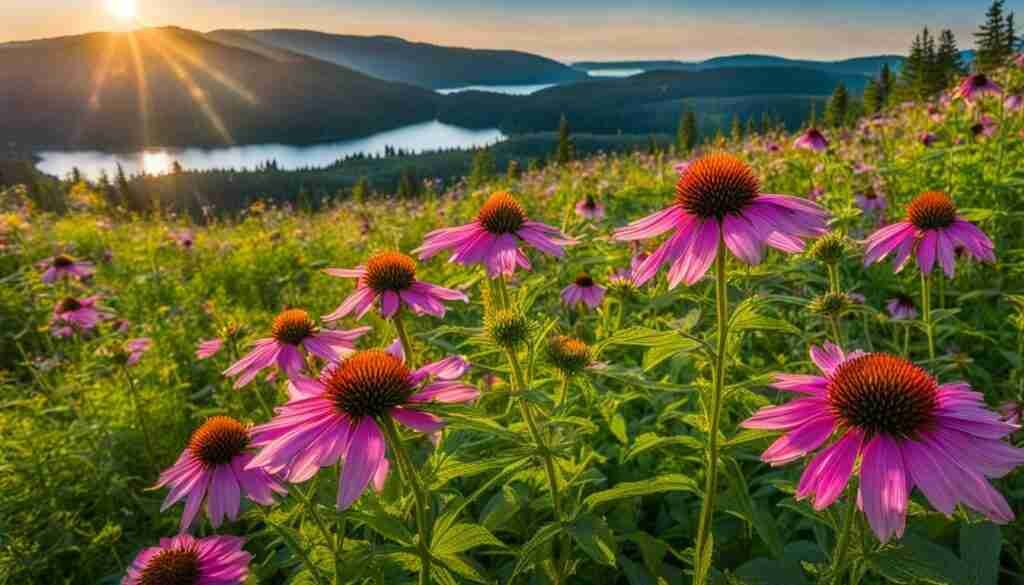
Exploring the wildflowers of Kansas is like stepping into a living tapestry of nature’s artistry. The fields and meadows come alive with a kaleidoscope of colors as the wildflowers bloom throughout the seasons. From the cheerful yellows and golds of the Black-Eyed Susans to the purples and pinks of the Purple Coneflowers, the wildflowers of Kansas paint a picturesque scene that is bound to leave you in awe.
These native flowers not only add visual appeal to the landscape but also support the local ecosystem by attracting pollinators such as bees, butterflies, and hummingbirds. Their vibrant blooms serve as a source of nectar and pollen, ensuring the continuation of these beautiful species and the sustainability of the natural environment.
So, whether you’re a nature lover, a photographer, or simply someone who appreciates the wonders of the natural world, the wildflowers of Kansas are an enchanting sight that should not be missed.
Native Wildflower Checklist
| Common Name | Scientific Name | Blooming Season |
|---|---|---|
| Black-Eyed Susan | Rudbeckia hirta | Spring to Fall |
| Purple Coneflower | Echinacea purpurea | Summer to Fall |
| Wild Bergamot | Monarda fistulosa | Summer |
| Blanket Flower | Gaillardia aristata | Summer to Fall |
| Indian Blanket | Gaillardia pulchella | Summer |
Note: This table showcases just a few examples of the native wildflowers you may encounter in Kansas. There are many more species to discover, each with its own unique characteristics and blooming seasons. Exploring the natural landscapes of Kansas is the best way to see the diverse array of wildflowers that call this state home.
Kansas Wildflower Identification Guide
Identifying wildflowers can be a rewarding and enjoyable activity, allowing you to connect with nature and appreciate the beauty of Kansas’ native flora. Whether you are a beginner or an experienced enthusiast, this guide will provide you with the tools and knowledge to identify the most common wildflowers found in Kansas.
Common Kansas Wildflowers
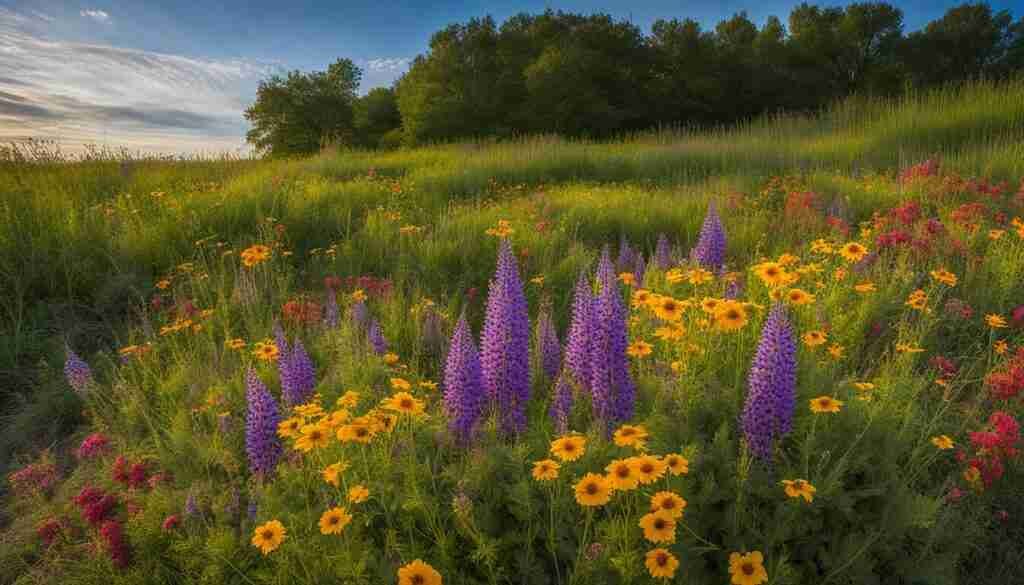
To help you on your wildflower identification journey, here are some of the most common wildflowers you may encounter in Kansas:
- Sunflower (Helianthus) – Known as the state flower of Kansas, sunflowers are iconic for their bright yellow petals and dark centers.
- Coneflower (Echinacea) – Coneflowers are characterized by their vibrant purple petals and cone-shaped centers.
- Black-eyed Susan (Rudbeckia hirta) – These cheerful wildflowers feature yellow petals and a dark brown center, creating a striking contrast.
- Milkweed (Asclepias) – Milkweed flowers have pinkish-purple petals and are essential for supporting Monarch butterfly populations.
Identification Tips
When identifying wildflowers, it’s helpful to consider their key characteristics, such as flower shape, color, and leaf structure. Additionally, observing the plant’s habitat and blooming season can provide valuable clues. Field guides and online resources can also be useful references to aid in the identification process.
Online Resources for Wildflower Identification
If you’re unsure about the identity of a particular wildflower, several online resources can assist you in the identification process. Websites such as the Kansas Native Plant Society and the Kansas Wildflowers and Grasses database offer extensive information and photos to help you accurately identify the wildflowers you encounter.
Takeaways
With the knowledge gained from this guide and the resources available, you’ll be well-equipped to identify the various wildflowers found in Kansas. Remember to observe the flower’s shape, color, and habitat, and consult reputable sources when in doubt. Happy wildflower identification!
Kansas Wildflower Season
Wildflowers in Kansas bloom throughout the year, with different species flowering during specific seasons. Spring is a particularly vibrant time, with many wildflowers in full bloom. Summer brings its own set of colorful flowers, while fall showcases the last bursts of beauty before winter arrives. Understanding the wildflower season in Kansas will help you plan your visits and ensure you don’t miss out on the stunning displays.
Wildflower Seasons in Kansas
Here is a breakdown of the wildflower seasons in Kansas:
- Spring: Spring is a time when the Kansas landscape comes alive with a riot of colors. From March to May, you can expect to see wildflowers such as Black-Eyed Susans, Bluebells, and Bloodroot.
- Summer: As summer arrives, the prairies and meadows of Kansas are adorned with vibrant wildflowers. From June to August, you may come across Black-Eyed Susans, Prairie Coneflowers, and Goldenrod.
- Fall: Fall brings a different kind of beauty to Kansas, with wildflowers adding pops of color to the changing leaves. From September to November, you can spot Wild Asters, Indian Grass, and Sneezeweed.
Each season offers a unique opportunity to experience the natural beauty of Kansas wildflowers. Whether you’re a nature enthusiast, photographer, or simply someone who appreciates the wonders of the outdoors, exploring the wildflower seasons in Kansas is a treat for the senses.
| Season | Featured Wildflowers |
|---|---|
| Spring | Black-Eyed Susans, Bluebells, Bloodroot |
| Summer | Black-Eyed Susans, Prairie Coneflowers, Goldenrod |
| Fall | Wild Asters, Indian Grass, Sneezeweed |
Whether you choose to explore the wildflower-rich trails, visit gardens, or create your own wildflower garden, don’t miss the chance to witness the stunning displays of Kansas wildflowers in their respective seasons. Plan your visits accordingly, and immerse yourself in the awe-inspiring beauty of these native flowers.
Best Places for Wildflower Hikes in Kansas
Kansas offers a multitude of hiking trails where you can immerse yourself in the beauty of wildflowers.
These trails take you through some of the most picturesque natural landscapes in the state, offering breathtaking views and diverse flora. Whether you’re an avid hiker or a nature enthusiast looking for a leisurely stroll, these trails provide the perfect opportunity to witness the vibrant colors and delicate beauty of Kansas wildflowers. Here are some of the best places for wildflower hikes in Kansas:
- Black Hoof Park/Lake Lenexa: Located in Lenexa, this park offers a scenic trail that winds around the picturesque Lake Lenexa. The trail is lined with wildflowers such as sunflowers, coneflowers, and black-eyed Susans, creating a vibrant and colorful landscape.
- Indian/Tomahawk Creek Trail: This trail, located in Overland Park, meanders through lush woodlands and open prairies, providing a diverse range of wildflowers to admire. Look out for prairie clovers, goldenrods, and butterfly milkweed along the way.
- Mill Creek Streamway Park: Stretching across several cities in Johnson County, Mill Creek Streamway Park offers miles of scenic trails along the picturesque Mill Creek. As you explore the trails, you’ll encounter a variety of wildflowers, including asters, bee balm, and prairie phlox.
- Shawnee Mission Park: With over 1,600 acres of natural beauty, Shawnee Mission Park is a haven for wildflower enthusiasts. The park features several trails that wind through woodlands, meadows, and around a scenic lake. Keep an eye out for wildflowers such as butterfly weed, milkweed, and yucca.
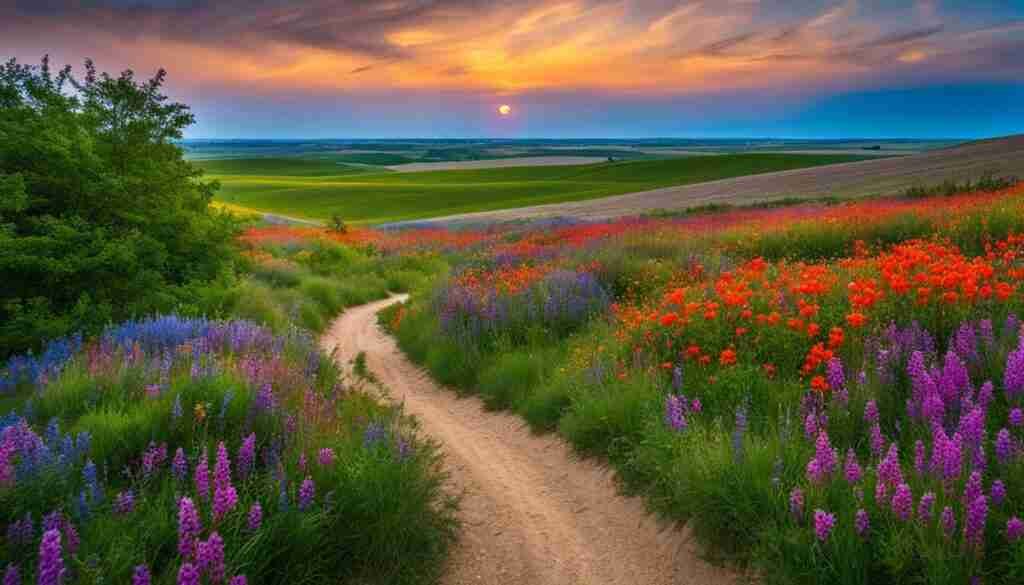
Embarking on a wildflower hike in Kansas allows you to connect with nature and appreciate the unique flora that thrives in this region. Remember to bring your camera to capture the stunning beauty of the wildflowers and take the time to explore the diverse ecosystems along the trails.
Whether you’re a beginner or an experienced hiker, these trails offer something for everyone, from peaceful meadow walks to challenging woodland treks. So put on your hiking boots, grab a water bottle, and venture out to discover the best places for wildflower hikes in Kansas.
Incorporating Kansas Wildflowers into Landscaping
Native wildflowers are not only a beautiful addition to the Kansas landscape, but they can also be incorporated into your own landscaping to create a vibrant and eco-friendly environment. By planting native flowers Kansas, you can enjoy the natural beauty of the state while supporting local pollinators and attracting wildlife to your outdoor space.
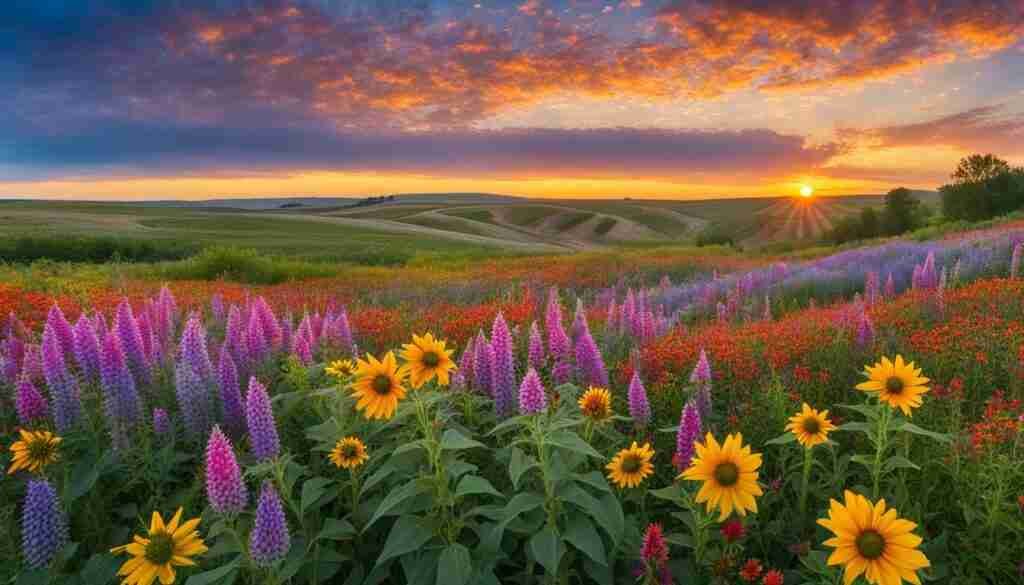
When selecting native flowers for your landscaping, consider the specific growing conditions of your area, such as sunlight exposure, soil type, and moisture levels. Native flowers are well adapted to the local climate and require less maintenance than non-native species. They also provide important food and habitat for birds, butterflies, and beneficial insects.
Benefits of Incorporating Kansas Wildflowers into Your Landscaping
There are several benefits to incorporating native wildflowers into your landscaping:
- Support local ecosystems: Native flowers Kansas play a crucial role in supporting the local ecosystem, providing food and habitat for native wildlife.
- Attract pollinators: Native flowers are excellent sources of nectar and pollen, attracting bees, butterflies, and other important pollinators to your garden.
- Low maintenance: Once established, native wildflowers require minimal watering and fertilization, making them a low-maintenance choice for your landscaping.
- Enhance biodiversity: By planting a variety of native wildflowers, you can enhance biodiversity in your garden and create a more resilient ecosystem.
Whether you have a large backyard or a small balcony, there are many ways to incorporate native wildflowers into your landscaping. Consider creating a wildflower meadow, planting a border of native flowers, or adding potted wildflowers to your outdoor space. The possibilities are endless, and the result will be a colorful and sustainable garden that showcases the unique beauty of Kansas wildflowers.
| Native Kansas Wildflowers for Landscaping | Light Requirements | Soil Type | Bloom Time |
|---|---|---|---|
| Purple Coneflower (Echinacea purpurea) | Full sun to partial shade | Well-drained soil | Summer |
| Black-Eyed Susan (Rudbeckia hirta) | Full sun | Well-drained soil | Summer |
| Blanketflower (Gaillardia spp.) | Full sun | Well-drained soil | Summer |
| Butterfly Milkweed (Asclepias tuberosa) | Full sun | Dry to medium moisture | Summer |
| Wild Bergamot (Monarda fistulosa) | Full sun to partial shade | Moist to wet soil | Summer |
Popular Native Kansas Flowers
Kansas is home to a diverse range of native flowers that have adapted to the state’s unique climate and landscape. These flowers not only add beauty to the environment but also provide crucial support to local pollinators. Here are some popular native flowers you can find in Kansas:
Hairy Aster
The Hairy Aster (Symphyotrichum pilosum) is a perennial wildflower that blooms from late summer to fall. It features delicate lavender flowers with a yellow center. This flower is often found in open fields and prairies throughout Kansas.
Purple Coneflower
The Purple Coneflower (Echinacea purpurea) is an iconic wildflower known for its vibrant purple petals and spiky, cone-shaped center. It blooms from late spring to early fall and attracts butterflies and bees. This flower is commonly found in prairies and open areas in Kansas.
Mallow
The Mallow (Malva spp.) is a herbaceous perennial with showy pink or white flowers. It blooms from early summer to fall and can be found in prairies, meadows, and along roadsides in Kansas. Its nectar attracts a variety of pollinators, including bees and butterflies.
Bloodroot
Bloodroot (Sanguinaria canadensis) is a native wildflower that gets its name from the red sap that oozes from its roots. It blooms in early spring and features white flowers with yellow centers. Bloodroot is typically found in woodlands and shaded areas in Kansas.
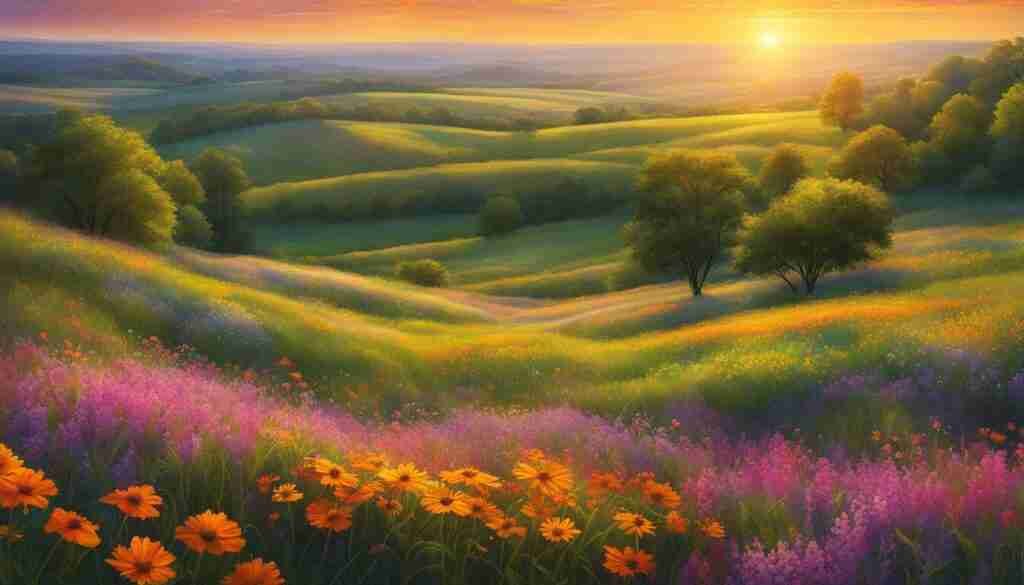
These are just a few examples of the many native flowers that thrive in Kansas. Exploring the state’s natural areas will reveal a wide array of wildflowers, each with its own unique beauty and ecological significance. Whether you’re a nature enthusiast or a casual observer, taking the time to appreciate the native flowers of Kansas is a rewarding experience.
Spring Wildflowers in Kansas
The arrival of spring in Kansas brings a vibrant display of wildflowers across the state. From the iconic Black-Eyed Susans to the delicate Bluebells, these colorful blooms add beauty and joy to the Kansas landscape. Whether you’re an avid photographer, a nature enthusiast, or simply someone who appreciates the wonders of nature, exploring the spring wildflowers in Kansas is a must.
One of the most captivating spring wildflowers in Kansas is the Black-Eyed Susan. With its bright yellow petals and dark center, it stands out against the green prairies and meadows. Another stunning wildflower to look out for is the Bloodroot, which boasts delicate white petals and vibrant red sap. The Bluebells offer a touch of serenity with their bell-shaped blooms in shades of blue and purple.
Exploring the spring wildflowers in Kansas is a rewarding experience that allows you to witness the beauty and resilience of nature. As you venture through the prairies, parks, and nature reserves, take the time to observe and appreciate the unique characteristics of each wildflower.
Capture their beauty through photographs or simply take a moment to soak in their vibrant colors and delicate forms. The spring wildflowers in Kansas are a true testament to the natural wonders of the state.
| Spring Wildflowers in Kansas | Description |
|---|---|
| Black-Eyed Susan | A bright and cheery wildflower with yellow petals and a dark center. |
| Bloodroot | A delicate wildflower with white petals and vibrant red sap. |
| Bluebells | Bell-shaped blooms in shades of blue and purple, adding a touch of serenity to the landscape. |
Where to Find Spring Wildflowers in Kansas
- Flint Hills Nature Trail
- Tallgrass Prairie National Preserve
- Konza Prairie Biological Station
- Clinton State Park
These locations offer the perfect opportunity to witness the beauty of spring wildflowers in Kansas. Plan a visit during the peak blooming season to fully experience the wonders of nature.
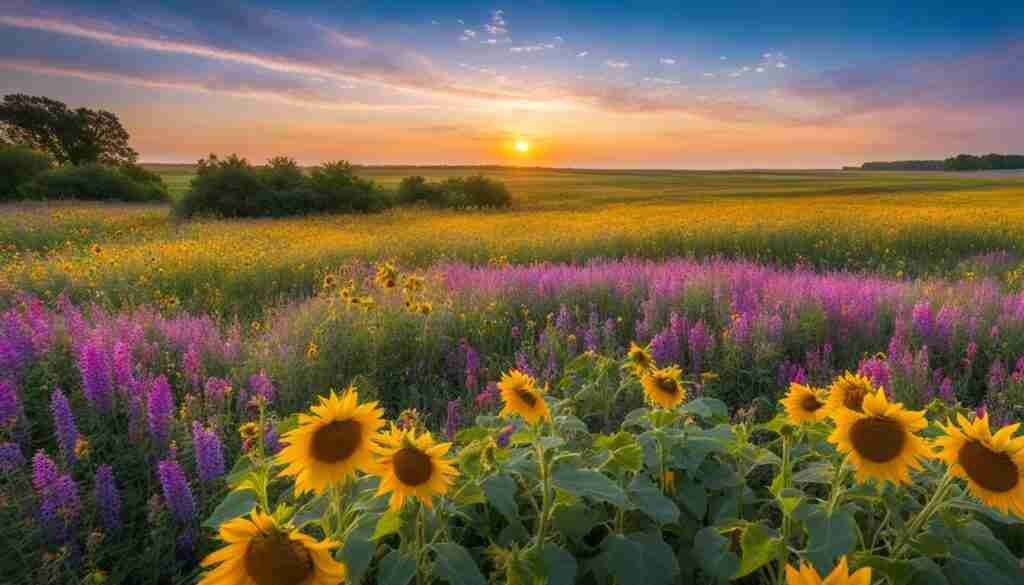
Summer Wildflowers in Kansas
In the summer months, the Kansas landscape comes alive with an array of vibrant wildflowers. These native blooms add pops of color to the prairies, meadows, and woodlands, creating a picturesque backdrop for outdoor enthusiasts and nature lovers. From Black-Eyed Susans to Prairie Coneflowers, the summer wildflowers of Kansas offer a breathtaking display of beauty.
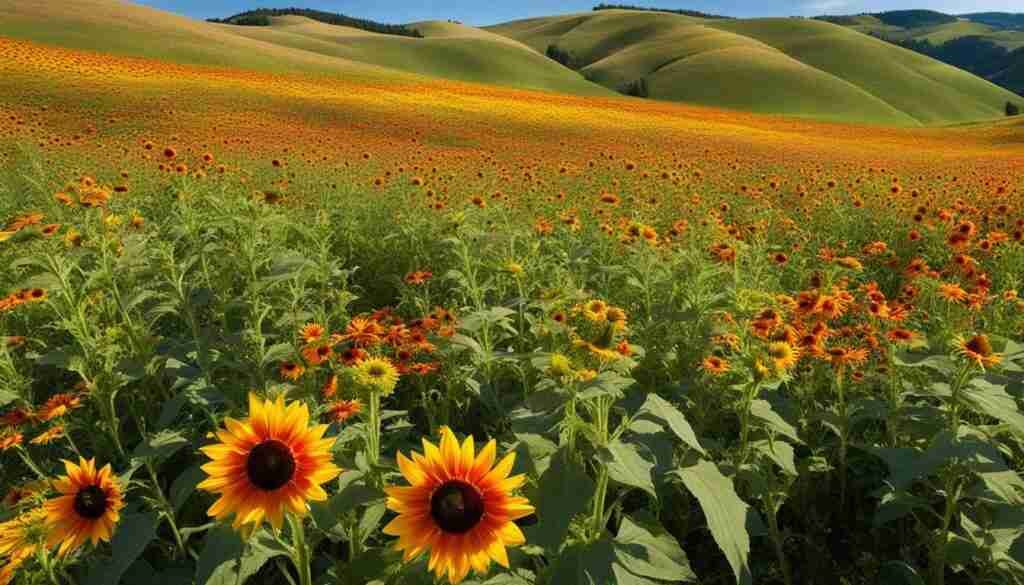
One of the iconic summer wildflowers in Kansas is the Black-Eyed Susan (Rudbeckia hirta). With its bright yellow petals and dark brown center, this flower is a true symbol of summer. It can be found in open fields and along roadsides, attracting pollinators such as bees and butterflies.
Another stunning summer wildflower is the Prairie Coneflower (Ratibida columnifera). With its striking orange petals and tall stems, this flower adds height and color to the prairies of Kansas. It is often found in dry, sandy soils and is a favorite among bees and other pollinators.
Goldenrod (Solidago spp.) is another common summer wildflower in Kansas. Known for its clusters of yellow flowers, Goldenrod brightens up meadows and fields. It serves as an important source of nectar for bees and butterflies, making it a valuable addition to any pollinator garden.
Table: Summer Wildflowers in Kansas
| Common Name | Scientific Name | Habitat | Pollinators |
|---|---|---|---|
| Black-Eyed Susan | Rudbeckia hirta | Fields, roadsides | Bees, butterflies |
| Prairie Coneflower | Ratibida columnifera | Prairies, dry soils | Bees, butterflies |
| Goldenrod | Solidago spp. | Meadows, fields | Bees, butterflies |
These are just a few examples of the summer wildflowers that grace the Kansas countryside. As you explore the outdoor spaces of the state, keep an eye out for these and other native blooms. They not only provide a visual feast for the eyes but also play a vital role in supporting pollinators and maintaining the delicate balance of the ecosystem.
Fall Wildflowers in Kansas
Fall in Kansas brings a different palette of colors, as the leaves change and wildflowers bloom. During this season, you may come across Wild Asters, Sneezeweed, Indian Grass, and Prairie Phlox. These fall wildflowers offer a final burst of beauty before winter settles in, reminding us of nature’s resilience and ever-changing cycles.
These fall wildflowers can be easily identified by their unique characteristics. Wild Asters, with their daisy-like flowers and vibrant hues of purple and blue, create stunning displays in meadows and fields. Sneezeweed, with its bright yellow or orange petals, adds a pop of color to the landscape.
Indian Grass, known for its tall, feathery plumes and golden-brown color, adds texture and beauty to prairies. Prairie Phlox, with its delicate pink or purple flowers, fills the air with a sweet fragrance.
As you explore Kansas during the fall season, keep an eye out for these beautiful wildflowers. Take a moment to appreciate their beauty and the role they play in supporting local ecosystems. Capture the essence of fall in Kansas with stunning photographs of these wildflowers, showcasing the natural splendor of the state.
Table: Fall Wildflowers in Kansas
| Wildflower | Description |
|---|---|
| Wild Asters | Daisy-like flowers in shades of purple and blue; blooms in meadows and fields |
| Sneezeweed | Bright yellow or orange petals; adds a pop of color to the landscape |
| Indian Grass | Tall, feathery plumes with golden-brown color; adds texture to prairies |
| Prairie Phlox | Delicate pink or purple flowers with a sweet fragrance |
Take the opportunity to visit Kansas’ protected areas, such as the Konza Prairie Biological Research Station, Tallgrass Prairie National Preserve, or Point-of-Rocks at the Cimarron National Grassland, to witness the fall wildflowers in their natural habitats. These locations offer breathtaking landscapes and provide a serene setting for enjoying the beauty of Kansas wildflowers.
Kansas Wildflower Gardens and Nature Centers
If you want to immerse yourself in the beauty of Kansas wildflowers, visit the state’s various gardens and nature centers. These well-preserved spaces offer opportunities to see a wide variety of native plants and flowers up close.
Sim Park: Located in Wichita, Sim Park is a popular destination for nature enthusiasts. The park features an extensive collection of native Kansas wildflowers, including sunflowers, coneflowers, and prairie clovers. Take a leisurely stroll along the trails and enjoy the vibrant colors and fragrant scents of the wildflowers.
Chaplin Nature Center: Situated in Arkansas City, Chaplin Nature Center provides a serene setting for appreciating the beauty of Kansas’ flora and fauna. The center features several walking trails that showcase native wildflowers, such as prairie phlox, butterfly milkweed, and blazing star. Don’t forget to bring your camera to capture the breathtaking sights.
Dillon Nature Center: Located in Hutchinson, Dillon Nature Center is a 100-acre oasis that offers a peaceful escape from the hustle and bustle of daily life. The center boasts a diverse range of native plants, including wildflowers like purple coneflowers, blanketflowers, and spiderworts. Take a stroll through the nature trails and enjoy the tranquility of the surrounding landscape.
Baker Research and Wetlands Natural Area: Situated in Lawrence, the Baker Research and Wetlands Natural Area is a haven for wildlife and plant enthusiasts. The area features a wide variety of native wildflowers, including prairie sunflowers, black-eyed susans, and goldenrods. Take a hike through the wetlands and experience the beauty of Kansas’ natural habitats.
Table: Kansas Wildflower Gardens and Nature Centers
| Garden/Nature Center | Location | Notable Wildflowers |
|---|---|---|
| Sim Park | Wichita | Sunflowers, Coneflowers, Prairie Clovers |
| Chaplin Nature Center | Arkansas City | Prairie Phlox, Butterfly Milkweed, Blazing Star |
| Dillon Nature Center | Hutchinson | Purple Coneflowers, Blanketflowers, Spiderworts |
| Baker Research and Wetlands Natural Area | Lawrence | Prairie Sunflowers, Black-Eyed Susans, Goldenrods |
Kansas Natural Plant Diversity
Kansas boasts a remarkable natural plant diversity, with over 2,000 vascular plant species and more than 40 types of ferns. From towering grasses to delicate shrubs, the state’s rich flora showcases the ecological richness and interconnectedness of its ecosystems.
Exploring Kansas’ native plants is not only a fascinating endeavor but also an opportunity to deepen your understanding of the delicate balance and beauty of the natural world.
One of the standout features of Kansas’ plant diversity is its range of grasses, which play a vital role in the state’s prairies. Tallgrass prairie species such as Big Bluestem, Switchgrass, and Indian Grass dominate the landscape, providing essential habitats and food sources for numerous animals and insects.
These grasses have deep roots that help prevent erosion and retain moisture in the soil, contributing to the overall health of the ecosystem.
In addition to grasses, Kansas is home to a variety of other native plants, including wildflowers, sedges, and trees. Wildflowers such as Purple Coneflower, Black-Eyed Susan, and Blanketflower add vibrant splashes of color to the prairies and meadows, attracting pollinators like bees and butterflies.
Sedges, a type of grass-like plant, thrive in wetland areas and provide crucial habitats for waterfowl and other aquatic species. Meanwhile, trees such as Cottonwood, Osage Orange, and Hackberry offer shade, shelter, and food for a wide range of wildlife.
Table: Native Plants of Kansas
| Plant Type | Examples |
|---|---|
| Grasses | Big Bluestem, Indian Grass, Switchgrass |
| Wildflowers | Purple Coneflower, Black-Eyed Susan, Blanketflower |
| Sedges | Softstem bulrush, Fox sedge, Bristly sedge |
| Trees | Cottonwood, Osage Orange, Hackberry |
Exploring the native plants of Kansas not only allows us to appreciate the state’s natural beauty but also highlights the importance of preserving and protecting these vital ecosystems. By learning about and promoting the use of native plants in landscaping and conservation efforts, we can contribute to the overall health and sustainability of Kansas’ unique flora and fauna.
Planting Native Kansas Wildflowers
If you want to bring the beauty of Kansas’ natural wildflowers into your own backyard, planting native species is the way to go. By choosing seeds of Kansas native flowers and following proper planting techniques, you can create a garden that supports local pollinators and showcases the stunning beauty of the state’s wildflowers.
September is a particularly good time to plant sunflowers, perennial clovers, and other native species in Kansas. These flowers are adapted to the local climate and soil conditions, making them easier to maintain and ensuring their successful growth. When planting, make sure to prepare the soil by removing any weeds or debris and adding organic matter for improved drainage and nutrient retention.
Once you’ve prepared the soil, scatter the seeds evenly and cover them with a thin layer of soil. Water the area gently to ensure the seeds get the moisture they need to germinate. As the flowers start to grow, thin them out to provide enough space for each plant to thrive.
Benefits of Planting Native Wildflowers in Kansas
- Supports local pollinators: Native wildflowers provide essential nectar and pollen sources for bees, butterflies, and other pollinators, helping to maintain their populations.
- Low maintenance: Native flowers are well-suited to the Kansas climate and require less water, fertilizer, and pest control compared to non-native species.
- Enhances biodiversity: Planting native wildflowers in your garden promotes a diverse ecosystem by attracting a variety of insects, birds, and other wildlife.
- Preserves local heritage: By cultivating Kansas native flowers, you are preserving the natural beauty and heritage of the state.
So why not create your very own wildflower garden? Not only will it add a touch of natural beauty to your outdoor space, but it will also contribute to the conservation efforts of Kansas’ native plants and pollinators.
| Native Kansas Wildflower | Bloom Time | Height |
|---|---|---|
| Prairie Coneflower (Ratibida columnifera) | Summer | 1-3 feet |
| Black-Eyed Susan (Rudbeckia hirta) | Summer | 1-3 feet |
| Butterfly Milkweed (Asclepias tuberosa) | Summer | 1-2 feet |
| Wild Bergamot (Monarda fistulosa) | Summer | 2-4 feet |
| Indiangrass (Sorghastrum nutans) | Fall | 3-6 feet |
By incorporating native Kansas wildflowers into your garden, you are not only adding color and beauty but also contributing to the preservation of the state’s unique ecosystem. So roll up your sleeves, grab some native wildflower seeds, and start planting your own piece of Kansas’ natural heritage.
Where to Enjoy Kansas Wildflowers
When it comes to experiencing the beauty of Kansas wildflowers, the state offers a plethora of choices. Whether you’re a nature lover, hiker, or photographer, there are numerous spots where you can immerse yourself in the vibrant colors and fragrant scents of native flowers. From prairies to national preserves, here are some of the best wildflower spots in Kansas:
Konza Prairie Biological Research Station
Located near Manhattan, the Konza Prairie Biological Research Station is a haven for wildflowers. This expansive grassland encompasses over 8,600 acres and is home to more than 600 plant species, including a variety of beautiful wildflowers. Visitors can explore trails that wind through the prairie, offering breathtaking views and opportunities to spot native Kansas flowers.
Tallgrass Prairie National Preserve
As one of the last remaining tallgrass prairies in the country, the Tallgrass Prairie National Preserve is a must-visit destination for nature enthusiasts. This vast preserve is home to a diverse array of plant and animal species, including many stunning wildflowers. Take a hike along the trails to witness the beauty of wildflowers such as purple coneflowers, black-eyed Susans, and the state flower of Kansas, the sunflower.
Point-of-Rocks at the Cimarron National Grassland
Located in southwestern Kansas, the Cimarron National Grassland is a hidden gem for wildflower enthusiasts. The Point-of-Rocks area offers sweeping vistas of the prairie and is a prime spot for observing a variety of wildflowers in their natural habitat. From delicate prairie clovers to vibrant blazing stars, the wildflowers at Point-of-Rocks are a sight to behold.
| Wildflower Spot | Location |
|---|---|
| Konza Prairie Biological Research Station | Manhattan, Kansas |
| Tallgrass Prairie National Preserve | Strong City, Kansas |
| Point-of-Rocks at the Cimarron National Grassland | Elkhart, Kansas |
These are just a few examples of the many places in Kansas where you can enjoy the breathtaking beauty of wildflowers. Whether you’re a resident or a visitor, make sure to explore these wildflower-rich locations to witness the stunning diversity of native flowers that Kansas has to offer.
Conclusion
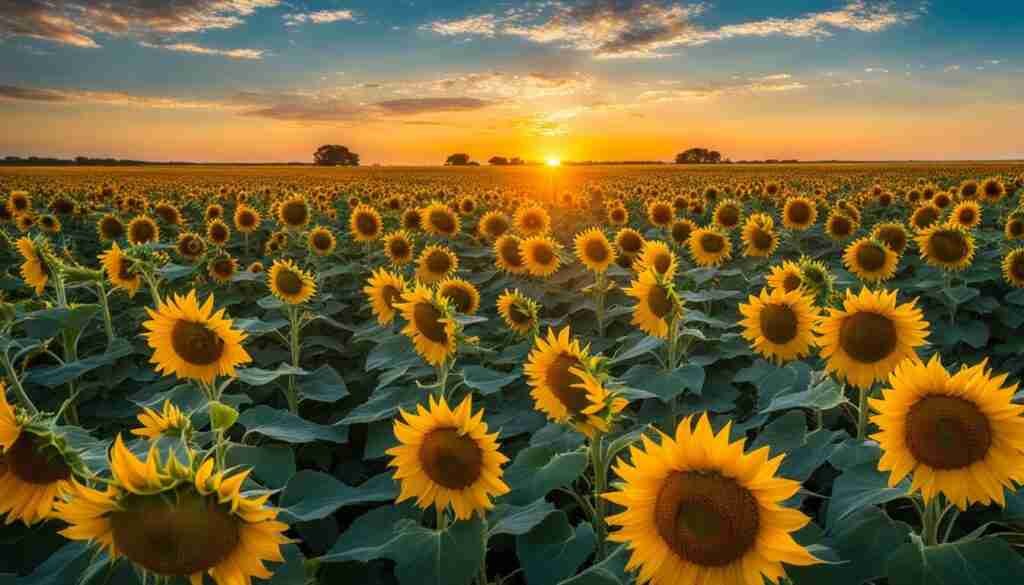
Kansas’ wildflowers are a true treasure, adding color, beauty, and biodiversity to the state’s landscapes. Whether you explore the trails, visit gardens, or cultivate your own wildflower garden, the experience of witnessing these native flowers in bloom is a source of joy and wonder. The vibrant hues of sunflowers, coneflowers, and other wildflower species create a unique tapestry that showcases the natural beauty of Kansas.
By understanding the wildflower season and identifying the different species, you can plan your visits to witness the stunning displays at the right time. Throughout the year, Kansas offers an array of wildflowers, each with its own distinct charm and significance. From the spring blooms that signify renewal to the fall flowers that offer a final burst of beauty, the seasons bring forth a rich tapestry of colors and fragrances.
Whether you’re a nature enthusiast, amateur botanist, or simply someone who appreciates the wonders of the natural world, exploring Kansas’ wildflowers is an opportunity to connect with nature and deepen your appreciation for the state’s ecological diversity.
Embrace the chance to immerse yourself in the peacefulness of the Kansas prairies, where the delicate petals of wildflowers sway in the gentle breeze. Discover the captivating beauty of Kansas wildflowers and create cherished memories as you witness the ever-changing cycles of nature.
FAQ
What are the most common types of wildflowers in Kansas?
Some of the most common types of wildflowers in Kansas include sunflowers, coneflowers, Hairy Aster, Purple Coneflower, Mallow, and Bloodroot.
When is the best time to see wildflowers in Kansas?
Wildflowers in Kansas bloom throughout the year, with different species flowering during specific seasons. Spring is particularly vibrant, while summer and fall also offer beautiful displays.
Where can I find wildflowers in Kansas?
Kansas offers numerous hiking trails, nature parks, prairies, and gardens where you can experience the beauty of wildflowers up close. Some popular spots include Black Hoof Park/Lake Lenexa, Indian/Tomahawk Creek Trail, and Shawnee Mission Park.
Can I incorporate wildflowers into my own landscaping?
Absolutely! Many homeowners and landscapers in Kansas choose to plant native wildflowers to enhance the beauty of their gardens. By adding Kansas wildflowers to your landscaping, you can create a vibrant and eco-friendly environment.
What are some popular native flowers in Kansas?
Some popular native flowers in Kansas include the Hairy Aster, Purple Coneflower, Mallow, and Bloodroot. These flowers have adapted to the Kansas climate and thrive in the local environment.
What are some examples of spring wildflowers in Kansas?
Some examples of spring wildflowers in Kansas include Black-Eyed Susans, Bloodroot, Bluebells, and Mallows. These colorful flowers signal the arrival of warmer weather.
What types of wildflowers can I expect to see in Kansas during the summer?
During the summer in Kansas, you may encounter Black-Eyed Susans, Prairie Coneflowers, Goldenrod, and Clovers. These vibrant flowers attract bees, butterflies, and other pollinators.
What are some fall wildflowers I can find in Kansas?
In the fall, you may come across Wild Asters, Sneezeweed, Indian Grass, and Prairie Phlox. These fall wildflowers offer a final burst of beauty before winter arrives.
Where can I go to immerse myself in the beauty of Kansas wildflowers?
If you want to experience the beauty of Kansas wildflowers, visit the state’s various gardens and nature centers, such as Sim Park, Chaplin Nature Center, and Dillon Nature Center. These well-preserved spaces are perfect for nature enthusiasts and photographers.
How many species of plants are there in Kansas?
Kansas is home to over 2,000 vascular plant species and more than 40 types of ferns, showcasing the state’s rich plant diversity.
Can I plant native wildflowers in my own backyard?
Yes! By choosing seeds of Kansas native flowers and following proper planting techniques, you can create a garden that supports local pollinators and showcases the beauty of the state’s wildflowers.
Where are some of the best places to enjoy Kansas wildflowers?
Kansas offers an abundance of wildflower-rich locations, including the Konza Prairie Biological Research Station, Tallgrass Prairie National Preserve, and Point-of-Rocks at the Cimarron National Grassland.