
Romania is a country known for its diverse and distinctive natural landscape. From the snow-capped Carpathian Mountains to the Danube River Delta, Romania offers a breathtaking backdrop for nature enthusiasts. But it’s not just the majestic mountains and winding rivers that make Romania so captivating; it’s also the vibrant wildflowers that blanket the country’s meadows and pastures.
With over 3,000 species of wildflowers, Romania is a floral paradise waiting to be explored.
From endemic flowers found only in Romania to stunning meadows bursting with color, the country’s floral diversity is truly remarkable. Whether you’re an avid photographer or simply appreciate the beauty of nature, Romania’s wildflowers offer a feast for the senses.
Key Takeaways:
- Romania is home to over 3,000 species of wildflowers
- The country’s diverse landscapes and traditional farming practices contribute to its rich floral abundance
- Endemic wildflowers can be found in various regions of Romania
- Exploring Romania’s wildflower diversity can be done through guided wildflower tours
- Some of the best places to see wildflowers in Romania include the Transylvanian Plateau and the high alpine meadows of the Carpathian Mountains
The Transylvanian Plateau: A Haven for Biodiversity
The Transylvanian Plateau, nestled within the breathtaking Carpathian Mountains, is a haven for biodiversity and a paradise for nature enthusiasts. This unique region boasts a rich variety of wildflowers, showcasing the vibrant floral beauty of Romania.
The abundant meadows and pastures of the Transylvanian Plateau owe their diversity to the traditional farming practices employed by local communities, which have been cultivated for generations.
With a commitment to low-intensity farming, the residents of the Transylvanian Plateau have created an environment that allows a wide array of wildflower species to flourish. This sustainable approach, characterized by timely mowing and grazing, has resulted in a stunning display of colors and fragrances.
As you explore the picturesque landscapes, you will witness the interplay of vibrant blooms, ranging from daisies and poppies to rare orchids and lilies.
The biodiversity of the Transylvanian Plateau is not limited to wildflowers alone. The region is home to a diverse range of plant and animal species, making it an ideal destination for nature lovers and biodiversity enthusiasts.
Immerse yourself in the natural wonders of the Transylvanian Plateau, where the delicate balance of traditional farming practices and ecological conservation has created an enchanting haven for all forms of life.

The Transylvanian Plateau: A Floral Tapestry
| Wildflower Species | Flowering Season | Habitat |
|---|---|---|
| Carpathian Bellflower | June – August | Meadows, forests |
| Transylvanian Gentian | July – September | Alpine meadows |
| Transylvanian Iris | May – June | Wetlands, riverbanks |
| Mountain Edelweiss | June – August | Rocky slopes |
As you explore the Transylvanian Plateau, keep an eye out for these magnificent wildflower species. From the delicate blossoms of the Carpathian Bellflower to the vibrant hues of the Transylvanian Gentian, each flower adds its unique touch to the floral tapestry of the region.
Whether you’re an avid botanist, a nature photographer, or simply a lover of natural beauty, the Transylvanian Plateau offers a captivating experience that celebrates the wonders of biodiversity and traditional farming practices.
Low Mountain Meadows: A Kaleidoscope of Colors
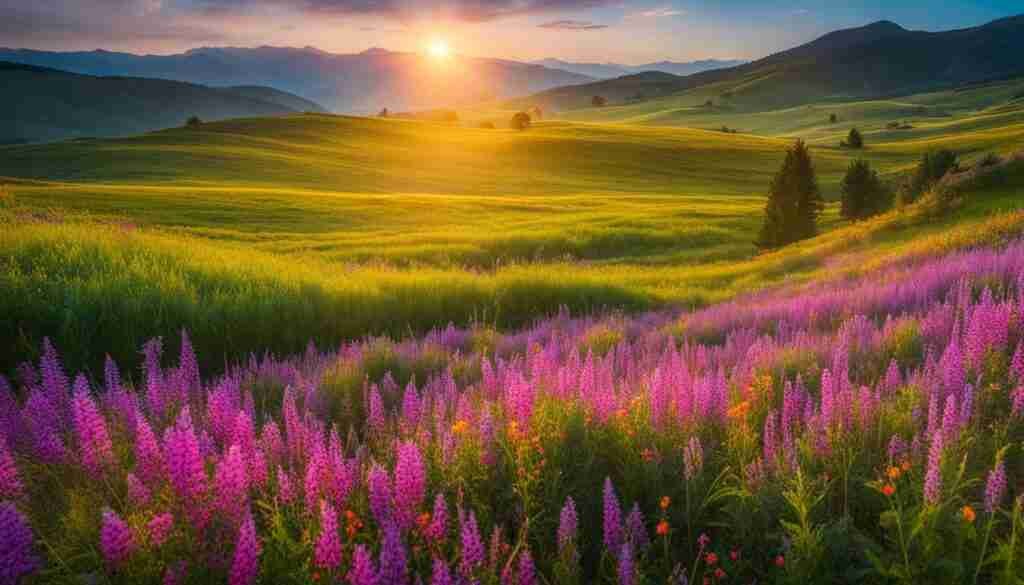
In the higher altitudes of around 1000 meters, you’ll find the enchanting low mountain meadows of Romania. These picturesque landscapes offer a breathtaking showcase of the country’s floral diversity, with a kaleidoscope of colors and fragrances. The meadows at this elevation are filled with an abundance of wildflowers, creating a truly mesmerizing sight.
The vibrant display of wildflowers in the low mountain meadows is made possible by the traditional farming practices employed in the region. The alternating mowing with grazing technique allows the flowers to flourish and thrive. This sustainable approach not only preserves the natural beauty of the meadows but also supports the delicate balance of the ecosystem.
Exploring the low mountain meadows is an immersive experience, immersing you in the splendor of nature’s vibrant palette. As you wander through these floral wonderlands, you’ll be surrounded by the scent of blooming flowers and the sight of butterflies and bees flitting from one blossom to another. It’s a true feast for the senses, a testament to the remarkable floral diversity of Romania.
The Beauty of Low Mountain Meadows: A Visual Delight
The low mountain meadows captivate with their vibrant colors and breathtaking beauty. Here’s a snapshot of the enchanting wildflowers that thrive in this unique ecosystem:
| Wildflower | Scientific Name | Color |
|---|---|---|
| Alpine Aster | Aster alpinus | Purple |
| Carpathian Bellflower | Campanula carpatica | Blue |
| Romanian Peony | Paeonia romanica | Pink |
| Carpathian Hellebore | Helleborus purpurascens | White |
| Bergenia | Bergenia crassifolia | Pink |
These are just a few examples of the stunning wildflowers that adorn the low mountain meadows of Romania. With each step, you’ll discover new delights and immerse yourself in the kaleidoscope of colors that make this region a paradise for flower enthusiasts and nature lovers.

So, whether you’re an avid photographer or simply appreciate the wonders of nature, don’t miss the opportunity to explore Romania’s low mountain meadows. Immerse yourself in the vibrant floral diversity, breathe in the fragrant air, and feast your eyes on the kaleidoscope of colors that await you in this enchanting corner of the country.
High Alpine Meadows: A Spectacular Floral Show
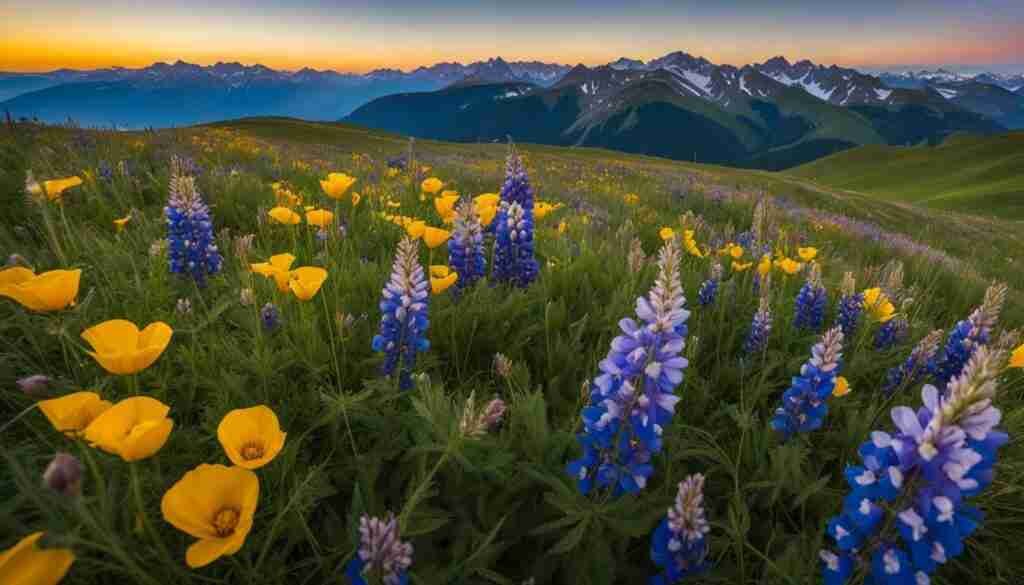
As you ascend to the higher altitudes of the Carpathian Mountains, you’ll be treated to a truly spectacular floral show in the high alpine meadows of Romania. These meadows, ranging from 1500 to 2500 meters above sea level, are a haven for a wide variety of wildflower species.
In these high mountain pastures, farming activities are limited to seasonal grazing, known as transhumance. This traditional practice ensures the preservation of delicate wildflowers that thrive in the cool climate and high humidity of the peaks. The absence of intensive farming allows these alpine meadows to burst into a riot of colors, creating a breathtaking display.
From vibrant purple gentians to delicate alpine asters, the high alpine meadows of Romania are home to numerous wildflower species. These hardy flowers have adapted to survive in the harsh alpine environment, showcasing their resilience and beauty.
The Diversity of Wildflower Species in Romania’s High Alpine Meadows
| Wildflower Species | Description |
|---|---|
| Edelweiss | A symbol of rugged beauty, the edelweiss is a star-shaped flower with white woolly petals. It is well-known for its ability to thrive in rocky alpine terrain. |
| Alpine Pasqueflower | This early blooming flower has distinctive purple petals and a yellow center. It is often found in rocky areas and snow beds. |
| Cushion Pink | This low-growing perennial produces clusters of pink flowers that form dense cushions. It is commonly found in rocky crevices and cliffs. |
| Alpine Sow-thistle | This tall, yellow-flowered plant thrives in open meadows and grasslands. It is known for its ability to withstand harsh mountain conditions. |
Exploring the high alpine meadows of Romania is a truly awe-inspiring experience. The combination of breathtaking scenery and the vibrant display of wildflowers creates a magical atmosphere. Whether you’re an avid photographer or simply a nature lover, these alpine meadows are a must-visit destination to witness the spectacular floral show.
Continue your journey through Romania’s wildflowers as we explore the stunning rhododendrons in the Carpathian Mountains in the next section.
Rhododendrons in the Carpathian Mountains: A Pink Marvel
The Carpathian Mountains of Romania are not only known for their breathtaking landscapes but also for their vibrant displays of rhododendrons. These magnificent flowers create a pink marvel that captivates anyone fortunate enough to witness it. Blooming above 1800 meters in elevation, from mid-June to early July, the rhododendrons transform the mountain slopes into a stunning sea of pink.
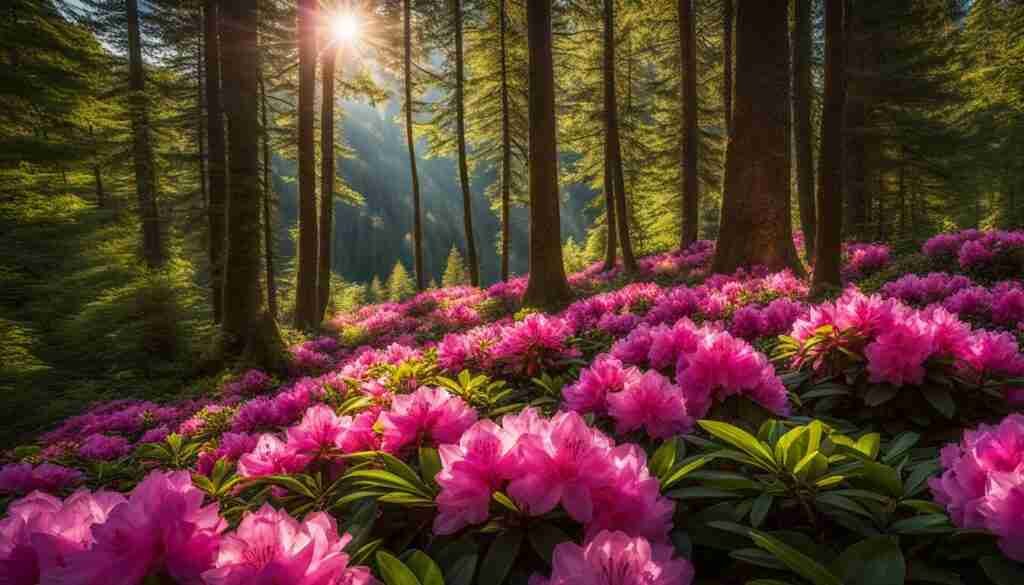
One of the best places to experience the rhododendron bloom in Romania is at Lake Iezerul Mare near Sibiu. Accessible by a cable car, this tranquil lake is surrounded by lush greenery and provides the perfect backdrop for the vibrant pink flowers.
The hike to the lake offers a rewarding experience for medium-experienced hikers, combining the beauty of nature with the sense of accomplishment that comes from conquering the trail.
Balea Lake is another picturesque location in the Carpathian Mountains where rhododendrons can be found in abundance. Situated at an altitude of 2040 meters, this glacial lake offers stunning views of the surrounding peaks and valleys. During the rhododendron bloom, the vibrant colors of the flowers stand out against the backdrop of the snow-capped mountains, creating a truly magical sight.
Table: Rhododendron Species in the Carpathian Mountains
| Rhododendron Species | Height (m) | Blooming Period |
|---|---|---|
| Rhododendron kotschyi | 0.5-1 | Mid-June to early July |
| Rhododendron caucasicum | 0.5-1 | Mid-June to early July |
| Rhododendron ponticum | 1.5-3 | Mid-June to early July |
Exploring the Carpathian Mountains during the rhododendron bloom is a truly enchanting experience. The vibrant colors, delicate petals, and sweet fragrance of these flowers create a sensory feast for nature lovers. Whether you choose to visit Lake Iezerul Mare or Balea Lake, witnessing the pink marvel of the rhododendrons will leave you in awe of Romania’s wildflower beauty.
The Lilac Forest of Ponoarele: Fragrant Beauty
Located in the sub-Carpathian region of Romania, the lilac forest of Ponoarele is a captivating sight that showcases the country’s floral diversity. Spanning a vast 20 hectares, this botanical reserve bursts into a vibrant display of fragrant lilac and ash flowers in early May. As you wander through the forest, the intoxicating scent of these blossoms fills the air, creating a truly immersive experience.
The lilac forest of Ponoarele is not only visually stunning but also plays a crucial role in preserving Romania’s floral heritage. This protected area is home to a wide range of plant species, including several varieties of lilacs. It serves as a haven for these delicate flowers, allowing them to thrive and enchant visitors with their beauty.
Exploring the Lilac Forest
When visiting the lilac forest of Ponoarele, take your time to explore the winding paths that weave through the woodland. The vibrant lilac and ash flowers create a magical ambiance, transporting you to a world of fragrant beauty. As you stroll between the tall, swaying trees, you’ll discover hidden nooks and crannies where the flowers bloom in abundance.
Whether you’re a nature enthusiast, a photographer, or simply someone who appreciates the wonders of the natural world, the lilac forest of Ponoarele is a must-see destination. Lose yourself in the enchanting fragrance and immerse yourself in the vibrant colors of this floral wonderland.

| Lilac Forest Highlights | Details |
|---|---|
| Location | Ponoarele, sub-Carpathian region of Romania |
| Floral Reserve Size | 20 hectares |
| Blooming Season | Early May |
| Main Attractions | Fragrant lilac and ash flowers |
Wild Peonies in Romania: A Stunning Display
Experience the enchanting beauty of wild peonies in Romania, as the country showcases a stunning display of these exquisite flowers.
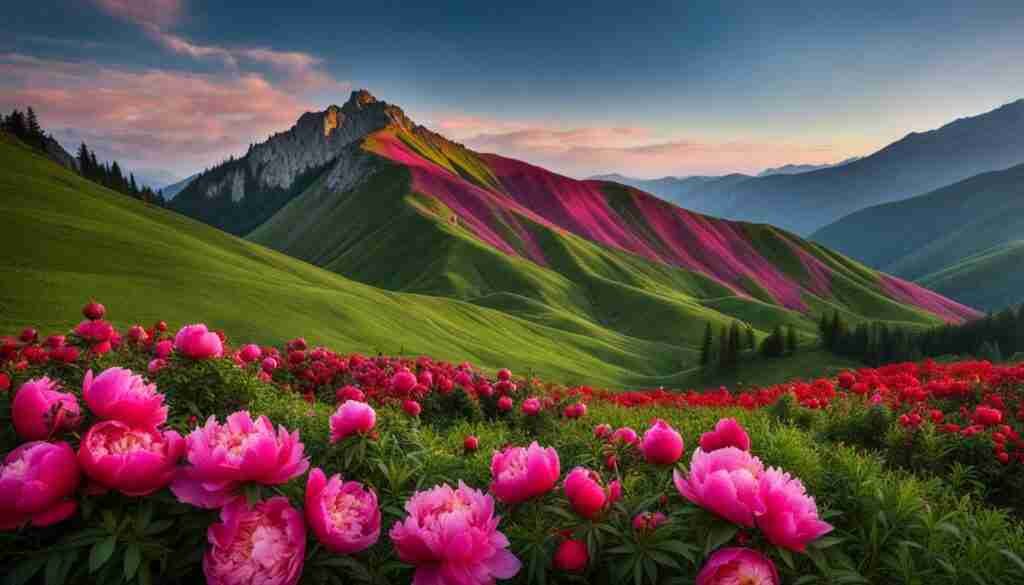
The steppe peonies, with their vibrant blood-red petals, can be found in the untamed wilderness of the Dobrogea mountains and other picturesque regions. One of the best places to witness this awe-inspiring spectacle is within a nature reserve located in Transylvania’s Mureș county.
Immerse yourself in the breathtaking beauty of the steppe peonies as they bloom, creating a captivating sight in the Romanian landscape. These wildflowers add a vibrant splash of color against the backdrop of green meadows and forested hills. The beauty and allure of the wild peonies are truly a testament to Romania’s rich floral diversity.
Table: Wild Peonies in Romania
| Wild Peony Species | Region |
|---|---|
| Steppe Peony | Dobrogea |
| Romanian Peony | Mureș county, Transylvania |
As you explore the untamed beauty of Romania’s natural landscapes, be sure to include the wild peonies in your itinerary. Witnessing these stunning blooms firsthand will leave you mesmerized by the sheer beauty and diversity of Romania’s wildflower landscapes.
Snowdrops: Nature’s Renewal and Hope
Imagine walking through a serene landscape, where the air is filled with the delicate scent of blooming flowers. As you explore Romania’s Dobrogea region, you will be greeted by the enchanting beauty of snowdrops.
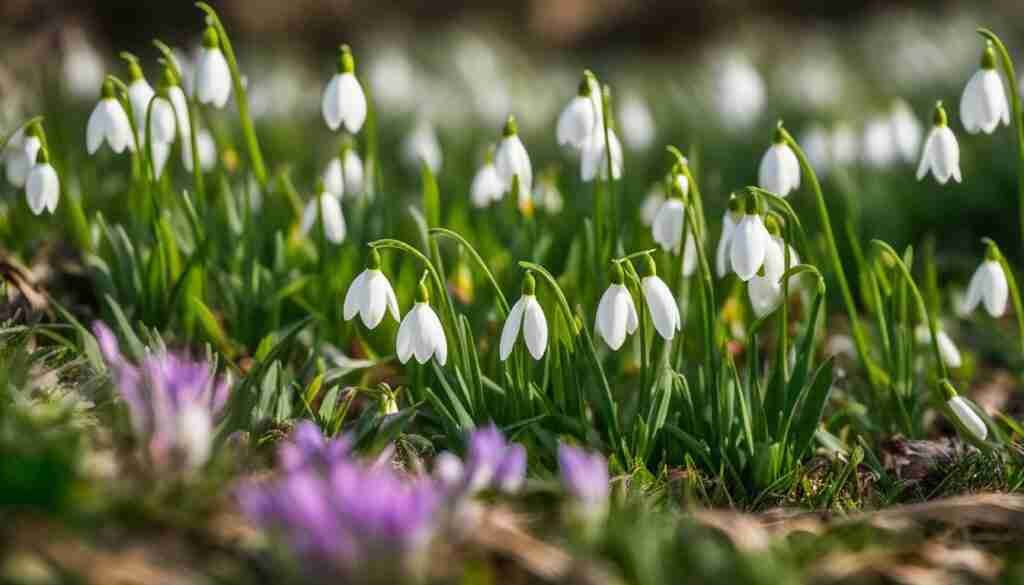
These small, white flowers, scientifically known as Galanthus nivalis, are a symbol of nature’s renewal and hope. With their graceful appearance, snowdrops bring a sense of tranquility and anticipation for the arrival of spring.
Exploring the Snowdrop Reserves
One of the best places to witness the mesmerizing carpets of snowdrops is in the Dobrogea region of Romania.
The Macinului Mountains National Park, nestled in this picturesque region, boasts the largest snowdrop reserve in the country. As you wander through the park, you will be surrounded by a sea of these enchanting white flowers, creating a truly magical sight.
Another stunning location to experience the beauty of snowdrops is Gradistea Muncelului – Cioclovina National Park in Transylvania. Here, you can witness the delicate blooms against the backdrop of lush greenery and towering trees. The park offers a serene setting for nature lovers to connect with the tranquility and beauty of the natural world.
A Sign of New Beginnings
Snowdrops thrive in moist soils, and their arrival in early spring signifies the awakening of nature after the cold winter months. These resilient flowers push through the frosty ground, offering a gentle reminder that brighter days are ahead. Their presence brings hope and a sense of optimism as they pave the way for the blooming of other wildflowers.
|
Features |
Dobrogea |
Gradistea Muncelului – Cioclovina |
|---|---|---|
|
Location |
Dobrogea region of Romania |
Transylvania, Romania |
|
Reserve Size |
Largest snowdrop reserve in Romania |
Serenic location |
|
Atmosphere |
Enchanting carpets of snowdrops |
Tranquility amidst lush greenery |
|
Symbolism |
Nature’s renewal and hope |
Connection with the natural world |
Witnessing the beauty of snowdrops in Romania is a truly extraordinary experience. These delicate flowers not only captivate the eye but also evoke a sense of wonder and appreciation for the wonders of the natural world. Whether you visit the Dobrogea region or explore Transylvania’s national parks, the sight of these resilient blooms will leave you feeling uplifted and inspired.
Best Time to See Wildflowers in Romania
If you’re planning a trip to Romania to witness the country’s stunning wildflowers, timing is key. The blooming season varies depending on the altitude, so it’s essential to plan your visit accordingly. Here’s a guide to help you navigate the best time to see wildflowers in Romania.
Spring Blooms
In March, the first signs of spring emerge, with delicate flowers starting to carpet the meadows. April is when most spring blooms burst into full glory, creating a vibrant tapestry of colors. This is an ideal time to explore the low mountain pastures and Transylvanian Plateau, where wildflowers are abundant.
Peak Blooming Season
By May, wildflowers in meadows up to 1000 meters altitude are in full bloom. This is the peak blooming season, offering a breathtaking spectacle of floral diversity. The Transylvanian Plateau becomes a true paradise of wildflowers, with the landscape painted in vibrant hues.
Alpine Meadows
In June, the explosion of colors and scents continues to captivate as wildflowers thrive in the high alpine meadows. These meadows reach their peak in July, showcasing a spectacular floral show against the backdrop of the Carpathian Mountains. If you’re looking to witness the alpine wildflowers, this is the perfect time to plan your visit.
While the majority of wildflowers bloom during spring and early summer, it’s important to note that late-blooming flowers can still be found in September. So, whether you visit Romania in the spring or summer, you’re bound to witness the captivating beauty of the country’s wildflowers.
Summary
In summary, the best time to see wildflowers in Romania is from March to July, depending on the altitude. From the low mountain pastures to the alpine meadows, each season brings its own unique display of vibrant colors and fragrant scents. So, plan your visit accordingly and immerse yourself in the enchanting beauty of Romania’s wildflowers.
Conclusion
Explore the beauty of Romania’s wildflowers and immerse yourself in the country’s floral diversity. From the vibrant meadows of the Transylvanian Plateau to the awe-inspiring alpine meadows, Romania offers a paradise for nature enthusiasts.
Whether you’re an avid photographer or simply appreciate the wonders of nature, the wildflowers in Romania are sure to captivate your senses.
Embark on a wildflower tour and discover the hidden gems of Romania’s floral landscapes.
Witness the burst of colors and scents as you venture through the diverse regions of the country. From the low mountain meadows to the high alpine pastures, each area showcases a unique array of wildflower species, creating a truly unforgettable experience.
Marvel at the exquisite rhododendrons in the Carpathian Mountains or wander through the fragrant lilac forest of Ponoarele. Admire the stunning display of wild peonies in the Dobrogea mountains or witness the renewal and hope brought by the delicate snowdrops. With each season offering its own spectacular blooms, Romania’s wildflowers never cease to amaze.
So pack your camera and get ready to explore the captivating beauty of Romania’s wildflowers. Whether you join a guided tour or venture out on your own, the floral diversity of this picturesque country is waiting to be discovered. Let the vibrant colors and fragrant scents of Romania’s wildflowers enchant you on an unforgettable journey into nature.
FAQ
What is the best time to see wildflowers in Romania?
The best time to see wildflowers in Romania varies depending on altitude. March marks the beginning of spring flowers, while April sees the arrival of most spring blooms. By May, wildflowers in meadows up to 1000 meters altitude are in full bloom.
The explosion of colors and scents occurs in June on the Transylvanian Plateau, while the alpine meadows reach their peak in July. Late-blooming flowers can still be found in September, showcasing Romania’s floral beauty year-round.
Where can I find the most diverse wildflower species in Romania?
Romania is known for its diverse wildflower species. The Transylvanian Plateau, with its traditional farming practices, offers a wide range of wildflowers. The alpine meadows of the Carpathian Mountains are also home to many unique and stunning floral varieties. Additionally, the sub-Carpathian region and specific nature reserves, such as Lake Iezerul Mare and Ponoarele, showcase a rich array of wildflower species.
Are there any endemic wildflowers in Romania?
Yes, Romania is home to several endemic wildflower species. The steppe peonies, with their blood-red flowers, can be found in the Dobrogea mountains and other regions. The Romanian peonies are another endemic species that can be admired in certain nature reserves, such as the one in Transylvania’s Mureș county.
Can I join wildflower tours in Romania?
Absolutely! Romania offers wildflower tours for nature enthusiasts and photographers. These tours take you to the best locations to witness the vibrant floral beauty of the country. Professional guides provide insights into the different species and their habitats, ensuring an immersive and educational experience.
What are some of the best places to see wildflowers in Romania?
Romania is filled with stunning locations to see wildflowers. Some of the best places include the Transylvanian Plateau, the alpine meadows of the Carpathian Mountains, Lake Iezerul Mare near Sibiu, the lilac forest of Ponoarele, and nature reserves in Dobrogea and Mureș county.