
Utah is home to a stunning array of wildflowers, showcasing the rich botanical diversity of the region. From the vibrant Heartleaf Arnica to the delicate White Bog Orchid, these native flowers create a natural spectacle that captivates visitors. Explore the picturesque landscapes of Utah and immerse yourself in the beauty of its wildflowers.
Key Takeaways:
- Utah is known for its diverse array of wildflowers, from the vibrant Heartleaf Arnica to the delicate White Bog Orchid.
- Exploring Utah’s landscapes allows you to immerse yourself in the natural beauty of its wildflowers.
- Wildflowers play a vital role in supporting the ecosystem and are home to various pollinators and insects.
- Preserving wildflower habitats and practicing responsible wildflower ethics is essential for the conservation of Utah‘s botanical diversity.
- There are specific regions in Utah, such as Big and Little Cottonwood Canyons, Tony Grove, and Cedar Breaks National Monument, that are known for their spectacular displays of wildflowers.
The Importance of Wildflower Conservation
Wildflowers in Utah play a vital role in maintaining the ecological balance and supporting the diverse flora and fauna of the region. Conserving these native flowers is essential to preserve the natural beauty of Utah’s landscapes and ensure the survival of its unique plant species.
One of the key reasons for wildflower conservation is their crucial role in supporting pollinators, such as bees and butterflies. Native flowers provide a source of nectar and pollen, which are essential food sources for these important insects. By conserving wildflowers, we protect the habitats and resources that support pollinators, contributing to the overall health of ecosystems.
Furthermore, wildflower conservation facilitates the identification and study of Utah’s diverse plant species. Each wildflower is a piece of the intricate puzzle that makes up Utah’s flora. By understanding and cataloging these native plants, scientists and researchers can gain valuable insights into the region’s botanical diversity, potentially leading to new discoveries and conservation strategies.
The Benefits of Wildflower Conservation
Conserving Utah’s wildflowers not only benefits the environment but also enhances our own lives. The presence of vibrant native flowers adds beauty to our surroundings, making outdoor spaces more visually appealing and enjoyable. Additionally, wildflowers contribute to the overall health of ecosystems by improving soil quality, preventing erosion, and providing habitat and food sources for wildlife.
| Benefits of Wildflower Conservation: |
|---|
| Supports pollinators and other wildlife |
| Preserves unique plant species |
| Enhances the beauty of natural landscapes |
| Improves soil quality and prevents erosion |
| Provides habitat and food sources for wildlife |
By recognizing the importance of Utah’s wildflowers and taking action to conserve them, we can ensure the continued existence of these natural treasures for future generations to appreciate and enjoy.
Guidelines for Enjoying Utah’s Wildflowers Responsibly
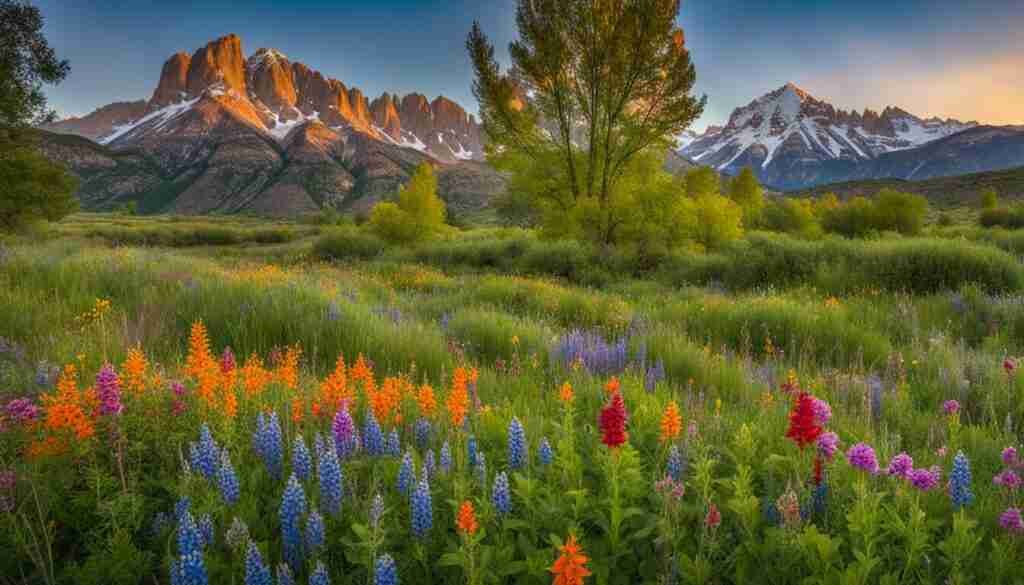
Utah’s wildflowers are a precious part of the state’s natural beauty and ecosystem. To ensure their preservation for future generations, it is essential to enjoy these wildflowers responsibly. By following a few simple guidelines, you can help protect the fragile balance of Utah’s wildflower ecosystems and contribute to their continued vibrancy.
Wildflower Ethics
One of the most important rules when enjoying Utah’s wildflowers is to never pick them. While it may be tempting to take a beautiful bloom home as a souvenir, this can have a detrimental impact on the ecosystem. Wildflowers serve as a vital food source for pollinators and other wildlife, and removing them disrupts the delicate balance of their habitats.
Additionally, it is crucial to avoid trampling the flowers or leaving established trails. Wildflowers often grow in fragile environments, and stepping off the designated paths can result in irreversible damage to their populations. By staying on the marked trails, you can minimize your impact and preserve the natural beauty of Utah’s wildflowers.
Leave No Trace
When exploring Utah’s wildflowers, it is important to practice Leave No Trace ethics. This means packing out any trash you bring with you, leaving the area as you found it, and respecting the wildlife that calls the wildflower habitats home.
Dispose of waste properly in designated receptacles and refrain from disturbing or feeding the animals you encounter. By practicing Leave No Trace, you can help ensure that future visitors can enjoy the same untouched beauty of Utah’s wildflowers.
Conclusion
By following these guidelines for enjoying Utah’s wildflowers responsibly, you can take part in preserving and protecting these natural wonders. Respect the importance of wildflower ethics, stay on established trails, and practice Leave No Trace principles to minimize your impact on these delicate ecosystems. Let’s work together to keep Utah’s wildflowers flourishing for generations to come.
Common Wildflowers of Big and Little Cottonwood Canyons
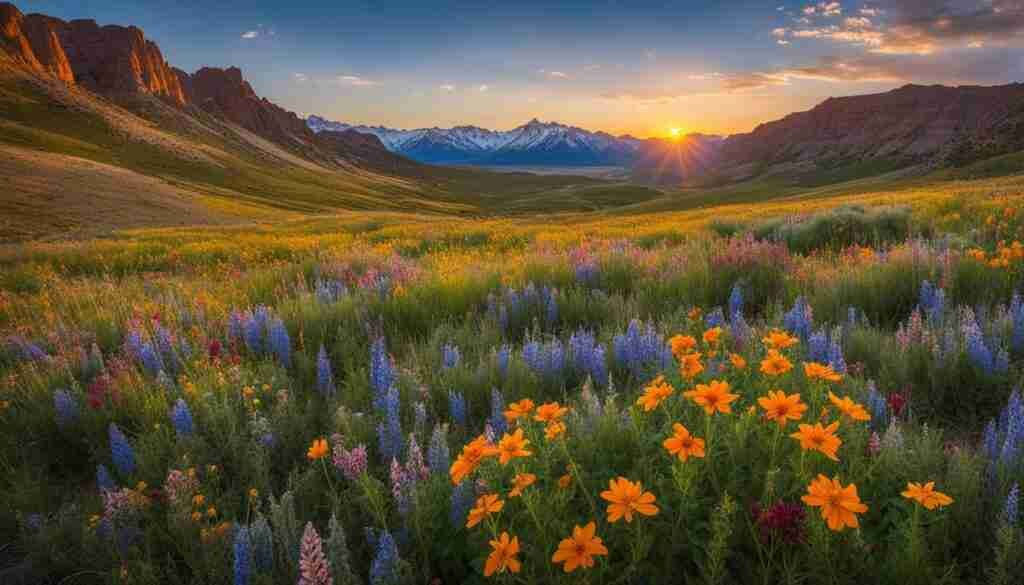
Big and Little Cottonwood Canyons in Utah are renowned for their breathtaking displays of wildflowers. These canyons are home to a diverse array of native wildflower species, creating a vibrant tapestry of colors and fragrances. Whether you’re a photography enthusiast or a nature lover, exploring these canyons will leave you mesmerized by the beauty of Utah’s wildflowers.
1. Heartleaf Arnica
The Heartleaf Arnica (Arnica cordifolia) is a striking wildflower that can be found in Big and Little Cottonwood Canyons. With its heart-shaped leaves and bright yellow flowers, this species adds a pop of color to the mountain landscape. It thrives in moist, shady areas and blooms from late spring to early summer.
2. Fireweed
Fireweed (Chamerion angustifolium) is a tall wildflower with vibrant pink or purple flowers that create a stunning contrast against the surrounding greenery. It is commonly found in open areas and along stream banks in the canyons. Fireweed blooms from mid-summer to early fall, providing a late-season burst of color.
3. Indian Paintbrush
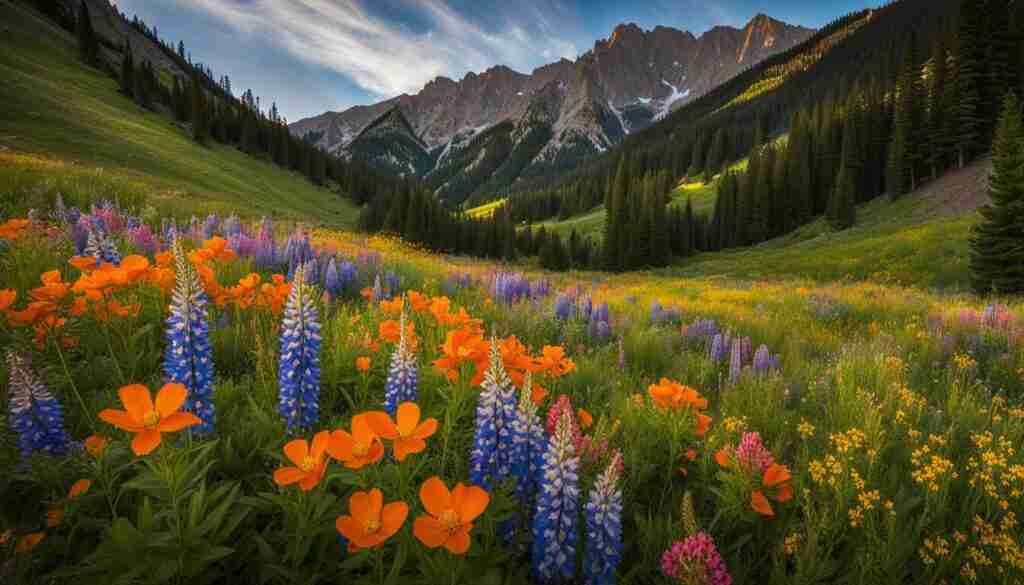
The Indian Paintbrush (Castilleja spp.) is a unique wildflower with showy, tubular red or orange flowers. It often grows in patches and is a favorite subject for wildflower photographers. Indian Paintbrush blooms from late spring to early summer, and its striking colors make it a standout in the wildflower meadows of Big and Little Cottonwood Canyons.
These are just a few examples of the many common wildflower species you can encounter in Big and Little Cottonwood Canyons. Each season brings a new wave of blooms, creating an ever-changing display of natural beauty. Whether you’re capturing their essence through photography or simply enjoying their presence, Utah’s wildflowers are sure to leave a lasting impression.
| Wildflower Species | Blooming Season |
|---|---|
| Heartleaf Arnica | Late spring to early summer |
| Fireweed | Mid-summer to early fall |
| Indian Paintbrush | Late spring to early summer |
Drought-Tolerant Native Wildflowers for Utah
Utah’s climate can be harsh, but that doesn’t mean you can’t enjoy the beauty of wildflowers in your garden or landscape. There are several drought-tolerant native wildflowers that thrive in Utah’s arid conditions. These resilient plants not only add color and vibrancy to your outdoor spaces but also support local pollinators and create a sustainable ecosystem.
One such native wildflower is the Blue Flax (Linum lewisii). With its delicate blue flowers and slender stems, the Blue Flax is a stunning addition to any garden. It is drought-tolerant and can withstand Utah’s dry summers. Another great choice is the Rocky Mountain Bee Plant (Cleome serrulata), which features vibrant pink flowers and attracts bees and butterflies.
Wallflower (Erysimum spp.) is another popular choice for Utah gardens. This native wildflower boasts bright yellow or orange blooms and is known for its pleasant fragrance. It is drought-tolerant and can survive in a variety of soil types. Other drought-tolerant options include the Scarlet Beebalm (Monarda spp.), Indian Paintbrush (Castilleja spp.), and Penstemon (Penstemon spp.).
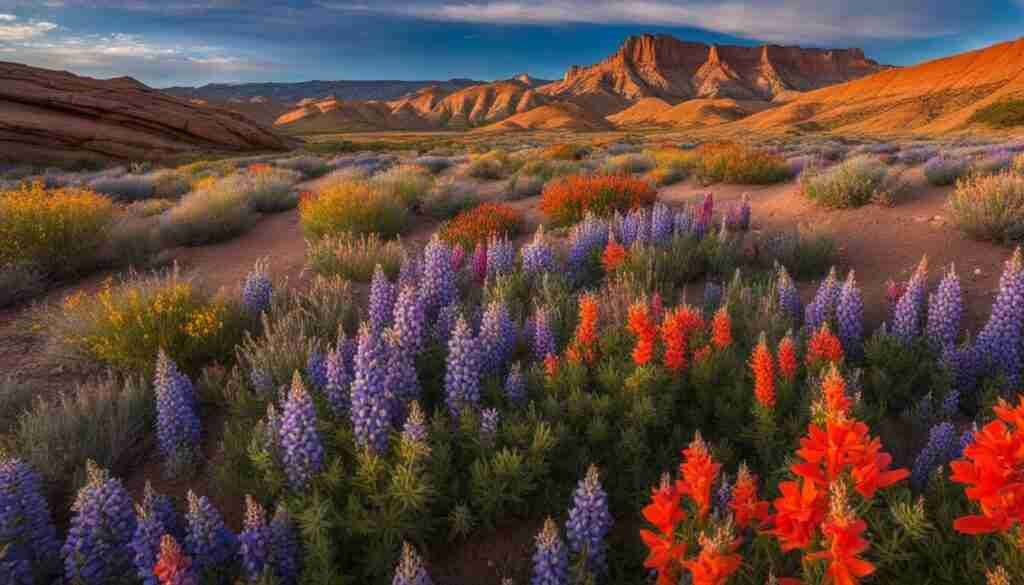
Table: Drought-Tolerant Native Wildflowers for Utah
| Wildflower | Description |
|---|---|
| Blue Flax | Delicate blue flowers, slender stems |
| Rocky Mountain Bee Plant | Vibrant pink flowers, attracts bees and butterflies |
| Wallflower | Bright yellow or orange blooms, pleasant fragrance |
| Scarlet Beebalm | Red or pink trumpet-shaped flowers, attracts hummingbirds |
| Indian Paintbrush | Red, orange, or yellow bracts surrounding small flowers |
| Penstemon | Tall spikes of tubular flowers in various colors |
By choosing these drought-tolerant native wildflowers, you can create a beautiful and sustainable landscape while conserving water and supporting local wildlife. These plants have adapted to Utah’s challenging climate and will thrive in your garden with minimal water requirements. Enjoy the beauty of Utah’s wildflowers while making a positive impact on the environment.
Where to Buy Native Wildflower Seeds in Utah
If you’re inspired to bring the beauty of Utah’s native wildflowers into your own garden, there are several places where you can purchase high-quality native wildflower seeds. By choosing native species, you can create a sustainable and vibrant ecosystem that supports local pollinators and preserves the natural flora of Utah.
One option is to check with local nurseries and garden centers in Utah. They often carry a variety of native wildflower seeds, and their expertise can help you select the best species for your specific location and soil conditions. Additionally, many nurseries offer guidance on planting and maintaining wildflowers, ensuring your success in creating a stunning wildflower garden.
Another option is to explore online retailers that specialize in native plants and seeds. These retailers typically provide a wide variety of wildflower species, allowing you to choose the perfect mix for your garden. Be sure to research the retailer’s reputation and reviews to ensure you’re purchasing from a trusted source.
Online Resources for Native Wildflower Seeds in Utah
If you prefer the convenience of online shopping, here are a few websites that offer native wildflower seeds specifically for Utah:
- Utah Native Plant Society (www.utahrareplants.org): The Utah Native Plant Society offers a seed program that includes a diverse selection of native wildflower seeds. Their seeds are sourced from Utah’s unique ecosystems, ensuring the preservation of local flora.
- Wildflower Farm (www.wildflowerfarm.com): Wildflower Farm provides a range of native wildflower seeds, including several species that are well-suited for the arid climate of Utah. Their website offers detailed descriptions of each species, making it easy to choose the right seeds for your garden.
- High Country Gardens (www.highcountrygardens.com): High Country Gardens specializes in water-wise, native plants, including a wide selection of native wildflower seeds. Their website provides comprehensive information on each species, helping you make informed choices for your garden.
Whether you choose to shop locally or online, purchasing native wildflower seeds is a small but significant step towards preserving Utah’s natural beauty and supporting its unique flora.
Best Time to View Wildflowers in Utah
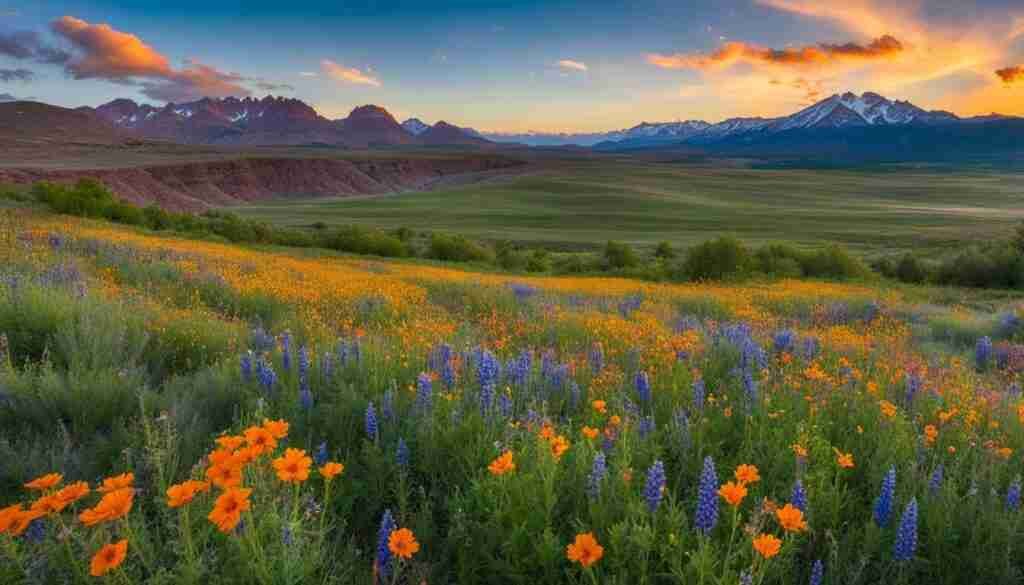
Utah is blessed with a diverse array of wildflowers that bloom throughout the summer months, creating breathtaking displays of color and beauty. To make the most of your wildflower viewing experience, it’s important to know the best time to visit. The optimal time to view wildflowers in Utah typically falls between early June and August, with some species blooming into September.
The exact timing of the wildflower season can vary depending on the temperature and elevation of the specific location. As a general rule, lower elevation areas and desert regions tend to bloom earlier in the season, while higher elevation mountain areas bloom later.
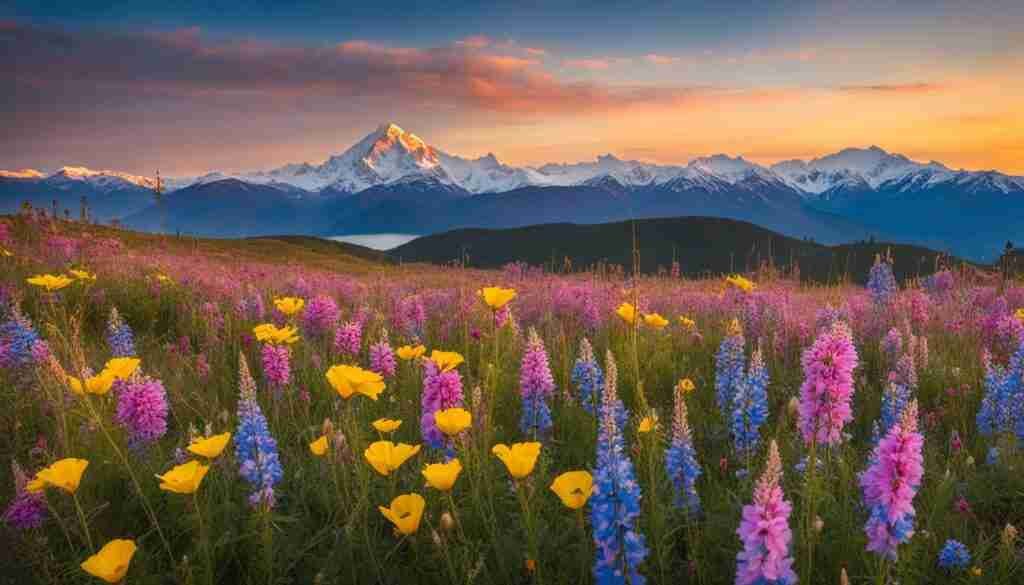
When planning your wildflower adventure, consider exploring popular destinations like Alta, Snowbird, Solitude, and Brighton. These areas are known for their abundant wildflower displays and offer a variety of trails that showcase the beauty of Utah’s flora.
Whether you’re a photography enthusiast, a nature lover, or simply seeking a peaceful escape into the great outdoors, the wildflower season in Utah promises a vibrant and awe-inspiring spectacle that will leave you in awe.
Wildflower Viewing Trails in Utah
| Trail Name | Location | Best Time to Visit |
|---|---|---|
| Alta Summer Trail | Alta | July – August |
| Cecret Lake Trail | Alta | July – August |
| Desolation Lake Trail | Big Cottonwood Canyon | July – August |
| Catherine’s Pass Trail | Big Cottonwood Canyon | July – August |
Tony Grove: A Haven for Wildflowers in Northern Utah
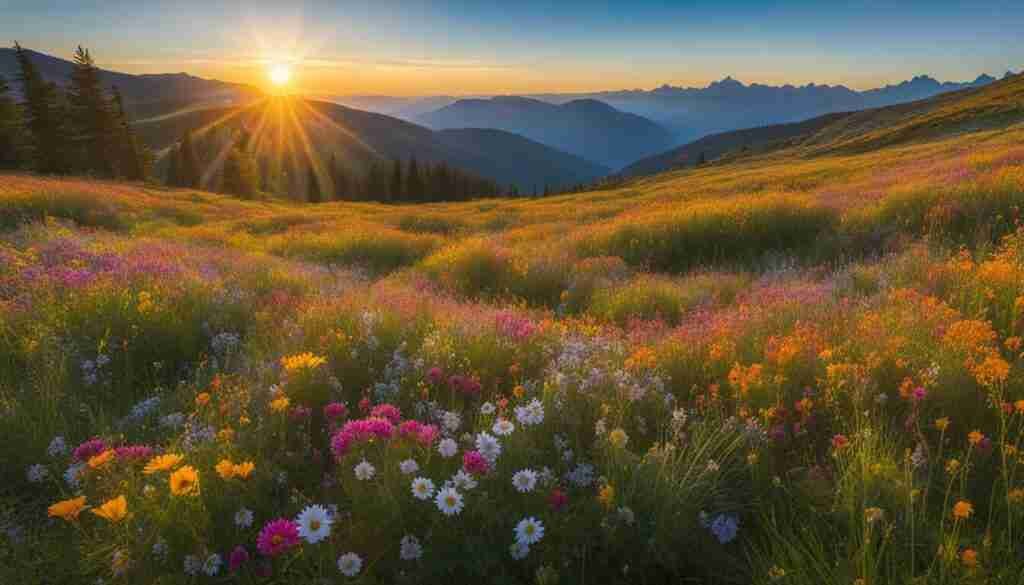
Tony Grove, located in Logan Canyon, is a hidden gem for wildflower enthusiasts in Northern Utah. With its high elevation and diverse ecosystem, Tony Grove boasts an abundance of wildflowers, including wild geraniums, lupines, and daisies. Take a drive along Highway 89 and explore this picturesque area to witness the beauty of Utah’s wildflowers.
If you’re an avid hiker, there are numerous trails in Tony Grove that offer opportunities to immerse yourself in the stunning wildflower displays. The Limber Pine Trail takes you through dense forests, where you can spot vibrant columbines and shooting stars. The White Pine Lake Trail rewards you with breathtaking views of alpine meadows adorned with various wildflower species.
To make the most of your visit to Tony Grove, consider bringing a wildflower identification guide. By familiarizing yourself with different wildflower species, you can enhance your experience and gain a deeper appreciation for the botanical diversity found in this area.
Remember to practice responsible hiking and adhere to trail etiquettes to help preserve the delicate ecosystems that support these beautiful wildflowers.
Wildflower Species in Tony Grove:
| Wildflower | Scientific Name | Blooming Season |
|---|---|---|
| Wild Geranium | Geranium maculatum | June to August |
| Lupine | Lupinus spp. | June to July |
| Shooting Star | Dodecatheon spp. | May to June |
| Arrowleaf Balsamroot | Balsamorhiza sagittata | April to June |
| Mountain Daisy | Erigeron compositus | June to August |
Cedar Breaks National Monument: A Showcase of Wildflower Beauty
Cedar Breaks National Monument in Southern Utah is a mesmerizing destination that showcases the unparalleled beauty of wildflowers. Nestled amidst sandstone formations and sitting at high elevation, this stunning location provides an optimal habitat for a vibrant wildflower season.
The combination of the unique geological features and the diverse ecosystem creates a perfect backdrop for a breathtaking display of nature’s colors.
Lupines, phlox, bluebells, and an array of other beautiful wildflower species can be found flourishing amidst the impressive red rock landscape. Whether you’re an avid photographer, a nature lover, or simply seeking a serene escape, Cedar Breaks National Monument offers an unforgettable experience.
Protecting the Wildflower Habitat
The delicate beauty of Cedar Breaks’ wildflowers highlights the importance of protecting their natural habitat. Preservation efforts are essential to ensure the continued existence of these stunning floral displays. The fragile ecosystems within the national monument require careful conservation measures to safeguard the diverse plant species that call this area home.
By following guidelines such as staying on designated trails, refraining from picking or trampling the flowers, and practicing Leave No Trace ethics, we can collectively contribute to the preservation of Cedar Breaks’ wildflower habitat. Let’s work together to maintain the natural integrity of this incredible landscape for future generations to enjoy.
| Wildflower Species | Blooming Season | Color |
|---|---|---|
| Lupine | June to July | Purple, blue, pink |
| Phlox | June to August | Pink, white, lavender |
| Bluebell | July to September | Blue, purple |
| Indian Paintbrush | June to August | Red, orange |
Visiting Cedar Breaks National Monument
To fully immerse yourself in the wildflower beauty at Cedar Breaks National Monument, plan your visit between June and September, when the flowers are in full bloom. Explore the various hiking trails that wind through the monument, allowing you to discover new pockets of wildflower brilliance with every step. Savor the incredible panoramic views, and don’t forget to bring your camera to capture the magic of this natural spectacle.
Whether you’re a local or a visitor to Utah, Cedar Breaks National Monument is a must-see destination that will leave you in awe of nature’s artistic flair. So pack your hiking boots, grab your wildflower identification guide, and prepare for an unforgettable experience amidst the breathtaking beauty of Cedar Breaks.
Exploring Wildflowers at Snowbasin Resort
If you’re looking to immerse yourself in the beauty of Utah’s wildflowers, Snowbasin Resort is an ideal destination. Located in the heart of the mountains, this resort offers not only world-class skiing but also a stunning display of alpine wildflowers during the peak season.
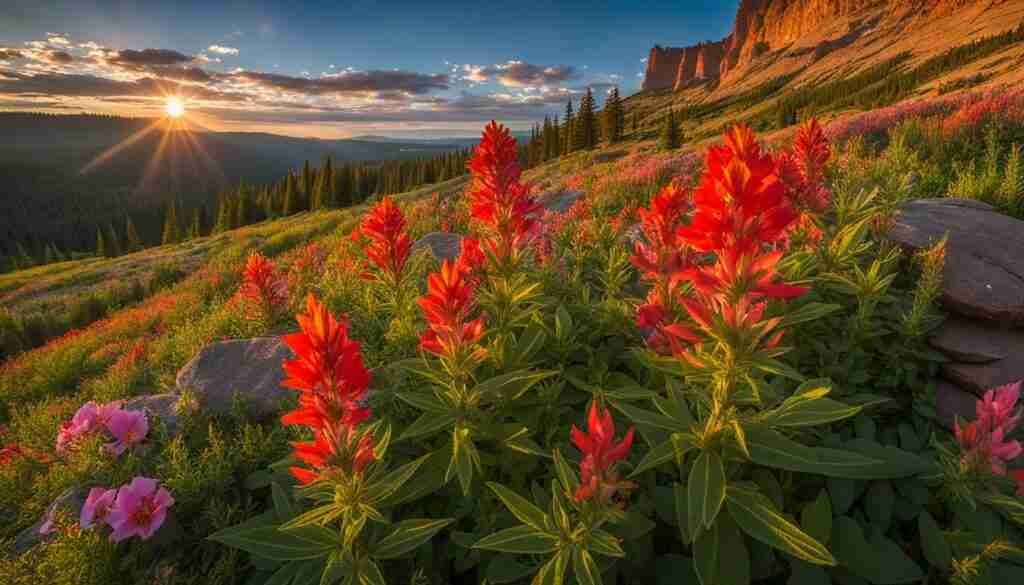
As you hike along the Ridge Trail or take a scenic ride in the Needles Gondola, you’ll be greeted by the vibrant colors of Utah’s wildflowers. The alpine cirques at Snowbasin Resort are home to a diverse array of species, including the majestic red skyrockets, delicate yarrow, and vibrant paintbrush.
Wildflower Spotting Tips:
- Bring your camera or smartphone to capture the beauty of the wildflowers.
- Look for the bright colors and distinctive shapes that make each species unique.
- Take your time to explore the different trails and elevations to maximize your chances of spotting a variety of wildflowers.
Whether you’re a photography enthusiast, a nature lover, or simply seeking a serene escape in the mountains, the wildflowers at Snowbasin Resort will leave you in awe of Utah’s natural beauty.
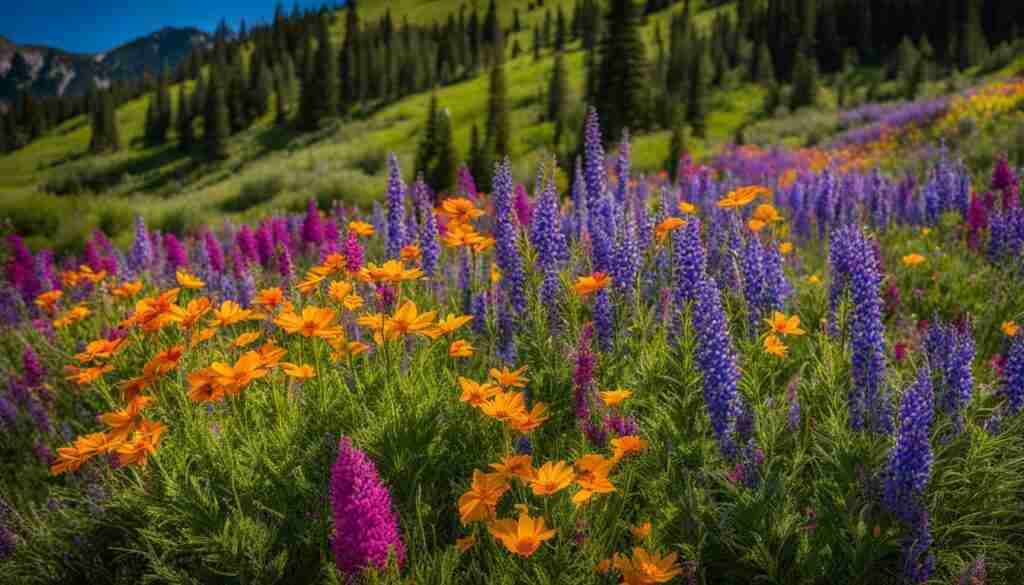
Lake Blanche Trail: A Scenic Hike to Wildflower Bliss
The Lake Blanche Trail, located in Big Cottonwood Canyon, is a must-visit destination for nature enthusiasts and hikers seeking a breathtaking display of Utah’s wildflowers. This picturesque trail offers a challenging yet rewarding experience, showcasing the beauty and diversity of the state’s flora. Lace up your hiking boots, pack your camera, and embark on an unforgettable adventure through the vibrant wildflower fields.
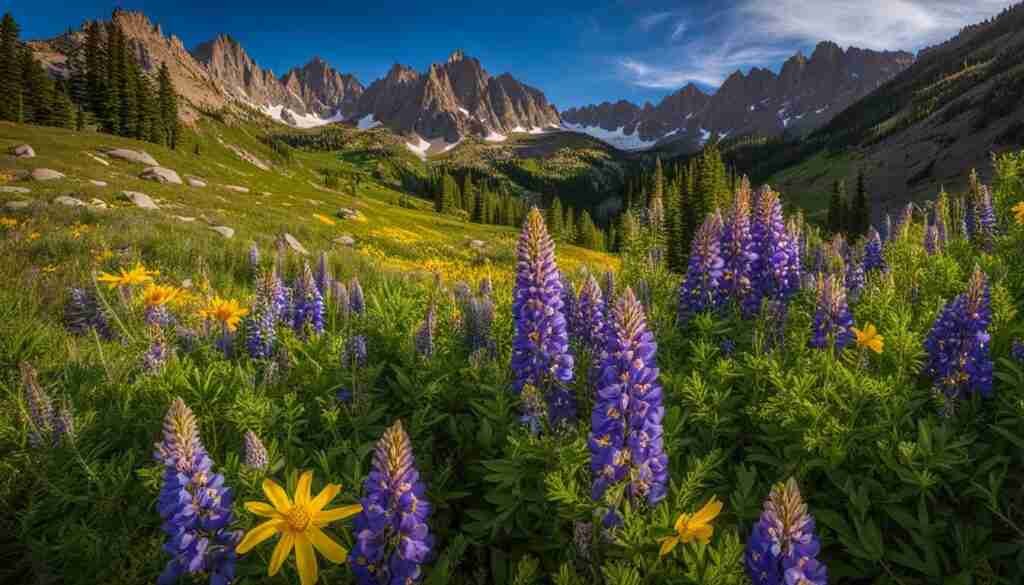
As you begin your hike along the Lake Blanche Trail, you’ll be greeted by a variety of wildflower species, each adding its unique touch of color to the landscape. The trail meanders through alpine meadows, offering views of yellow sunflowers, purple lupines, and delicate white blooms.
These wildflowers create a stunning contrast against the rugged cliffs and the towering Sundial Peak in the distance, providing an awe-inspiring backdrop for your journey.
It’s essential to note that the Lake Blanche Trail is considered a moderately difficult hike, with steep sections and rocky terrain. However, the effort is well worth it, as you’ll be rewarded with awe-inspiring vistas and a chance to witness an array of wildflower species in their natural habitat. Remember to bring plenty of water, sun protection, and sturdy footwear to ensure a safe and enjoyable hiking experience.
Table: Wildflowers You Might Encounter on the Lake Blanche Trail
| Wildflower | Scientific Name | Color |
|---|---|---|
| Columbine | Aquilegia spp. | Vibrant mix of blues, purples, and whites |
| Mountain Bluebell | Mertensia spp. | Blue-violet |
| Indian Paintbrush | Castilleja spp. | Red, orange, yellow |
| Western Anemone | Pulsatilla occidentalis | White, pink, purple |
| Fireweed | Chamerion angustifolium | Pink to magenta |
Immerse yourself in the tranquility of the Lake Blanche Trail as you breathe in the fresh mountain air and take in the beauty of Utah’s wildflowers.
Whether you’re a seasoned hiker or a nature lover looking for a scenic adventure, this trail promises an enchanting experience that will leave you mesmerized by the vibrant colors and fragrant blooms along the way. Don’t forget to capture the magic through your lens and create lasting memories of this wildflower paradise.
Tips for Enjoying Utah’s Wildflowers Safely
When venturing out to enjoy Utah’s wildflowers, it is important to take certain precautions to ensure both your safety and the preservation of these delicate ecosystems. Follow these tips to have a memorable and responsible experience:
Wildflower Identification Guide
Enhance your wildflower experience by bringing along a guide that will help you identify the different species you encounter. Not only will this deepen your appreciation for Utah’s wildflowers, but it will also allow you to engage with the flora around you on a more meaningful level.
Do Not Pick Wildflowers
While it may be tempting to pluck a beautiful wildflower as a keepsake, it is important to remember that picking wildflowers is not only illegal in many locations but also harms the delicate ecosystem. Wildflowers serve as a vital food source for pollinators and other wildlife, and removing them disrupts the natural balance of the environment.
Stay on Designated Trails
Stick to established trails and avoid trampling the delicate alpine flora. Deviating from designated paths can damage the fragile ecosystems and disrupt the growth of native wildflowers. By respecting the designated trails, you can help preserve the beauty of Utah’s wildflowers for others to enjoy.
Come Prepared
Be prepared for changing weather conditions when venturing into Utah’s wildflower areas. The high elevation can bring chilly temperatures, even during the summer months. Dress in layers, wear proper sun protection, and bring adequate water and snacks to stay hydrated and energized throughout your wildflower exploration.
By following these tips, you can safely and responsibly enjoy the beauty of Utah’s wildflowers while contributing to their long-term conservation.
Where to Find Native Wildflower Seeds in Utah
If you’re inspired to plant native wildflowers in Utah, there are several resources where you can find high-quality seeds. Supporting local conservation organizations, botanical gardens, and native plant nurseries is a great way to contribute to the conservation and preservation of Utah’s native wildflowers. Here are some places where you can find native wildflower seeds:
Local Conservation Organizations
- Utah Native Plant Society – The Utah Native Plant Society offers a variety of resources for native plant enthusiasts, including seed sales and exchanges. Check their website and contact local chapters for information on obtaining native wildflower seeds.
- The Nature Conservancy – The Nature Conservancy has a presence in Utah and may have resources for those interested in planting native wildflowers. Reach out to your local chapter or visit their website for more information.
Botanical Gardens
- Red Butte Garden – Located in Salt Lake City, Red Butte Garden is a botanical garden that focuses on the native plants of Utah. They have a plant sale event where you can find native wildflower seeds and other native plants for your garden.
- Ashton Gardens at Thanksgiving Point – Ashton Gardens is a beautiful garden located in Lehi, Utah. They may offer native wildflower seeds as part of their garden shop offerings.
Native Plant Nurseries
- Wasatch Wildflower Farm – Wasatch Wildflower Farm is a native plant nursery in Park City, Utah. They specialize in growing native wildflowers, grasses, and shrubs. Visit their nursery or check their website for available native wildflower seeds.
- Prairie Nursery – Although not based in Utah, Prairie Nursery is an online nursery that offers a wide selection of native wildflower seeds. They provide detailed information on each plant species, making it easy to choose the right seeds for your garden.
By obtaining native wildflower seeds from these sources, you can play a part in preserving Utah’s natural beauty and supporting the conservation of native flowers. Whether you’re starting a wildflower garden or adding to an existing landscape, planting native species is a sustainable and environmentally-friendly choice.
| Resource | Location | Website |
|---|---|---|
| Utah Native Plant Society | Various locations | https://www.unps.org/ |
| The Nature Conservancy | Various locations | https://www.nature.org/ |
| Red Butte Garden | Salt Lake City | https://www.redbuttegarden.org/ |
| Ashton Gardens at Thanksgiving Point | Lehi | https://www.thanksgivingpoint.org/visit/ashton-gardens/ |
| Wasatch Wildflower Farm | Park City | https://www.wasatchwildflowerfarm.com/ |
| Prairie Nursery | Online | https://www.prairienursery.com/ |
Conclusion
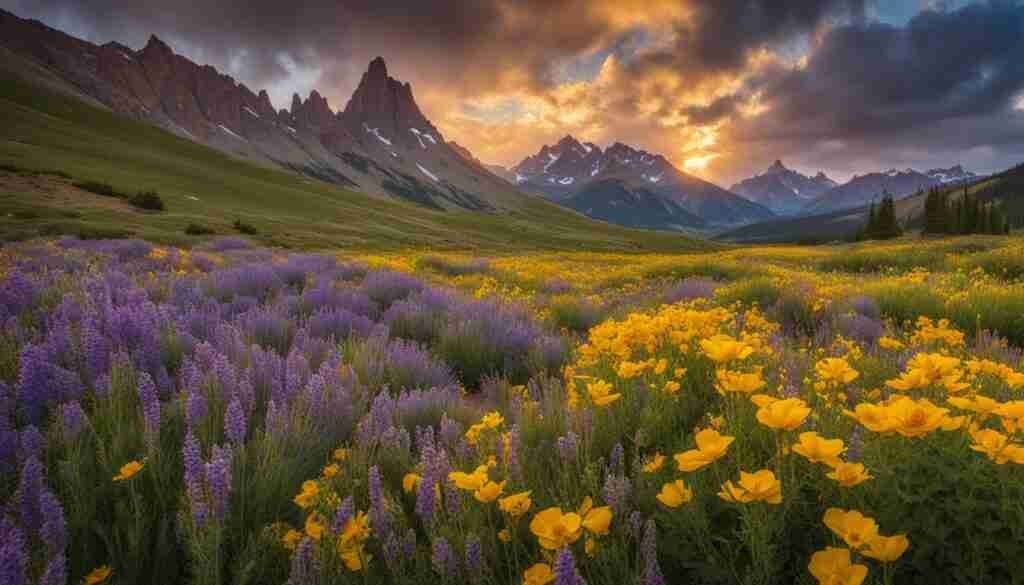
Utah’s wildflowers are a testament to the state’s rich botanical diversity. From the delicate elegance of the White Bog Orchid to the vibrant hues of Fireweed, these native flowers add a touch of natural beauty to Utah’s landscapes. By appreciating and conserving these wildflowers, we can ensure the preservation of the state’s unique botanical heritage for generations to come.
Whether you’re exploring the picturesque canyons or venturing to national monuments, Utah offers a wealth of opportunities to immerse yourself in the wonders of wildflowers. Take a camera and capture the stunning visual display, or simply revel in the vibrant colors that grace the trails and open spaces.
Remember, it’s important to enjoy these wildflowers responsibly. Respect their habitats by not picking the flowers or straying from designated trails. Let’s play our part in preserving the delicate balance of Utah’s wildflower ecosystems and protect the natural beauty that is so unique to this state. So, get ready to indulge your senses and witness the botanical diversity of Utah’s wildflowers today!
FAQ
Are wildflowers in Utah protected?
Yes, it is important to conserve Utah’s wildflowers and their habitats.
Can I pick wildflowers in Utah?
No, it is best to avoid picking wildflowers as they are essential for pollinators and wildlife.
What should I do if I encounter wildflowers on a trail?
Stay on designated trails and avoid trampling the flowers to minimize your impact.
How can I help preserve Utah’s wildflowers?
By practicing Leave No Trace ethics, such as packing out your trash and respecting wildlife.
Where can I find native wildflower seeds in Utah?
Check with local nurseries, seed companies, or online retailers specializing in native plants.
When is the best time to view wildflowers in Utah?
Typically, the blooming season occurs between early June and August, with some species blooming into September.
What are some popular destinations for wildflower viewing in Utah?
Alta, Snowbird, Solitude, and Brighton offer some of the best wildflower viewing trails.
Can I plant native wildflowers in my garden?
Yes, there are several drought-tolerant native wildflowers that thrive in Utah’s climate.
Where can I purchase high-quality native wildflower seeds in Utah?
Check with local conservation organizations, botanical gardens, or native plant nurseries.
What precautions should I take when venturing out to enjoy Utah’s wildflowers?
Bring a wildflower identification guide, refrain from picking wildflowers, stay on designated trails, and be prepared for changing weather conditions.
How can I contribute to the conservation of Utah’s native wildflowers?
By supporting local establishments that sell native wildflower seeds and promoting wildflower conservation efforts.