
Springtime in Palestine is a sight to behold, with its vibrant colors and unique wildflower species. These native Palestinian wildflowers have been highly valued throughout history for their beauty and various uses. From anemones and cyclamen to lupines and tulips, the blooming wildflowers in Palestine create a stunning display of resilience and natural beauty.
Key Takeaways:
- Palestine is home to a diverse range of native wildflowers with vibrant colors.
- Wildflowers have deep cultural and traditional significance in Palestinian heritage.
- The landscapes of Palestine are transformed into a picturesque canvas of colors during springtime.
- Palestine is home to rare and exquisite wildflower species, contributing to its biodiversity.
- Palestinian wildflowers play a role in traditional cuisine and have medicinal benefits.
The Significance of Wildflowers in Palestinian Heritage
Wildflowers hold a special place in Palestinian heritage and culture. They are not just admired for their beauty, but also have deep symbolic and traditional meanings. Throughout history, wildflowers have been an integral part of Palestinian daily life, revered for their versatility and connection to the land.
These native plants have been used in cooking, decoration, medication, and for spiritual purposes.
In Palestinian cuisine, wildflowers are cherished for their unique flavors and aromas. They are often added to dishes to enhance the taste and provide a touch of authenticity. Wildflowers like chamomile, thyme, and Jerusalem sage bring a distinctive floral essence to traditional Palestinian recipes.
Additionally, wildflowers have played a significant role in Palestinian traditional medicine. The healing properties of certain plants have been recognized and utilized for centuries. From soothing chamomile tea to the invigorating benefits of sage, these wildflowers have been used to treat various ailments and promote well-being.
Wildflowers also feature prominently in Palestinian art and handicrafts. The delicate beauty of these flowers inspires artists to capture their essence in paintings, embroidery, and other forms of artistic expression. The presence of wildflowers in Palestinian heritage reflects their cultural significance and the deep connection between the people and the land.
| Traditional Uses of Wildflowers in Palestinian Culture | Examples |
|---|---|
| Cooking | Chamomile tea, thyme-infused dishes, Jerusalem sage seasonings |
| Medicine | Chamomile remedies, sage tonics, thyme poultices |
| Decoration | Floral arrangements, garlands, dried flower crafts |
| Spiritual Purposes | Offerings, rituals, ceremonial use |
Wildflowers are not simply beautiful flowers in Palestine; they are a vital part of the cultural fabric, carrying the stories and traditions of generations. Their significance goes beyond aesthetics, encompassing the culinary, medicinal, and spiritual aspects of Palestinian heritage.
By understanding and appreciating the value of wildflowers, we can celebrate the rich tapestry of Palestinian culture and the profound connection between people and nature.
The Colors of Spring in Palestine
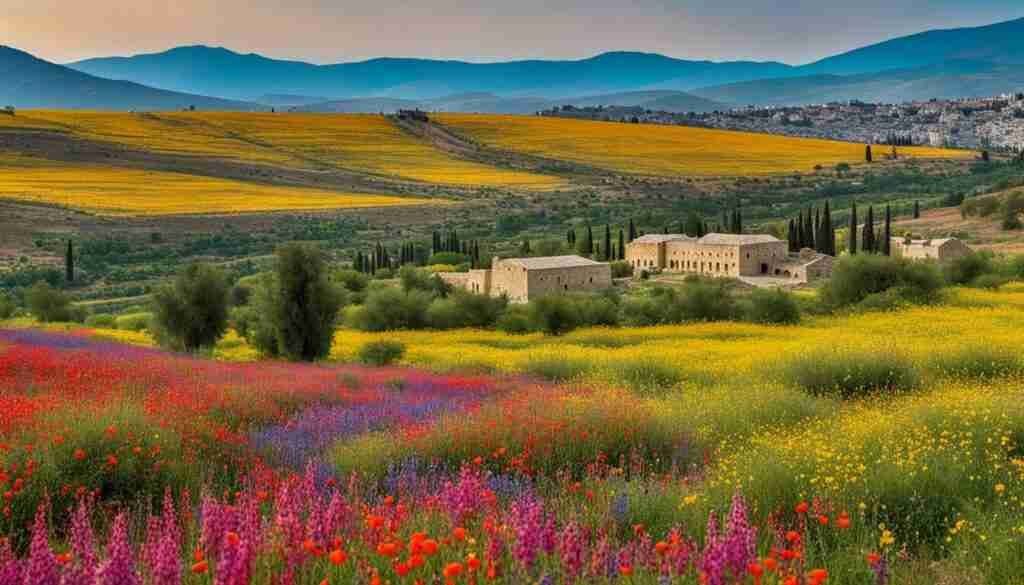
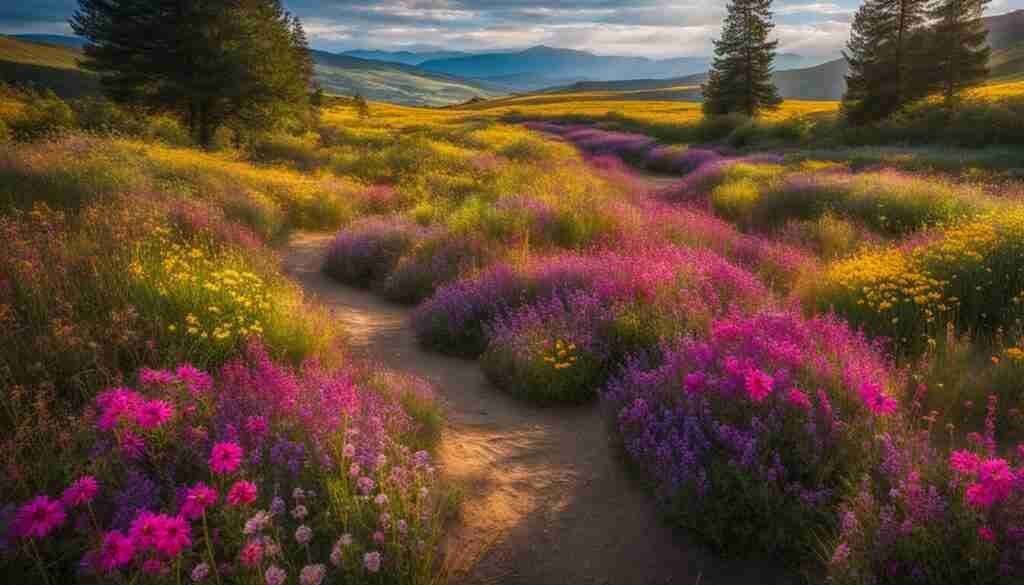
Palestine comes alive with vibrant colors during the spring season. From the blooming wildflowers in Palestine to the picturesque landscapes, the colors of spring create a mesmerizing sight. The wide range of wildflowers found in Palestine adds to the beauty of the Palestinian landscapes.
One of the most striking colors that can be seen during spring in Palestine is red. Fields filled with anemones and poppies paint the landscape in shades of crimson. These vibrant red blooms create a captivating contrast against the green meadows and blue skies.
In addition to red, other colors also grace the Palestinian landscapes. Purple and white cyclamen flowers, pink tulips, and yellow lupines can be spotted, adding a touch of elegance and diversity to the natural scenery. The unique blend of colors showcases the rich floral biodiversity of Palestine.
Springtime in Palestine is truly a feast for the eyes. The vibrant colors of the blooming wildflowers create a visual symphony of nature’s beauty. Whether you’re exploring the hillsides or strolling through the countryside, the colors of spring in Palestine will leave you in awe.
The Colors of Spring in Palestine
| Color | Wildflowers |
|---|---|
| Red | Anemones, Poppies |
| Purple | Cyclamen |
| White | Cyclamen |
| Pink | Tulips |
| Yellow | Lupines |
Rare and Exquisite Wildflowers of Palestine
Palestine is not only home to a diverse array of wildflowers but also boasts some rare and exquisite species that are truly captivating. These unique wildflowers contribute to the rich floral biodiversity of the region and showcase the resilience of Palestinian flora.
From the enchanting beauty of rare tulips to the delicate charm of germander, each wildflower found in Palestine tells its own story.
One of the rare wildflowers found in Palestine is the tulip, known for its stunning colors and intricate patterns. These vibrant flowers can be found in limited areas and are a delight to behold.
Another rare gem is the germander, a small flowering plant that boasts beautiful purple flowers. Its unique appearance and scarcity make it a sought-after sight for nature enthusiasts.
Exploring the landscapes of Palestine during the blooming season reveals a world of hidden treasures. From the majestic Persian buttercup to the mesmerizing iris, each rare wildflower adds a touch of magic to the Palestinian flora.
These exquisite species are a testament to the ecological importance and natural beauty of Palestine, deserving of our admiration and protection.
| Wildflower | Description |
|---|---|
| Tulip | Rare species with vibrant colors and intricate patterns |
| Germander | Small flowering plant with beautiful purple flowers |
| Persian buttercup | Majestic wildflower with vibrant colors |
| Iris | Mesmerizing flower with unique shapes and colors |
Incredible Rare Wildflowers
Let’s take a closer look at two exceptional rare wildflowers found in Palestine:
- Tulip: This rare species of wildflower is known for its remarkable beauty, with vibrant colors ranging from deep reds to bright yellows. Each tulip has its own distinct pattern, making it a true marvel of nature. The limited distribution and unique characteristics of the tulip make encountering it a rare and special experience in Palestine.
- Germander: Found in select areas of Palestine, the germander is a small flowering plant with lovely purple flowers. Its delicate appearance and scarcity make it a highly sought-after wildflower among nature enthusiasts and photographers. The germander’s charm lies in its ability to thrive in challenging environments, adding to its allure and rarity.
The rare and exquisite wildflowers of Palestine are a testament to the beauty and diversity of the region’s floral landscape. These unique species not only enrich the natural environment but also serve as a reminder of the importance of preserving Palestine’s wildflower heritage for future generations to appreciate and cherish.
Palestinian Landscapes: A Tapestry of Flora
The landscapes of Palestine are a true testament to the incredible floral biodiversity found in the region. From the rolling hills to the winding roadsides, the diversity of flowering plants in Palestinian landscapes is a sight to behold. Whether you’re exploring the countryside or strolling through urban parks, you’ll be captivated by the colorful tapestry of wildflowers that grace the land.
With over 2,800 species of flowering plants, Palestine boasts a rich and varied flora. The unique mix of geographical regions, including Mediterranean coastline, fertile valleys, and arid desert, creates ideal habitats for a wide range of wildflowers. From delicate anemones to vibrant corn marigolds, each flower contributes to the vibrant palette of colors that adorn the Palestinian landscapes.
Exploring the floral abundance of Palestine is like embarking on a botanical adventure. You’ll encounter a diverse array of blooming wildflowers, each with its distinct beauty and characteristics. From the iconic red anemones that blanket the landscape to the dainty chamomile flowers that dot the meadows, every corner of Palestine is a treasure trove waiting to be discovered.
The Beauty of Palestinian Flora
The beauty of Palestinian flora lies not only in its visual appeal but also in its ecological importance. The wildflowers play a crucial role in supporting local ecosystems, providing food and habitat for insects, birds, and other wildlife. They contribute to the overall balance of the ecosystem and help maintain the delicate web of life in the region.
| Flowering Plant | Region | Blooming Season |
|---|---|---|
| Anemone | Coastal Areas | Spring |
| Corn Marigold | Valleys and Plains | Summer |
| Chamomile | Open Fields and Meadows | Spring and Summer |
| Lupine | Mountains and Hillsides | Spring |
The table above showcases just a few examples of the flowering plants found in different regions of Palestine. Each plant has its unique habitat and blooming season, adding to the ever-changing tapestry of colors throughout the year.
As you explore the Palestinian landscapes, take a moment to appreciate the abundance and diversity of wildflowers that surround you. Their beauty not only enchants the eye but also serves as a reminder of the intricate interconnectedness of the natural world.
Soak in the breathtaking beauty of Palestinian flora and let it inspire a deeper connection with the environment and a renewed appreciation for the wonders of nature.
The Magic of Springtime Bird Migration in Palestine
Springtime in Palestine is a truly magical season, not only for the blooming wildflowers but also for the breathtaking phenomenon of bird migration. Located at the crossroads of continents, Palestine serves as a crucial stopover for hundreds of bird species on their journey to breeding grounds or wintering destinations.
The ideal climate and diverse landscapes of Palestine attract millions of birds each year, making it a paradise for birdwatchers and nature enthusiasts.
During spring, Palestine welcomes a wide variety of bird species, including raptors, waterfowl, warblers, and many others. This migration spectacle offers a unique opportunity to witness the beauty and diversity of avian life in action.
From the soaring flight of raptors to the melodic songs of warblers, the skies of Palestine come alive with the sights and sounds of migratory birds.
As the birds pass through Palestine, they bring with them a sense of wonder and awe. They remind us of the interconnectedness of ecosystems and the importance of preserving habitats for these incredible creatures. Springtime bird migration in Palestine is not just a natural wonder but also a testament to the resilience and adaptability of birds as they navigate vast distances in search of food, mates, and suitable nesting sites.
The Importance of Bird Migration
Bird migration plays a vital role in maintaining the balance of ecosystems worldwide. It facilitates the dispersal of seeds, regulates insect populations, and contributes to pollination.
The annual journey of migratory birds also has cultural and symbolic significance, inspiring awe, and wonder in people across different cultures and generations.
By observing and understanding bird migration patterns, scientists and conservationists gain valuable insights into the health of ecosystems and the impact of environmental changes. The study of bird migration in Palestine helps shed light on global conservation efforts and provides a basis for the protection of migratory routes and critical habitats.

| Common Bird Species in Palestine | Migration Period |
|---|---|
| Palestinian Sunbird | March to April and August to September |
| Palestine Sunbird | March to April and August to September |
| European Bee-eater | April to May and August to September |
| Palestine Wheatear | March to May and August to October |
| Booted Eagle | March to April and August to September |
The table above showcases some common bird species found in Palestine and their migration periods. It highlights the diverse range of bird species that pass through Palestine during spring and autumn, enriching its natural landscapes with their presence.
Springtime in Palestine is truly a spectacle to behold, with the vibrant colors of wildflowers harmonizing with the graceful flight of migratory birds. It is a season that celebrates the resilience and beauty of nature, reminding us of the interconnectedness of all living beings and the importance of preserving the natural world for future generations.
Capturing the Beauty of Palestinian Wildflowers
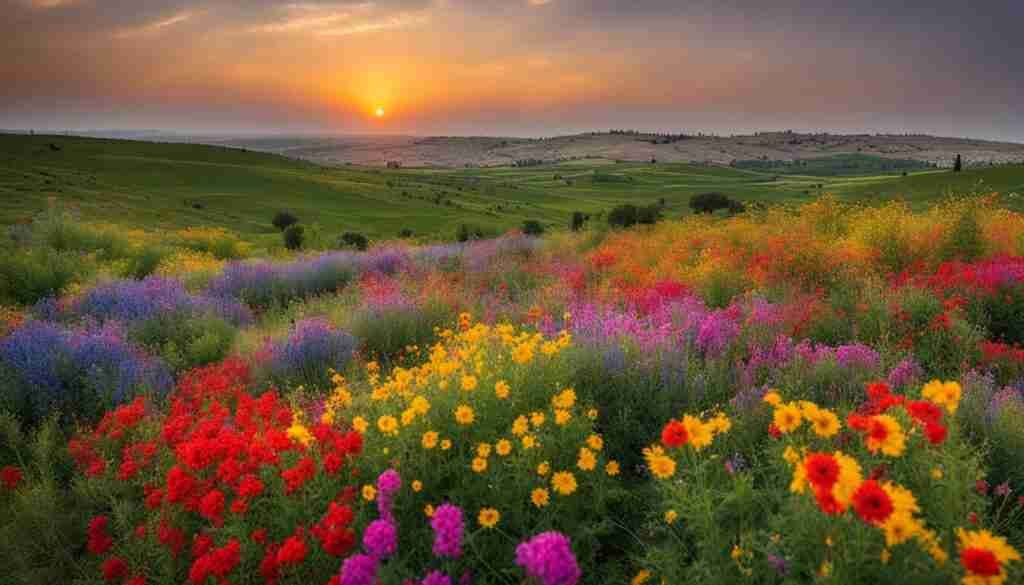
The beauty of Palestinian wildflowers has captivated photographers and artists, inspiring them to capture the vibrant colors and unique varieties found in the region. From professional photographers to nature enthusiasts, many have sought to document the wildflower landscapes in Palestine, showcasing the breathtaking beauty of Palestinian flora.
Photography of Wildflowers
Photography allows us to freeze a moment in time, preserving the delicate beauty of wildflowers forever. The intricate details of each petal, the vibrant colors against a backdrop of nature’s wonders – these are the elements that photographers capture to showcase the enchanting allure of Palestinian wildflowers.
With the advancement of digital photography, it has become easier than ever to capture the essence of wildflower landscapes in Palestine. Whether it’s the vast fields of anemones or the delicate blooms of cyclamen, photographers can now convey the full spectrum of colors and textures found in Palestinian flora.
Exploring Wildflower Landscapes in Palestine
Wildflower landscapes in Palestine offer endless opportunities for photographers to explore and unleash their creativity. From the rolling hills covered in a blanket of colorful petals to the hidden valleys where rare and exquisite species thrive, every corner of Palestine holds a treasure trove of wildflower beauty waiting to be discovered.
Photographers can wander through meadows filled with lupines and tulips, capturing the juxtaposition of vibrant hues against the backdrop of the vast Palestinian landscapes. They can also focus their lens on the intricate details of each wildflower, revealing the delicate patterns and textures that make each bloom unique.
Capturing the Essence of Palestinian Flora
In the art of wildflower photography, the aim is not only to document but also to convey the essence and spirit of Palestinian flora. Through composition, lighting, and perspective, photographers can evoke emotions and create visual stories that transport viewers to the enchanting world of wildflowers.
By capturing the beauty of Palestinian wildflowers, photographers play a vital role in raising awareness about the rich floral biodiversity of the region. Their images not only preserve the natural beauty of Palestinian flora but also inspire others to appreciate and protect these precious ecosystems.
Wildflowers in Palestinian Cuisine
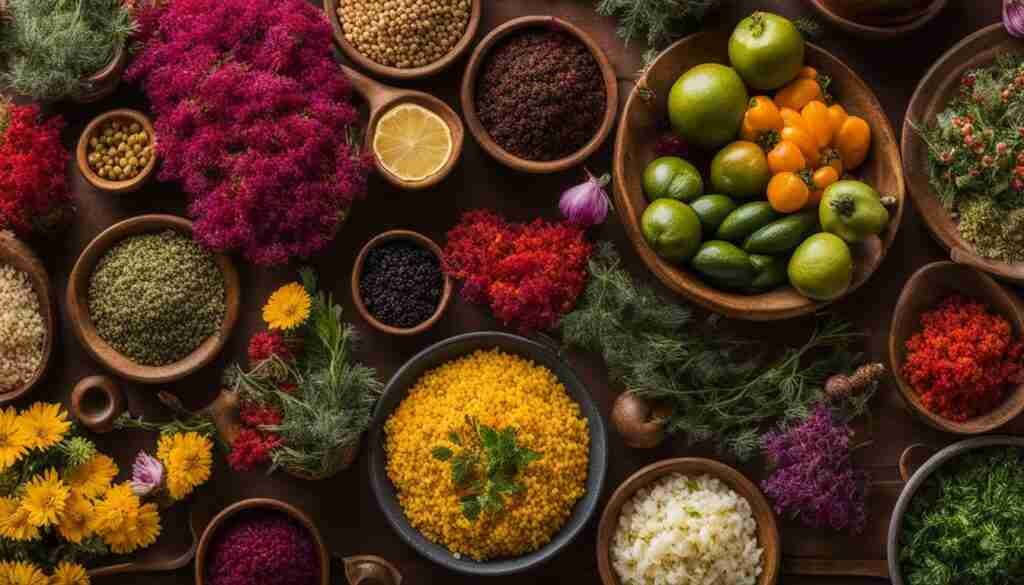
Wildflowers play a significant role not only in the visual beauty of Palestine but also in its culinary traditions. The traditional uses of wildflowers in Palestinian cuisine add unique flavors and aromas to a variety of dishes. From delicate chamomile to fragrant thyme, wildflowers are carefully incorporated into recipes, creating a distinct and authentic culinary experience.
Chamomile: Known for its calming properties, chamomile is often used in teas and infusions in Palestinian cuisine. Its delicate floral taste adds a soothing touch to beverages, providing a perfect way to unwind after a long day.
Thyme: Thyme is a versatile herb used in savory Palestinian dishes. Its earthy and slightly minty flavor enhances the taste of meats, vegetables, and legumes. It is commonly found in dishes like Mansaf, the national dish of Jordan, and Za’atar, a popular Middle Eastern spice blend.
Watercress: Watercress is a wildflower with a peppery flavor that adds a refreshing bite to salads and soups. It is packed with nutrients and is a popular ingredient in Palestinian cuisine, providing a vibrant green color and a distinctive taste.
| Wildflower | Traditional Use |
|---|---|
| Chamomile | Tea, infusions |
| Thyme | Savory dishes, spice blends |
| Watercress | Salads, soups |
Wildflower Recipe: Thyme-Scented Chicken
Experience the flavors of Palestine with this delicious Thyme-Scented Chicken recipe:
- Marinate chicken pieces with olive oil, minced garlic, lemon juice, salt, and a generous amount of fresh thyme. Let it marinate for at least 1 hour or overnight for maximum flavor.
- Preheat the oven to 400°F (200°C) and place the marinated chicken pieces in a baking dish.
- Roast the chicken in the oven for about 45 minutes or until cooked through, turning once to ensure even browning.
- Serve the thyme-scented chicken with a side of roasted vegetables or a fresh salad for a satisfying and aromatic Palestinian meal.
By incorporating wildflowers into their cuisine, Palestinians celebrate their connection to the land and the natural resources it provides. Cooking with wildflowers not only adds depth and complexity to dishes but also keeps the culinary heritage of Palestine alive.
Palestinian Wildflowers: A Source of Medicinal Benefits
Palestinian wildflowers have been treasured not only for their beauty but also for their healing properties, making them a valuable resource in traditional medicine. For centuries, these wildflowers have been used to address various ailments and promote overall well-being.
Their therapeutic benefits have been passed down through generations, showcasing the deep connection between the Palestinian people and the flora that surrounds them.
One notable wildflower with medicinal properties is chamomile. Known for its soothing and calming effects, chamomile tea is a popular remedy for relaxation and improved sleep. It is also believed to have anti-inflammatory properties and can be used to alleviate digestive discomfort and promote healing.
Another wildflower, thyme, is widely used for its antibacterial and antifungal properties. It is often employed in respiratory remedies, helping to alleviate coughs and colds.
Traditional medicine in Palestine also makes use of sage, a wildflower known for its medicinal and aromatic qualities. Sage tea is commonly used to relieve sore throats and digestive issues. It is also believed to have anti-inflammatory properties and can aid in reducing menopausal symptoms.
These are just a few examples of the many wildflowers in Palestine that possess healing properties and play a significant role in traditional medicine practices.
| Wildflower | Medicinal Benefits |
|---|---|
| Chamomile | Soothing, anti-inflammatory, digestive aid |
| Thyme | Antibacterial, antifungal, respiratory support |
| Sage | Anti-inflammatory, sore throat relief, menopausal symptom reduction |
These wildflowers, carefully harvested and prepared, continue to be essential components of traditional Palestinian medicine. Their use not only highlights the practicality and resourcefulness of the Palestinian people but also reinforces the importance of preserving floral biodiversity for future generations.
The healing properties of Palestinian wildflowers are a testament to their resilience, mirroring the resilience of the Palestinian people amidst challenging circumstances.
Conservation and Protection of Palestinian Wildflowers
The conservation and protection of Palestinian wildflowers are vital for preserving the rich floral biodiversity of the region. These delicate and unique plants are susceptible to habitat loss, climate change, and other environmental threats. Efforts are being made to raise awareness about the importance of wildflowers and the need to protect their natural habitats.
The Role of Conservation Organizations
Conservation organizations play a crucial role in safeguarding Palestinian wildflowers. They work tirelessly to identify and protect critical habitats, establish protected areas, and implement conservation strategies. These organizations collaborate with local communities, government agencies, and researchers to develop sustainable practices that balance the needs of human development with the preservation of floral biodiversity.
One such organization is the Palestinian Wildlife Society (PWLS), which focuses on the conservation of plants and animals in Palestine. They conduct research, raise public awareness, and advocate for the protection of natural resources.
The PWLS also engages in educational programs and community initiatives to empower individuals to become stewards of their environment.
Preserving Floral Biodiversity for Future Generations
Preserving floral biodiversity is not only important for the survival of wildflowers but also for the overall health of ecosystems. Wildflowers play a crucial role in providing habitat, food, and shelter for numerous insects, birds, and other wildlife.
By conserving wildflowers, we can ensure the long-term survival of these species and maintain the balance of our natural ecosystems.
Conservation efforts also help preserve the cultural and historical significance of Palestinian wildflowers. These plants have been an integral part of Palestinian heritage for centuries, with traditional uses in various aspects of life.
By protecting wildflowers, we preserve the knowledge and practices associated with these plants, fostering cultural continuity and promoting a sense of pride in Palestinian identity.
| Conservation Actions | Benefits |
|---|---|
| 1. Establishing protected areas | – Safeguarding critical habitats – Supporting biodiversity – Providing recreational and educational opportunities |
| 2. Conducting research on wildflower populations | – Informing conservation strategies – Monitoring population trends – Identifying threats and vulnerabilities |
| 3. Raising public awareness | – Fostering a sense of environmental responsibility – Encouraging sustainable practices – Building support for conservation efforts |
| 4. Collaborating with local communities | – Engaging stakeholders in conservation planning – Promoting community-led initiatives – Valuing traditional knowledge and practices |
By supporting conservation organizations, participating in educational programs, and advocating for the protection of wildflowers, we can ensure the long-term survival of these beautiful and ecologically important plants.
Together, we can protect Palestinian flora and preserve their natural beauty for future generations to enjoy.

Appreciating the Resilience of Palestinian Wildflowers
Palestinian wildflowers possess a remarkable resilience that allows them to thrive in challenging environments and harsh conditions. These resilient blooms symbolize the strength and perseverance of the Palestinian people and their deep connection to the land.
In the face of adversity, these wildflowers continue to bloom and flourish, showcasing the unwavering spirit of Palestinian flora.
Wildflowers in challenging environments, such as arid deserts and rocky slopes, have adapted to survive with limited resources. Their ability to endure harsh conditions and still produce vibrant, colorful blooms is a testament to their resilience.
These tenacious wildflowers serve as a reminder of the resilience and determination found within the Palestinian landscape.
Despite the political and environmental challenges faced by Palestine, the wildflower populations remain resilient, capturing the hearts and imaginations of those who witness their beauty. From the delicate anemones to the majestic tulips, Palestinian wildflowers inspire awe and admiration.
Recognizing Palestinian Floral Resilience
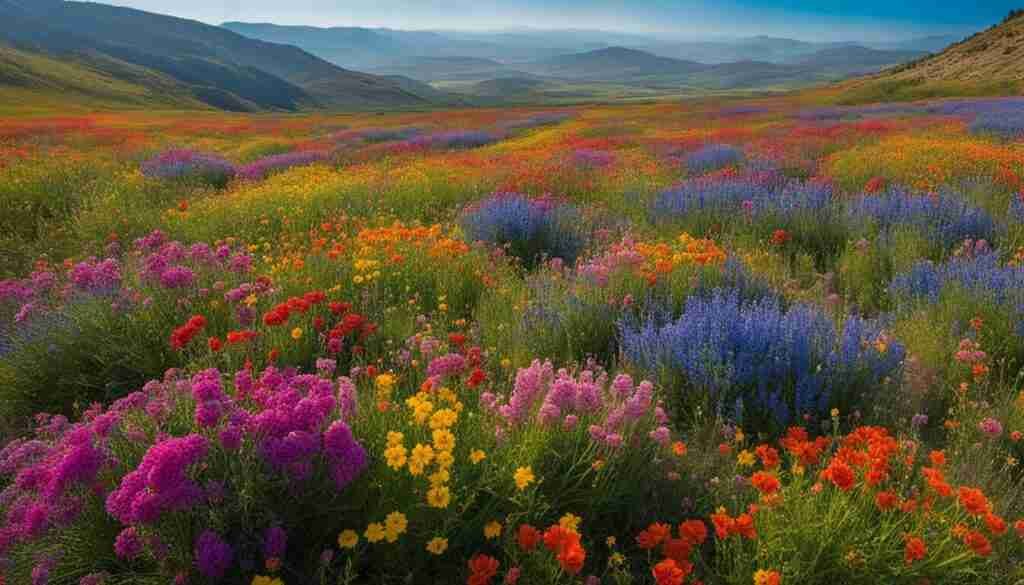
The ability of Palestinian wildflowers to thrive in difficult conditions showcases their extraordinary resilience. These flowers have adapted to survive in a land marked by conflict and adversity, emerging as a symbol of hope and resilience for the Palestinian people.
| Wildflower | Challenging Environment | Resilient Characteristics |
|---|---|---|
| Anemones | Rocky slopes | Tolerant to dry conditions |
| Tulips | Desert regions | Dormant during extreme heat, resilient to sandstorms |
| Cyclamen | Forest floors | Tolerant to shade and limited sunlight |
These wildflowers not only bring beauty and color to the landscape but also serve as a symbol of hope and resilience for the Palestinian people. Their ability to bloom and flourish in challenging environments is a testament to the strength and determination found within the Palestinian spirit.
Conclusion
The beauty of Palestine wildflowers is truly awe-inspiring. From their vivid colors to their unique varieties, these blooming wildflowers represent the natural beauty and Palestinian floral beauty. Throughout history, these native Palestinian wildflowers have been highly valued for their beauty and various uses.
From anemones and cyclamen to lupines and tulips, the resilience and natural beauty of these wildflowers create a stunning display.
Wildflowers hold a special place in Palestinian heritage and culture, serving as symbols of tradition, spirituality, and identity. They have been used in cooking, decoration, medication, and for spiritual purposes, adding depth and significance to their beauty. The landscapes of Palestine showcase a diverse range of wildflowers, contributing to the tapestry of flora that adds to the natural beauty of the region.
Through their rare and exquisite species, Palestinian wildflowers contribute to the biodiversity and richness of the land. From the hills to the roadsides, these wildflowers can be found in abundance, creating a picturesque canvas of colors.
Their resilience in challenging environments is a testament to the strength and perseverance of the Palestinian people and their connection to the land.
Appreciating the breathtaking beauty of Palestine wildflowers allows us to understand their importance in preserving Palestinian floral beauty. From their traditional uses to their medicinal benefits, wildflowers are a vital part of Palestinian heritage and the natural world.
As efforts continue to protect and conserve these precious blooms, we can ensure that future generations can also marvel at the splendor of Palestine wildflowers.
FAQ
What is the significance of wildflowers in Palestinian heritage?
Wildflowers hold a special place in Palestinian heritage and culture. They are not just admired for their beauty, but also have deep symbolic and traditional meanings. They have been used in cooking, decoration, medication, and for spiritual purposes, making them an integral part of Palestinian identity and history.
What colors can be seen in springtime in Palestine?
Palestine comes alive with vibrant colors during the spring season. From red fields filled with anemones and poppies to purple and white blooms of cyclamen and lupines, the landscapes of Palestine are transformed into a picturesque canvas of colors. Other hues like pink, yellow, and blue can also be seen, with a diverse range of wildflowers adding to the beauty of the Palestinian landscapes.
Are there any rare wildflower species in Palestine?
Yes, Palestine is home to some rare and exquisite wildflower species. From the rare tulips to the beautiful germander, the wildflowers found in Palestine are unique and captivating. These rare species contribute to the biodiversity of the region and are a testament to the resilience of Palestinian flora.
Where can wildflowers be found in Palestine?
Wildflowers can be found in abundance in Palestine, from the hills to the roadsides. Whether it’s anemones, corn marigold, or chamomile, the diverse flora of Palestine adds to its natural beauty. The varying geographical regions of Palestine contribute to the unique mix of flowering plants found in the landscapes.
Why is bird migration significant in Palestine?
Springtime in Palestine is not just about wildflowers; it’s also a time for the magical phenomenon of bird migration. Due to its central location between continents, Palestine serves as a crucial migratory route for hundreds of bird species. The ideal climate and topography make it a popular destination for both breeding and migrating birds, with millions of birds passing through Palestine each year.
How do wildflowers contribute to Palestinian cuisine?
Wildflowers are not just admired for their beauty; they also play a role in Palestinian cuisine. Many wildflowers are used in traditional Palestinian recipes, adding unique flavors and aromas. From chamomile and thyme to Jerusalem sage and watercress, wildflowers add a touch of authenticity to Palestinian dishes.
Do Palestinian wildflowers have medicinal properties?
Yes, Palestinian wildflowers have been used for their medicinal properties for centuries. Various wildflowers have healing properties and are used in traditional medicine to treat different ailments. Chamomile, thyme, and sage are just a few examples of wildflowers with known medicinal benefits in Palestine.
What efforts are being made to protect Palestinian wildflowers?
Conservation organizations and initiatives are working towards the preservation of Palestinian flora for future generations. Efforts are being made to raise awareness about the importance of wildflowers and the need to protect their natural habitats.
What do Palestinian wildflowers symbolize?
Palestinian wildflowers display remarkable resilience, thriving in challenging environments and harsh conditions. They symbolize the strength and perseverance of the Palestinian people and their connection to the land. The ability of these wildflowers to bloom and thrive is a testament to the resilience of Palestinian flora.
How can I appreciate the beauty of Palestinian wildflowers?
The beauty of Palestinian wildflowers has inspired many photographers and artists. From professional photographers to nature enthusiasts, capturing the vibrant colors and unique varieties of Palestinian wildflowers has become a popular activity. The wildflower landscapes in Palestine provide endless opportunities for stunning photographs and visual storytelling.
Why is the conservation of Palestinian wildflowers important?
The conservation and protection of Palestinian wildflowers are crucial for preserving the rich floral biodiversity of the region. Efforts are being made to raise awareness about the importance of wildflowers and the need to protect their natural habitats. Conservation organizations and initiatives are working towards the preservation of Palestinian flora for future generations.
What is the beauty of Palestine wildflowers?
The beauty of Palestine wildflowers is truly awe-inspiring. From their vivid colors to their unique varieties, these wildflowers represent the natural beauty and resilience of Palestine.
Whether it’s their traditional uses, medicinal benefits, or their importance to Palestinian heritage, wildflowers hold a special place in the hearts and landscapes of Palestine. Take a moment to appreciate the breathtaking beauty of Palestine wildflowers and their contribution to the natural world.